

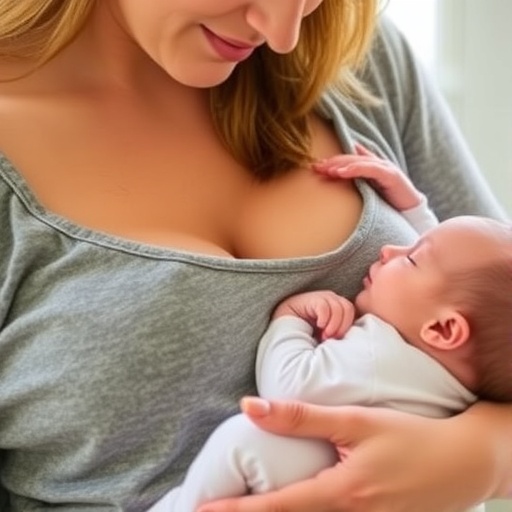
In a groundbreaking new study from the University of Oulu, researchers have unveiled a novel evolutionary perspective on the human breast that challenges longstanding assumptions. While breasts are universally recognized as critical organs for lactation and infant nourishment, their size has traditionally been thought unrelated to their primary function of milk production. This assumption is grounded in the understanding that a considerable portion of breast volume consists of adipose tissue—fat—which does not contribute directly to lactation. However, the study introduces compelling evidence suggesting that human breasts may have evolved not only for nutritional delivery but also as vital thermoregulatory interfaces during breastfeeding, crucially aiding neonatal survival.
Historically, theories regarding breast evolution have centered on reproductive signaling, positing breasts as sexually selected traits that convey indicators of individual health and fertility, much like facial symmetry. These signals purportedly serve to attract mates, thus promoting reproductive success. Another anthropological speculation has portrayed breasts as reservoirs of body fat, offering an energy store during periods of scarcity. Although these ideas have dominated discussion, the thermal regulation hypothesis elaborated by the Oulu team represents a significant paradigm shift, deeply rooted in functional biomechanics and infant physiology.
The impetus for exploring breast thermoregulation stemmed from recognizing that newborns possess underdeveloped thermoregulatory systems, rendering them exceptionally vulnerable to hypothermia. Neonatal hypothermia markedly increases morbidity and mortality rates globally, making any maternal mechanism that mitigates this risk evolutionarily advantageous. The research, conducted in the specialized climate chamber facilities of the Finnish Institute of Occupational Health’s Kastelli Research Centre, sought to empirically test whether the temperature of breastfeeding mothers’ breasts differs from non-lactating women and men under controlled environmental conditions.
Participants in the study comprised breastfeeding mothers alongside two control cohorts: men and non-breastfeeding women, enabling comparison across gender and lactation status. Temperature measurements of skin surface were meticulously recorded while each participant was exposed to a range of ambient temperatures. The findings were unequivocal—breast surface temperature among breastfeeding women was consistently elevated relative to controls. This temperature differential was not merely an incidental physiological variation but endured even as the ambient temperature was systematically reduced, underscoring an active thermogenic or heat retention mechanism localized to the breast tissue.
From a biomechanical perspective, the human breast offers an expansive contact surface area during infant suckling, enhancing heat transfer from maternal to neonatal skin. This morphological feature ensures effective conductive warming, which could substantially reduce the newborn’s risk of hypothermic stress. By elevating the temperature at this interface, breastfeeding mothers potentially provide a microenvironment that tempers rapid heat loss in neonates, thus supporting thermoregulatory homeostasis during a critical developmental window.
Adjunct Professor Juho-Antti Junno, a prominent bioarchaeologist involved in the study, highlighted the significance of these findings by situating them within an evolutionary framework. He argued that the durability and functional sophistication of breast thermoregulation could constitute one of the most profound insights into early human evolution recorded in Finland. This suggests that beyond lactation and sexual signaling, the breast evolved as a multisensory organ instrumental in newborn survival—a hypothesis carrying profound implications for understanding human anatomical specialization.
These insights also resolve prior ambiguities surrounding why human females developed conspicuously prominent breasts as opposed to more subtle mammary glands seen in other primates. The thermoregulatory function demands an external, accessible interface that optimizes skin-to-skin contact and heat exchange, which smaller or less prominent breasts may not facilitate as efficiently. The expanded surface area afforded by external breast morphology hence represents an evolutionary trade-off that benefits infant thermal balance alongside nourishment.
The interdisciplinary nature of the research team, spanning archaeology and biomedical medicine, reinforces the study’s comprehensive scope, blending evolutionary theory with applied physiology. This cross-pollination of disciplines enabled a robust experimental design supported by precise thermographic measurements, enriching interpretations beyond mere observational speculation. Consequently, the study exemplifies how integrative research methodologies can generate fresh perspectives on longstanding biological questions.
Published in the esteemed journal Evolutionary Human Sciences, the research not only broadens our understanding of human breast evolution but also opens avenues for further investigation into lactation-associated thermal physiology. The implications extend to neonatal health care, potentially guiding recommendations for maternal-infant contact after birth to optimize thermal stability and reduce hypothermia-related complications.
Moreover, the study challenges clinicians, anthropologists, and evolutionary biologists alike to reconsider the functional multiplicity of human anatomy. It encourages a shift from viewing physiological traits solely through the lens of reproduction or aesthetics to acknowledging their critical adaptive functionalities in survival. The dual role of breasts in both nourishment and thermal regulation may exemplify evolutionary ingenuity tailored to the vulnerabilities of early human infancy.
In sum, this pioneering research underscores the complexity woven into human evolutionary adaptations and calls for renewed exploration of seemingly familiar anatomical features. By unraveling the thermoregulatory dimension of the human breast, the University of Oulu team has illuminated another layer of evolutionary sophistication that vitalizes our understanding of mother-infant interactions and early human survival strategies.
Subject of Research: People
Article Title: Infant’s thermal balance and the evolution of the human breast – a proof-of-concept study
News Publication Date: 11-Dec-2025
Web References: https://www.cambridge.org/core/journals/evolutionary-human-sciences/article/infants-thermal-balance-and-the-evolution-of-the-human-breast-a-proofofconcept-study/A92D7DD76F4391B1B1659CD032AD3BFC
References:
Kuvaja, T., Väre, T., Rissanen, S., Rintamäki, H., Lehenkari, P., & Junno, J.-A. (2025). Infant’s thermal balance and the evolution of the human breast – a proof-of-concept study. Evolutionary Human Sciences. https://doi.org/10.1017/ehs.2025.10024
Keywords: human breast evolution, thermoregulation, neonatal hypothermia, breastfeeding physiology, evolutionary biology, skin surface temperature, maternal-infant heat transfer


