

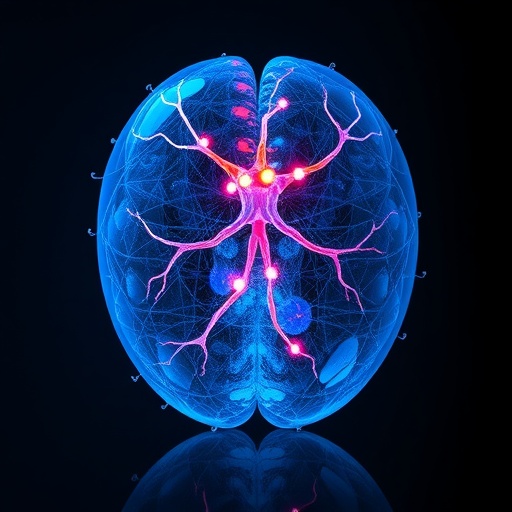
In a groundbreaking exploration of the human brain’s intricate functions, researchers at Cedars-Sinai Health Sciences University have unveiled remarkable insights into why images of previously observed objects reappear with vivid clarity when recalled from memory. This pioneering study, recently published in the esteemed journal Science, reveals a fascinating neural mechanism that bridges visual perception and imagination, elucidating how our brains recreate images internally with high fidelity.
At the heart of this discovery lies the observation that the same populations of neurons responsible for perceiving an object are reactivated during the act of imagining that object. By pinpointing this neural overlap, the research team offers the first detailed understanding of the shared code that the brain employs not only to see but also to conjure mental images. This revelation opens new frontiers in cognitive neuroscience by explicating the biological foundations of visual imagination.
The investigation was led by Dr. Ueli Rutishauser, director of the Center for Neural Science and Medicine at Cedars-Sinai and a professor specializing in Neurosurgery, Neurology, and Biomedical Sciences. Dr. Rutishauser explains, “When we mentally generate an image of a previously encountered object, we effectively ‘reactivate’ the same neurons that were involved in the initial visual experience.” This neural reactivation employs a specific code, essentially the brain’s language for representing visual information, allowing for the reconstruction of images within our mind’s eye.
Such findings not only enhance our grasp of cognitive processes but have profound implications for creative disciplines. Visual imagination is fundamental to artistry and innovation, and understanding its neural underpinnings could foster advancements in how we harness creativity or rehabilitate mental health. The study thus stands at the intersection of neuroscience and clinical application.
Dr. Adam Mamelak, director of the Functional Neurosurgery Program and co-author of the study, highlighted potential therapeutic avenues stemming from this work. By decrypting how the brain controls visual imagery, these insights could inform new treatments for psychiatric disorders such as post-traumatic stress disorder (PTSD) and obsessive-compulsive disorder (OCD), conditions often characterized by disruptive and uncontrollable mental images. The prospect of targeting specific neural patterns offers new hope for managing such illnesses.
The study’s methodology leveraged the unique opportunity presented by 16 adult epilepsy patients undergoing invasive monitoring. These individuals had electrodes temporarily implanted within their brains to locate seizure foci, providing a rare window into single-neuron activity. Participants were shown a series of images depicting faces and objects, followed by tasks where they were asked to mentally visualize these images from memory, allowing researchers to record neural responses during both perception and imagination.
Significantly, neurons in the fusiform gyrus—a brain region key for high-order visual processing and face recognition—exhibited robust activity during image viewing. For approximately 80% of neurons responsive to visual stimuli, researchers successfully decoded the precise image features to which these neurons were tuned, effectively cracking the brain’s visual code. Strikingly, when participants later imagined the images, around 40% of these same neurons reactivated using an identical code, recreating the neural signature associated with the original visual experience.
Advanced artificial intelligence played a pivotal role in decoding neuronal activity throughout the study. Utilizing deep visual neural networks, the team generated quantitative descriptors of the visual stimuli, facilitating a rigorous analysis of the neural coding scheme. Further, generative AI models produced novel synthetic images which were then used to test predictions about neuronal responses, successfully validating the neural code identified. This synergy between neuroscience and machine learning exemplifies modern interdisciplinary research.
The significance of this research extends beyond humans. It builds upon prior work by Dr. Doris Y. Tsao from the University of California, Berkeley, who identified a similar neural code for object recognition in nonhuman primates. The current study not only confirms the presence of this shared neural coding in humans but crucially demonstrates its role in bridging perception with imagination. This confirmation across species deepens our evolutionary understanding of visual information processing.
Moreover, the study’s findings bear weighty implications for psychiatric science. If perception and imagination rely on overlapping neural substrates, disruptions in this shared code could underlie difficulties in differentiating real from imagined experiences—a hallmark of several mental health disorders. Recognizing this opens new avenues for inquiry into how mental imagery is regulated in both health and disease.
Despite these advancements, the researchers acknowledge unresolved questions. It remains unclear what precisely triggers the reactivation of neurons during imagination, or how memory systems selectively engage the relevant neuronal subsets to reconstruct specific objects. Future investigations will need to unravel these initiation and selection mechanisms to fully comprehend the cognitive architecture governing visual imagery.
The study’s collaborative nature is noteworthy, with contributions from Cedars-Sinai investigators including C.M. Reed, J.M. Chung, and L.M. Bateman, as well as interdisciplinary support from computational scientists. Significant funding was provided by the National Institutes of Health’s BRAIN Initiative, the Howard Hughes Medical Institute, the Simons Foundation, and the Chen Center for Systems Neuroscience, reflecting broad institutional investment in understanding brain function.
As neuroscience enters an era shaped by new technologies and AI integration, this research exemplifies how decoding the language of neurons can uncover the intimate relationship between seeing and imagining. By delineating the neural code that unites these processes, Cedars-Sinai’s study charts a course toward unlocking the mysteries of human cognition, with promising clinical and creative implications on the horizon.
Subject of Research: Neural mechanisms underlying visual perception and imagination in the human brain
Article Title: A shared code for perceiving and imagining objects in human ventral temporal cortex
News Publication Date: 9-Apr-2026
Web References: DOI: 10.1126/science.adt8343
References:
Rutishauser U, Tsao DY, Mamelak A, et al. A shared code for perceiving and imagining objects in human ventral temporal cortex. Science. 2026 Apr 9; DOI: 10.1126/science.adt8343.
Keywords: Memory, Visual perception, Mental imagery, Neural code, Fusiform gyrus, Neuroscience, Artificial intelligence, Brain-machine interface, Psychiatric disorders, Epilepsy, Cognitive neuroscience


