

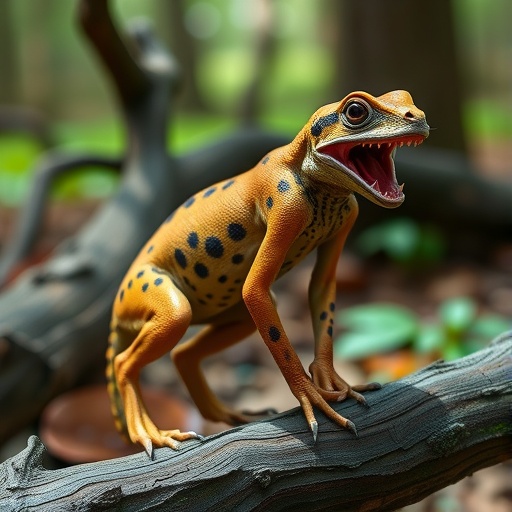
In the face of rapidly transforming ecosystems, animals across the biological spectrum—from simple mollusks to intelligent birds like crows—exhibit remarkable behavioral flexibility that enhances their survival prospects. This adaptability is not merely reactive but plays a pivotal role in shaping the evolutionary trajectories of these species. For instance, marmots and ground squirrels located in California have adjusted their behaviors in response to regional warming by increasingly occupying wet vegetation zones and traversing steep slopes, thereby mitigating thermal stress. Similarly, polar bears, confronted with the alarming decline of their icy habitats, are exhibiting dietary shifts that include terrestrial food sources such as bird eggs and reindeer, and spending extended periods on land. In Ontario’s lake ecosystems, lake trout modify habitat preferences by migrating to cooler, deeper waters as surface temperatures rise; concurrently, these fishes tend to consume smaller prey, a behavioral modification linked to metabolic demands.
Such behavioral plasticity not only facilitates immediate survival but also influences the pace and direction of physiological evolution within species. Yet, despite its acknowledged significance, integrating behavioral dynamics into evolutionary models has been a major scientific challenge. This difficulty primarily stems from the considerable variability in behavioral responses, both inter- and intra-specifically, to comparable environmental pressures. Consequently, this heterogeneity has impeded the development of universal predictive frameworks tied to how organisms’ physical traits might evolve in the context of climate perturbations.
Addressing this gap, Carlos Botero, an associate professor specializing in integrative biology at The University of Texas at Austin, introduces a novel computational model detailed in the journal Nature Communications. This model uniquely incorporates behavioral flexibility as a dynamic variable influencing evolutionary change, circumventing the need to catalogue each species’ distinct behavioral adaptations individually. Instead, it quantifies the capacity for behavioral adjustment itself, positing that this meta-trait crucially modulates evolutionary outcomes. This conceptual advance holds great promise for conservation biology, offering more nuanced tools for assessing species’ resilience or vulnerability in a rapidly warming world.
Botero’s approach departs from traditional evolutionary models by simulating the evolutionary process in populations numbering thousands of individuals over hundreds of generations, focusing on the evolutionary trajectory of a singular physiological trait, such as modifications in thermal insulation thickness. Importantly, this model elucidates how behavioral flexibility dampens selective pressures that would otherwise drive rapid physical evolution. In populations manifesting high behavioral adaptability, maladaptive traits are effectively buffered by behavioral compensation, which alleviates the necessity for swift physiological changes.
This insight yields a counterintuitive revelation: species that demonstrate the greatest behavioral adaptability tend to undergo slower physical evolution because their behaviors shield them from direct selective pressures. Evolutionary stasis in such groups is not a consequence of difficulty in adaptation but rather a strategic bypass of biological necessity. Conversely, species with limited behavioral responses are subject to stronger evolutionary pressure to adjust physically, often resulting in rapid trait evolution.
Intriguingly, Botero discovered that species exhibiting intermediate levels of behavioral flexibility—not those at the extremes—display the highest propensity for generating biological novelty and speciation when their environmental circumstances become variable. This moderate level of flexibility strikes a crucial evolutionary balance, enabling organisms to explore and exploit new habitats without completely negating the need for adaptive physiological modifications. Thus, these lineages can both buffer environmental challenges behaviorally and maintain evolutionary momentum, catalyzing biodiversity.
The implications of this research are profound, challenging long-standing assumptions in evolutionary biology and conservation science. Historically, species characterized by slow physiological evolution were presumed to be at increased risk under climate change scenarios; Botero’s findings suggest the narrative is more complex. Behavioral flexibility emerges as a critical factor mediating risk, with the potential to both shield species from immediate threats and modulate the pace of their evolutionary responses.
Moreover, Botero’s modeling underscores the multifaceted role of behavior as both an ecological and evolutionary driver. It acts not only as an acute survival mechanism but also as a broader agent shaping the tempo and mode of species diversification. The model bridges ecology and evolution, laying groundwork to anticipate how species might fare under ongoing and future climate fluctuations more reliably.
This conceptual framework also invites re-examination of conservation priorities. Species groups previously classified as evolutionarily constrained might be re-assessed considering their behavioral plasticity profiles. Such refined evaluations can inform targeted conservation strategies that account for the interplay between behavior and evolution, potentially enhancing management efficacy in preserving biodiversity under climate change.
Furthermore, the methodology used—computational simulation of evolutionary processes incorporating behavioral flexibility—heralds a new era in ecological modeling. It reflects an integrative paradigm that can assimilate complex, variable traits and dynamic responses, moving beyond static or oversimplified assumptions about species adaptation capacities.
As global climates continue to shift unpredictably, deciphering the mechanisms underlying species’ adaptive capacities becomes indispensable. Botero’s contribution offers a potent lens to unravel this complexity, harmonizing empirical behavioral observations with evolutionary theory via robust computational tools. It accentuates the vital role of behavioral plasticity as a malleable trait with significant evolutionary leverage.
Ultimately, the study invites a paradigm shift in how biologists understand and predict species’ resilience. It highlights that the pathways to adaptation are not solely carved by genetic and physiological changes but are intricately entwined with flexible behavioral repertoires that mediate environmental interactions. Recognizing this synergy is essential for advancing evolutionary biology and developing conservation frameworks that are realistic and responsive to the challenges of a warming planet.
Carlos Botero’s findings thus represent a significant advance in evolutionary ecology, offering a sophisticated, empirically grounded model that integrates behavior and evolution. Its insights are poised to influence both scientific understanding and practical conservation efforts amid one of the most pressing issues of our time—climate change and its impact on biodiversity.
Subject of Research: Not applicable
Article Title: The evolutionary consequences of behavioural plasticity
News Publication Date: 13-Mar-2026
Web References:
https://www.nature.com/articles/s41467-026-70632-8
http://dx.doi.org/10.1038/s41467-026-70632-8
Keywords
Conservation biology, Applied ecology, Conservation ecology, Ecological modeling, Evolution, Ecological adaptation, Ecological speciation, Climate change, Climate change adaptation


