

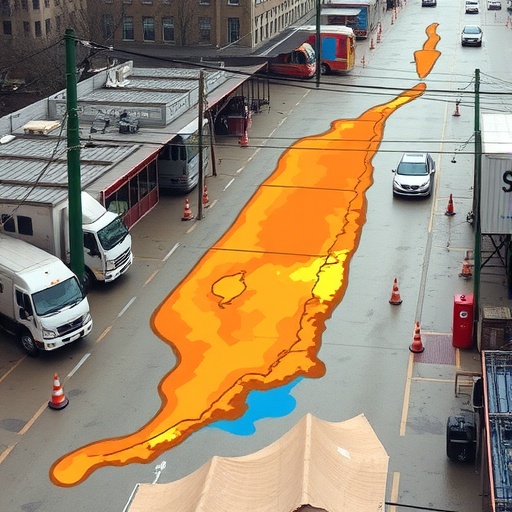
As urban centers around the world face increasing threats from climate change, the challenge of managing urban flooding has grown more urgent and complex. Yet, new research highlights a sobering reality: many of the adaptive measures designed to protect cities from flooding may inadvertently entrench and deepen existing social and environmental injustices. A recent perspective article published in Nature Water provides a rigorous examination of how climate adaptation efforts, when not mindfully implemented, frequently reinforce cycles of inequality, especially among the most marginalized communities.
Urban flooding hazards are escalating globally due to climate-induced shifts in weather patterns, including increased precipitation intensity, sea-level rise, and storm surges. However, these risks do not affect all urban residents equally. Vulnerable groups—often delineated by race, socioeconomic status, gender, and migration status—disproportionately endure the brunt of flooding impacts. Historical factors such as residential segregation, redlining, and discriminatory land-use planning have concentrated these populations in areas with higher flood exposure and lower-quality infrastructure. Consequently, floodwaters inundate neighborhoods that simultaneously have limited social and financial capital to mitigate and recover from disasters.
One persistent issue lies in the disproportionate siting of polluting infrastructure like wastewater treatment plants and combined sewer systems in communities of color, an enduring legacy of environmental racism. This results in these communities facing exposure not only to floodwaters but also to untreated sewage and toxic contaminants released during storm events. Cities such as Mobile, Alabama; Baton Rouge, Louisiana; and Jackson, Mississippi, illustrate these injustices, where systemic racism in infrastructure placement has exacerbated environmental health risks. The inequities are compounded by lower access to resources such as flood insurance, credit facilities, and governmental recovery funds, leaving vulnerable households more susceptible to long-term displacement and impoverishment following floods.
Adaptation strategies themselves can unintentionally exacerbate inequalities when they fail to incorporate historical context and social dynamics into planning and implementation. For example, in St. Louis, Missouri, the city’s efforts to address combined sewer overflows were divided along racial and socioeconomic lines. The predominantly white, affluent areas received costly infrastructure upgrades, including new pipes and storage tanks, while the poorer, predominantly Black neighborhoods were assigned lower-cost “green” solutions like rain gardens. Although these gardens serve an ecological function in managing stormwater, the ongoing burden of maintenance was disproportionately placed on communities with fewer financial and labor resources, highlighting a disparity in environmental service allocation.
This divide is emblematic of a larger issue: the lack of awareness in engineering and scientific communities about how historical and structural inequalities shape contemporary environmental vulnerabilities. Climate adaptation is often approached as a technical problem, ignoring the complex societal contexts within which flooding occurs. The prioritization of economically profitable investments and market-based tools further marginalizes vulnerable populations. Programs that incentivize green infrastructure implementation frequently require property ownership, thereby excluding renters and informal settlers from participation and benefits.
Moreover, adaptation efforts that succeed in wealthier neighborhoods can indirectly harm less privileged communities by redirecting floodwaters towards lower-income areas, a phenomenon known as “flood water displacement.” Such reallocations exacerbate social tensions and deepen inequities, underscoring the necessity for comprehensive, equitable planning processes.
There is also a critical intersection between climate adaptation and gentrification. Urban greening initiatives, intended to improve flood resilience and livability, can boost property values and attract wealthier residents, resulting in the displacement of long-term residents of color and working-class families. Case studies from Medellín, Colombia, and São Paulo, Brazil, reveal that large-scale nature-based flood control projects risk uprooting informal settlement communities, dismantling social networks critical for resilience, and thereby weakening communal adaptive capacities.
Addressing these challenges requires transformative strategies that prioritize equity at their core. Central to this is the concept of centering racial justice in adaptation planning, where broader social needs—such as access to healthcare, education, and livelihoods—are integral to enhancing adaptive capacity. Authentic inclusion demands co-production processes wherein community members actively participate in problem definition, goal-setting, solution development, and success evaluation. This approach challenges traditional top-down decision-making by distributing power more equitably and incorporating locally grounded knowledge.
Effective governance mechanisms are equally vital, with emphasis on transparency, accountability, and the rectification of historical power imbalances. Public participation must transcend tokenistic consultation and become a genuine instrument for shaping climate responses. Furthermore, adaptive management approaches, which embed continuous learning and flexibility within projects, ensure that strategies remain responsive to evolving risks and community values. Success metrics should be co-created with communities to reflect locally relevant outcomes rather than externally imposed standards.
While these systemic changes are complex and multifaceted, emergent case studies reinforce their feasibility and efficacy. In Bogotá, Colombia, grassroots organizations such as Arraigo exemplify community-led resilience by deploying nature-based interventions that mitigate landslide and flood risks while enhancing food security. Their locally driven terraces and catchment basins underscore the potential of bottom-up solutions tailored to context-specific vulnerabilities.
In Austin, Texas, the Dove Springs Climate Navigator program innovatively bridges local knowledge with municipal planning by establishing two-way information sharing about flooding experiences. Importantly, this initiative compensates participants, fostering trust and sustaining engagement. Such models of equitable co-production demonstrate how community investment is essential for creating adaptive solutions that genuinely serve marginalized populations.
Similarly, in Atlanta, Georgia, historical community activism influenced municipal infrastructure decisions to prevent the discharge of untreated wastewater in minority neighborhoods, showcasing how empowered localized resistance can promote more just environmental outcomes. It signals that transformative adaptation is achievable when communities possess both voice and leverage in decision-making.
This perspective article underscores an urgent imperative in climate adaptation scholarship and practice: without confronting and dismantling the embedded legacies of oppression, efforts to mitigate urban flood risks risk perpetuating cycles of injustice. Instead, through intentional, equitable strategies grounded in social justice, inclusive governance, and adaptive flexibility, there lies an opportunity not only to enhance urban resilience but also to repair historic inequities.
Ultimately, equitable flood management must transcend technical fixes and embrace social dimensions that amplify marginalized voices, foster shared power, and affirm community knowledge. This holistic approach is not only ethically imperative but also foundational to sustainable and effective climate adaptation—offering a blueprint for cities worldwide grappling with the intertwined challenges of environmental change and social justice.
Subject of Research: Urban flood management, climate adaptation, environmental justice
Article Title: Transformative adaptation needed to break cycles of inequitable urban flood management
News Publication Date: February 4, 2026
Web References:
- https://www.nature.com/articles/s44221-025-00569-7
- https://serc.si.edu/staff/rebecca-hale/haler9132022
- https://www.caryinstitute.org/science/our-scientists/elizabeth-cook
- https://rivercenter.uga.edu/people/krista-capps/
- https://racheldscarlett.weebly.com/
References:
Hale, R.L., Capps, K., Cook, E.M., Scarlett, R. (2026). Transformative adaptation needed to break cycles of inequitable urban flood management. Nature Water. DOI: 10.1038/s44221-025-00569-7
Image Credits: Pamela Andrade, CC BY 2.0
Keywords: climate change adaptation, urban flooding, environmental justice, co-production, green infrastructure, adaptive management, racial equity, urban resilience, flood risk, social vulnerability


