

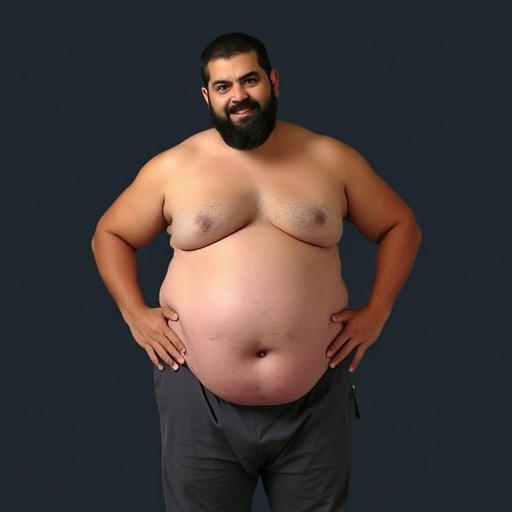
In the evolving landscape of global health, obesity stands as one of the most pressing challenges, fundamentally linked to a staggering array of chronic conditions, including cardiovascular disease, diabetes, and dyslipidemia. Traditional metrics, notably those standardized by the World Health Organization (WHO), have long served as the backbone for diagnosing obesity across diverse populations. Yet, these generalized benchmarks may fall short in fully capturing the nuanced health risks that obesity poses in distinct ethnic groups or regions. A groundbreaking study, recently published in the International Journal of Obesity, shines a spotlight on this critical gap by investigating anthropometric cut-points tailored specifically for Qatari adults, aiming to refine the detection of obesity and its cardiovascular repercussions based on sex-specific and population-specific criteria.
The implications of this research transcend mere academic curiosity, reaching into the very heart of clinical practice and public health policies in the Middle East. As Qatar rapidly undergoes demographic and lifestyle transformations, fueled by urbanization and changing dietary habits, the prevalence of obesity-related conditions soars correspondingly. Conventional international guidelines, while broad and globally-oriented, may not sufficiently mirror the unique physiological and metabolic profiles of Qatari men and women. This study’s pioneering approach to establishing localized, sex-specific anthropometric cut-points serves not only to improve diagnostic accuracy but also to enhance early intervention strategies, ultimately aiming to mitigate the cascading effects of obesity-related diseases in this population.
Central to the study’s methodology was the recognition that body composition and fat distribution patterns differ markedly across populations. Standardized measures such as Body Mass Index (BMI) often inadequately account for these variations, sometimes leading to misclassification — either underestimating or overestimating risk. The researchers conducted a comprehensive analysis involving an extensive cohort of Qatari adults, collecting detailed anthropometric data alongside cardiovascular health indicators. Employing robust statistical techniques, they derived optimized cut-points that better correlate with cardiovascular risk parameters, offering a more precise tool for clinicians working within Qatar’s healthcare system.
One of the most striking revelations from the study is the pronounced discrepancy between WHO-recommended thresholds and the newly identified Qatari-specific cut-points. For both men and women, these revised limits often differ, underscoring the crucial need for sex-specific adjustments. Men, for example, may require a different waist circumference and BMI benchmark to accurately reflect their cardiovascular risk profile, compared to women, whose fat distribution patterns and associated risks manifest differently. Such sex-specific differentiation is vital, as biological and hormonal factors significantly influence obesity’s impact on cardiovascular health and metabolic syndrome manifestation.
Beyond the immediate clinical utility, the study also emphasizes the broader epidemiological consequences of misclassification. When global cut-points are universally applied, a substantial portion of the Qatari population at genuine risk may remain undiagnosed or inappropriately categorized as healthy. This underestimation poses a grave public health challenge, as unidentified high-risk individuals miss out on timely lifestyle interventions, pharmacological treatments, and monitoring. Conversely, some individuals might be labeled obese unnecessarily, inviting unwarranted stigma and potential healthcare resource misallocation. The tailored cut-points derived in this research thus promise to recalibrate screening processes, ensuring both sensitivity and specificity in risk detection.
The researchers carefully validated their proposed cut-points through cross-referencing with cardiovascular disease markers such as blood pressure, lipid profiles, and insulin resistance measures. This multi-pronged validation approach lends substantial credibility to their findings, demonstrating that the newly established anthropometric thresholds align closely with clinically significant outcomes rather than mere statistical artifacts. Such rigor fortifies the argument for adopting these sex- and population-specific benchmarks in clinical guidelines and public health frameworks within Qatar and potentially neighboring Gulf countries sharing similar demographic traits.
Importantly, this study also underscores the limitations of BMI as a standalone measure in obesity assessment. While BMI has long been favored for its simplicity, it does not differentiate between muscle and fat mass or consider fat distribution, which is a crucial determinant of cardiovascular risk. The incorporation of additional anthropometric indicators, such as waist circumference and waist-to-hip ratio, into the cut-point derivation presents a more holistic assessment strategy. This nuanced approach reflects a growing trend in obesity research, advocating for multifactorial evaluation rather than reliance on singular measures.
The research further raises critical considerations about the translatability of global health policies. The one-size-fits-all nature of international guidelines may inadvertently perpetuate health disparities, particularly among populations with distinct genetic, environmental, and cultural backgrounds. Qatar’s case exemplifies how regional and ethnic-specific research is essential for crafting effective health interventions. Policymakers are encouraged to integrate such locally generated evidence into national health strategies, thereby optimizing resource allocation and maximizing the impact of preventive and therapeutic measures.
Expanding the scope beyond Qatar, the study invites researchers worldwide to reevaluate anthropometric thresholds within their specific populations. It points to a paradigm shift toward personalized medicine and population-based customization in public health. While the global framework provided by organizations like WHO remains indispensable, complementary localized standards could refine disease prediction models and enhance care delivery worldwide. This approach resonates with precision health initiatives that prioritize tailoring healthcare to individual and group-level variations.
Another fascinating aspect highlighted by the research is the interplay between urbanization, lifestyle changes, and anthropometric profiles in obese populations. Qatar’s rapid modernization has led to sedentary lifestyles and dietary shifts favoring energy-dense, processed foods, contributing to altered fat accumulation and cardiovascular risk patterns. The derived cut-points mirror these socio-economic dynamics, making them not only clinically relevant but also a potential indicator of lifestyle-induced health transitions. This insight reinforces the necessity of dynamic, context-aware health assessment tools that evolve alongside population health trends.
Moreover, the implications for clinical practice are profound. General practitioners, cardiologists, and endocrinologists operating in Qatar can now utilize these refined cut-points to stratify patients more effectively, personalize treatment plans, and monitor disease progression or remission with greater precision. This contributes to more efficient clinical decision-making and improved patient outcomes. Additionally, healthcare providers may leverage these findings to educate patients about their unique health risks, fostering greater awareness and adherence to preventive measures.
The study also advocates for the incorporation of advanced technologies and data analytics in anthropometric research. Utilizing statistical modeling and predictive analytics enabled the research team to identify cut-points that are statistically and clinically meaningful. As these tools become increasingly accessible, future investigations may further enhance the granularity and accuracy of anthropometric risk assessment by integrating genetic, metabolic, and lifestyle data, thus transcending traditional measurement boundaries.
Importantly, the dialogue surrounding obesity and cardiovascular health is rarely static—it must continuously adapt as new evidence emerges. This research exemplifies the progressive nature of scientific inquiry, illustrating how localized data can challenge, refine, or even overturn established norms. It serves as a call to action for global health communities to embrace a more modular approach in developing diagnostic criteria that are sensitive to cultural, environmental, and biological diversity.
Public health ramifications extend beyond individual diagnostics. Adoption of population-specific thresholds may transform obesity surveillance programs in Qatar, enabling more precise tracking of disease prevalence and risk factor evolution over time. This intelligence can guide targeted community interventions, resource prioritization, and policy reforms tailored to Qatar’s demographic realities. As cardiovascular disease burden intensifies worldwide, nuanced approaches like those proposed here could dramatically alter the trajectory of chronic disease management on a national scale.
Lastly, this research not only advances scientific understanding but also contributes to social equity in healthcare. By mitigating the risk of misclassification, it promotes fairness in disease prevention and treatment access, reducing the likelihood of population subgroups being marginalized due to diagnostic inaccuracies. As health disparities increasingly attract global attention, studies such as this underscore the importance of equity-focused research to ensure all populations receive optimal, evidence-based care.
In sum, the derivation of sex-specific, Qatari population-centric anthropometric cut-points redefines the frontier of obesity and cardiovascular risk assessment. It challenges reliance on generalized global standards and paves the way for tailored health metrics that resonate with the biological and socio-cultural realities of distinct populations. As obesity continues to fuel the global epidemic of cardiovascular diseases, such innovative approaches in research and clinical practice are imperative, signaling a future where precision health and localized epidemiology converge to deliver superior outcomes for all.
Subject of Research: Deriving sex-specific anthropometric cut-points for obesity and cardiovascular disease risk in Qatari adults.
Article Title: Deriving sex-specific anthropometric cut-points for obesity and cardiovascular disease risk in Qatari adults.
Article References:
Ajeen, R., Turk-Adawi, K.I., Ammerman, A.S. et al. Deriving sex-specific anthropometric cut-points for obesity and cardiovascular disease risk in Qatari adults. Int J Obes (2025). https://doi.org/10.1038/s41366-025-01947-7
Image Credits: AI Generated
DOI: 10 December 2025


