

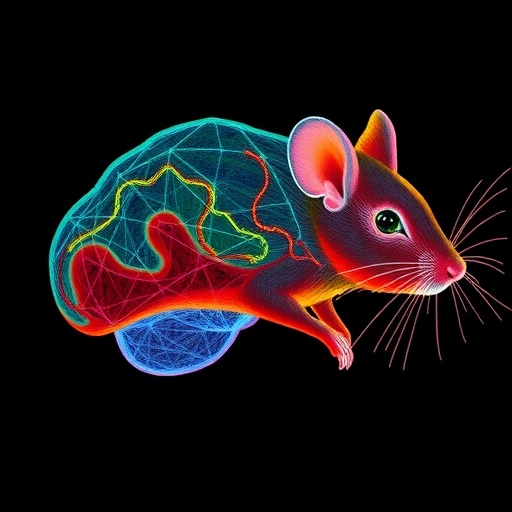
In a groundbreaking study published in Nature, researchers at UCLA Health have unveiled critical insights into the neural mechanisms that underlie prosocial behavior—those acts of helping and comforting others—by revealing their deep evolutionary and neurobiological roots connected to parental care. This discovery bridges a longstanding gap in understanding the motivation behind empathy and why it sometimes falters in individuals, shedding new light on social behaviors across species.
The research builds on a profound evolutionary hypothesis that suggests prosocial behaviors may not have evolved as isolated phenomena, but rather co-opted pre-existing neural systems originally dedicated to parenting. Despite the historical speculation surrounding this theory, the specific brain circuits linking caregiving to helping others, especially beyond offspring, remained elusive until this landmark investigation.
In their study, the UCLA team employed mice as a model organism to probe the neural architecture involved in two seemingly distinct social behaviors: nurturing offspring and comforting distressed peer adults. By conducting carefully controlled observational studies, the scientists found that the extent to which mice cared for their pups was positively correlated with how much time they spent consoling stressed adult companions. These findings pointed to a specific behavioral synergy that transcends mere social interaction, hinting at shared underlying neural substrates.
To delve deeper into the mechanistic basis of this phenomenon, the researchers monitored neural activity in the medial preoptic area (MPOA) — a key brain region historically associated with parenting behaviors. Remarkably, the MPOA exhibited activation not only during pup care but also when the adult mice encountered stressed peers, indicating the same population of neurons might be supporting both behaviors. This neural overlap suggests that caregiving circuits have broader functions than previously appreciated.
Further experimental manipulations demonstrated this connection with striking clarity. Selective silencing of MPOA neurons activated during pup care resulted in a dramatic reduction in the mice’s willingness to engage in comforting behaviors toward distressed adults. This causal evidence decisively links the neural circuits involved in parenting with those underpinning prosocial, empathic behaviors toward unrelated individuals, underscoring a shared neurobiological foundation.
An exploration of the broader neural pathways revealed that the MPOA communicates directly with the brain’s dopamine reward circuitry, specifically the nucleus accumbens. Both parenting activities and comforting of stressed peers triggered dopamine release in this reward center, emphasizing that helping behaviors are intrinsically motivating and rewarding. This newly identified MPOA-to-dopamine pathway likely evolved to reinforce caregiving efforts through positive feedback, further rooting social support motivations in ancient neural systems.
This elegant study reframes the medial preoptic area not as a parenting-exclusive locus but as a general hub for other-directed care, a critical node where evolutionary pressures sculpted the neural architecture enabling complex social cooperation. Such insights illuminate parallels across many social species, including humans, where the capacity to console and support others fortifies social communities.
The implications extend far beyond basic science. Understanding the neurocircuitry mediating strong prosocial drives also opens potential avenues for addressing social dysfunction seen in psychiatric disorders such as depression and autism spectrum disorder. Many of these conditions are characterized by social withdrawal and a diminished capacity for empathy; dissecting the neural substrates involved offers hope for novel therapeutic targets that could restore healthy social engagement.
As a next step, the UCLA researchers are embarking on studies to decipher why inherent differences exist between individuals regarding their prosocial tendencies. Genetic, epigenetic, and environmental factors likely modulate these brain circuits, contributing to the variability observed in empathy and caregiving behaviors. Decoding these influences could deepen our understanding of the nexus between biology and social personality traits.
Moreover, the team aims to evaluate animal models of neuropsychiatric disorders to examine potential disruptions within the MPOA and its dopaminergic projections. Should these circuits prove compromised, it may explain the social deficits often encountered. The prospect of therapeutically modulating this circuitry to revive social motivation is an exciting frontier envisioned by these findings.
Senior author Weizhe Hong, a professor in UCLA’s Departments of Neurobiology and Biological Chemistry, emphasizes the profound significance of these results: “We show that the same circuits that enable animals to care for their offspring also drive helping and comforting behaviors toward distressed adults, highlighting a common neural basis that may shape empathy, cooperation and the formation of supportive social communities.” This statement encapsulates the transformative impact of this research on neuroscience and our comprehension of social behavior.
By illuminating the deep evolutionary roots and specific neural substrates shared by parenting and prosocial behaviors, this study provides a conceptual framework that could unify diverse fields—from ethology and evolutionary biology to clinical psychiatry and social neuroscience. The brain’s ancient parenting circuitry emerges as a fundamental scaffold, one upon which the complex tapestry of empathy and social cooperation is woven.
Ultimately, this research reminds us that the capacity for empathy and altruism is not merely a cultural overlay but rests on conserved biological machinery hardwired in the brain’s architecture. Helping others, motivated by ancient circuits designed for offspring care, is intrinsically rewarding and vital for the cohesion and resilience of social groups, providing a neurobiological basis for kindness itself.
Subject of Research: Animals
Article Title: Shared neural substrates of prosocial and parenting behaviors
News Publication Date: 4-Mar-2026
Web References: DOI: 10.1038/s41586-026-10327-8
Keywords: Behavioral neuroscience, prosocial behavior, empathy, parenting circuitry, medial preoptic area, dopamine reward system, social motivation, neuropsychiatric disorders, mice model, social neuroscience


