

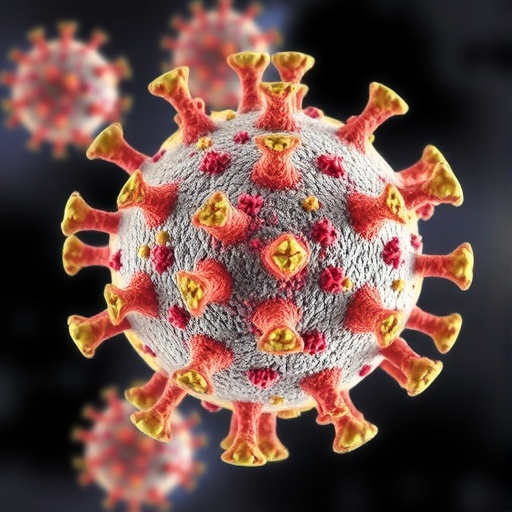
In a breakthrough that promises to reshape the landscape of infectious disease research, scientists at The University of Texas at Austin have unveiled the highest resolution molecular structure ever documented of the Andes virus Gn-Gc tetramer—a critical protein complex facilitating viral entry into human cells. This landmark achievement not only advances our understanding of hantaviruses, notorious for a mortality rate near 40%, but also illuminates a promising path toward urgently needed vaccines and antibody therapies against these deadly pathogens.
Hantaviruses, transmitted primarily through rodents, represent a global health threat exacerbated by the absence of approved vaccines or treatments. The Andes virus, endemic to regions of the southwestern United States as well as parts of North and South America, has been responsible for severe outbreaks, including fatal infections such as the one reported last year in New Mexico. The research team’s detailed structural elucidation of the virus’s surface architecture is a foundational stride in battling these viruses before they spiral into widespread pandemics.
Central to the Andes virus’s infectivity is the Gn-Gc tetramer, a mushroom-shaped assembly of glycoproteins meticulously orchestrated on the viral surface. The team engineered virus-like particles—synthetic mimics devoid of viral genetic material—to safely analyze this complex. Employing cutting-edge cryo-electron microscopy (cryo-EM), which captures molecular shadows by transmitting electrons through vitrified samples, researchers reconstructed the Gn-Gc tetramers with unprecedented clarity. This technique exploits electron scattering to resolve molecular shapes at near-atomic scales.
A distinctive aspect of this study lies in the team’s novel approach to data refinement. They selectively isolated cryo-EM images of tetramers oriented perpendicular to the electron beam, while excluding other orientations. This selective curation allowed them to repurpose algorithmic reconstruction methods originally designed for isolated proteins rather than virus surface assemblies. The resulting 3D molecular maps feature an extraordinary resolution of 2.3 angstroms—fine enough to distinguish details on the scale of just a few atoms. This represents a quantum leap in structural precision compared to prior models resolving at approximately 12 angstroms, which were prone to inaccuracies.
The intricate details captured in this high-resolution structure reveal the conformational subtleties of the viral glycoprotein complex prior to cell attachment and fusion. This “pre-fusion” state is crucial for rational vaccine design because it informs how to stabilize the protein conformation so the immune system can recognize and neutralize the virus effectively. Once the virus initiates fusion with host cells, its surface proteins rearrange, rendering antibody targeting more challenging. The research team plans to leverage artificial intelligence-driven protein engineering to introduce stabilizing mutations that lock the tetramer in its vulnerable pre-fusion state, a strategy increasingly recognized as transformative in contemporary viral vaccine development.
The significance of this advance is underscored by the timing of NIH’s recent pandemic preparedness initiatives, which identified hantaviruses among the top viral families posing urgent pandemic risks. Funding channels through programs like ReVAMPP and the Provident consortium have catalyzed collaborative efforts, facilitating state-of-the-art structural studies and accelerating therapeutic innovation. The UT Austin team’s cross-institutional partnerships—with Texas A&M University, UT Southwestern Medical Center, and biotech firm HDT Bio—exemplify the integrative research model needed to confront emerging viral threats.
Notably, the team moved swiftly beyond characterization by engineering a vaccine candidate based on the high-resolution structural template. When administered to mice, this candidate elicited robust neutralizing antibody responses against the Andes virus, validating the functional utility of their structural findings. This success marks a milestone in translating nanoscale molecular insight into practical medical countermeasures that could one day reduce hantavirus mortality globally.
Beyond immediate vaccine implications, the methodology pioneered here—precise selection of favorable particle orientation coupled with advanced cryo-EM—promises broad applicability across virology. McLellan and colleagues anticipate that these techniques will empower researchers studying other challenging viral surface proteins, elevating our capacity to dissect and target viral architecture with surgical precision.
The team’s future trajectory involves both elucidating the structural dynamics of the Gn-Gc tetramers during infection and refining protein engineering approaches to enhance vaccine stability and efficacy. This dual focus integrates classical structural biology with avant-garde computational tools, reflecting a paradigm shift toward interdisciplinary strategies in infectious disease research.
In summary, this unprecedented high-resolution structural mapping of the Andes virus glycoprotein assembly unlocks new avenues for vaccine and antiviral development. As hantaviruses remain a looming pandemic threat with no current treatments, these insights represent a beacon of hope. By delineating the molecular blueprints of viral infection at near-atomic resolution, the researchers have provided the scientific community with powerful tools to design next-generation vaccines, neutralizing antibodies, and potentially antiviral drugs tailored to these deadly pathogens.
Subject of Research: Animals
Article Title: High-resolution in situ structures of hantavirus glycoprotein tetramers
News Publication Date: 27-Feb-2026
Web References:
DOI: 10.1016/j.cell.2026.01.030
References:
McLellan J.S., Guo L., et al. “High-resolution in situ structures of hantavirus glycoprotein tetramers,” Cell, 2026.
Image Credits: University of Texas at Austin
Keywords: Vaccine research, Hantavirus, Infectious diseases, Epidemics, Structural biology, Biomolecular structure


