

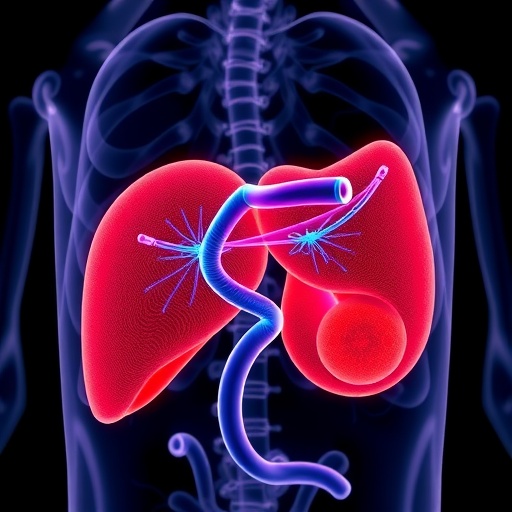
In a groundbreaking study published in the esteemed journal BMC Pediatrics, a team of researchers led by Huang, Y., Zhou, Y., and Xu, X. has developed a novel bleeding prediction model specifically designed for percutaneous liver biopsy in pediatric patients. This innovative model aims to address one of the significant risks associated with liver biopsies in children—bleeding complications. By utilizing an advanced combination of clinical data and machine learning algorithms, the researchers have not only created a predictive tool that seeks to enhance patient safety but also aims to improve decision-making processes in clinical settings.
Liver biopsies are critical procedures used to obtain liver tissue for diagnostic purposes, especially in children battling liver diseases. However, despite their therapeutic necessity, these procedures carry potential risks, including bleeding, which can lead to severe complications. The team recognized that the existing predictive measures lacked specificity and sensitivity, particularly for the pediatric population. Thus, the motivation to devise a more accurate bleeding prediction model became paramount, aiming to minimize risks and improve patient outcomes in this vulnerable demographic.
In their research, Huang and colleagues meticulously gathered a large dataset that encompassed numerous variables impacting bleeding risk. These included demographic factors such as age and weight, clinical presentation details, and the history of coagulopathy among patients. By extending their dataset to include over a significant number of cases, the researchers ensured a robust analysis capable of yielding reliable predictions. The attention to detail in data collection highlights the complexity of pediatric care, where nuances can significantly influence clinical outcomes.
One of the compelling features of this bleeding prediction model is its endorsement by a rigorous validation process. The research team employed statistical methods to assess the model’s effectiveness in predicting bleeding complications through a series of cross-validation techniques. The findings revealed a high degree of accuracy, notably surpassing existing models tailored for adult populations. This significant advancement emphasizes the importance of pediatric-specific research, advocating for tailored approaches in medical practice.
Moreover, the model utilizes advanced machine learning techniques, incorporating algorithms designed to handle multidimensional data. This element of the research underscores the innovative application of technology in medicine, showcasing how artificial intelligence can enhance clinical protocols. By intelligently analyzing complex interactions within the data, the model seeks to provide real-time predictions that can guide clinicians in their decision-making processes during liver biopsy procedures.
The implications of this groundbreaking work extend beyond immediate clinical applications. With the introduction of this bleeding prediction model, healthcare institutions can potentially see a decrease in complications arising from percutaneous liver biopsies. The ability to better stratify patients based on their individual bleeding risks could lead to more personalized and cautious approaches when determining the necessity and timing of biopsies. As a result, the researchers advocate for the integration of their model into routine clinical practice, which could contribute to a cultural shift toward data-driven decision-making in pediatric gastroenterology.
This development also opens up pathways for future research. The authors acknowledge that while their model shows promising results, the need for continuous evaluation and refinement remains critical. Future studies could explore the longitudinal effects of the model’s implementation, investigating its impact on broader patient populations and integrating feedback from clinicians directly involved in patient care. Their work serves as a blueprint for subsequent studies aiming to leverage machine learning in other domains of pediatric healthcare.
In light of these advancements, it is crucial to engage with the ethical implications of implementing such predictive technologies in clinical settings. The healthcare community must navigate the balance between innovation and safety, ensuring that tools designed to aid in predictive analytics do not compromise patient autonomy or the physician-patient relationship. Healthcare providers can leverage these tools to enhance patient care but must simultaneously remain vigilant against over-reliance on any automated system.
Furthermore, as pediatric liver diseases continue to rise globally, there is an urgent need for healthcare services to adapt to these changing circumstances. The establishment of effective and reliable prediction models can significantly influence treatment protocols, potentially resulting in improved long-term outcomes for young patients struggling with chronic liver conditions. The ongoing development and validation of such models could reshape the landscape of pediatric healthcare, offering hope not only to patients but also to their families facing the uncertainties of serious medical treatments.
This pioneering study has gained significant attention within the medical community, with many experts asserting that similar predictive models should be developed for other high-risk procedures in pediatrics. The potential for scalability is vast, as insights gained from the bleeding prediction model could be applicable to other intervention contexts where complications pose serious threats to patient safety. By fostering an environment of advanced, data-informed care, the researchers aspire to influence the next generation of medical practices.
In conclusion, Huang, Y., Zhou, Y., Xu, X., and their team have made a significant contribution to the field of pediatric medicine through their innovative bleeding prediction model. As they navigate the intersection of technology and clinical care, this research underscores the critical need for continued exploration within medical science, guiding practitioners in upholding the highest safety standards. The road forward beckons with promise, and the potential transformations in pediatric liver biopsy procedures stand as an exciting horizon for both doctors and patients alike.
Now, researchers and clinicians alike eagerly await further innovations and refinements that could arise from this foundational work, aspiring to build a healthcare system that continuously evolves in response to the needs of its youngest patients.
Subject of Research: Development of a bleeding prediction model for percutaneous liver biopsy in children
Article Title: Development and validation of bleeding prediction model for percutaneous liver biopsy in children.
Article References:
Huang, Y., Zhou, Y., Xu, X. et al. Development and validation of bleeding prediction model for percutaneous liver biopsy in children.
BMC Pediatr (2025). https://doi.org/10.1186/s12887-025-06341-w
Image Credits: AI Generated
DOI: 10.1186/s12887-025-06341-w
Keywords: bleeding prediction model, liver biopsy, pediatric patients, machine learning, clinical safety


