

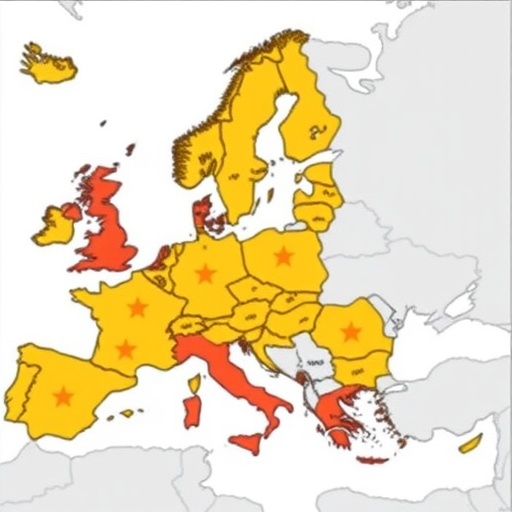
The increasing reliance on renewable energy sources necessitates a comprehensive understanding of their variability and the potential for what can be termed “energy droughts.” A recent study by Kittel and Schill, published in the journal Commun Earth Environ, delves into this critical subject, presenting an innovative approach to analyze the temporal dynamics of renewable energy availability across Europe. The researchers utilize a multi-threshold time series analysis, a methodology designed to capture fluctuations in renewable energy output over time, shedding light on significant patterns that may impact energy strategy and policy.
Renewable energy sources, particularly solar and wind, have been heralded as the solutions to combat climate change and reduce dependence on fossil fuels. However, their intermittent nature raises concerns about energy reliability. This study addresses these concerns head-on, providing a framework for understanding periods of low energy production, or “energy droughts,” which could hamper energy supply and economic stability. Kittel and Schill’s analysis covers various regions across Europe, making it not only timely but geographically comprehensive.
The methodology employed in this research is particularly noteworthy. Traditional methods often overlook the complexities involved in analyzing time series data, especially when dealing with multiple variables. By implementing a multi-threshold approach, the researchers are able to delineate periods of varying energy generation capabilities. This nuanced view of renewable energy output is paramount, as it allows policymakers and energy providers to pinpoint critical periods that elaborate on the relationship between resource availability and environmental conditions.
Furthermore, the significance of this study cannot be overstated in the context of Europe’s ambitious energy targets. The European Union has set forth goals for significant reductions in greenhouse gas emissions, necessitating an increased share of renewable energy in national grids. Understanding the inherent risks associated with energy droughts becomes central to ensuring these targets are met while also maintaining the integrity of energy supply systems. Kittel and Schill’s findings serve as a vital resource for energy planners seeking to navigate the tricky waters of sustainability and supply stability.
The study also tackles the implications of climate change on renewable energy sources. As global temperatures rise, extreme weather patterns are becoming more commonplace, which could further exacerbate the frequency and intensity of energy droughts. By utilizing a robust analytical framework, Kittel and Schill provide evidence that suggests varying regional vulnerabilities, highlighting the need for tailored solutions rather than a one-size-fits-all approach to energy policy.
Importantly, the research acknowledges that while renewable energy sources help diminish carbon footprints, their transition into the mainstream energy supply is fraught with challenges. The findings illustrate the need for advanced predictive models that incorporate upcoming weather patterns, technological advances, and consumer usage trends. The researchers advocate for more robust forecasting systems that can effectively manage the risks associated with variable renewable energy sources.
In their discussion, Kittel and Schill emphasize the role of technological innovation in mitigating the impact of energy droughts. They argue that harnessing advancements in energy storage and grid management could significantly buffer against the fluctuations inherent in renewable energy supply. Investments in battery technology and the development of smart grid systems could provide the flexibility needed for energy systems to thrive amidst variability.
Alongside the technical analysis, the implications of the findings extend to stakeholder collaboration. The study suggests that utility companies, policymakers, and technology developers must work together to develop integrated strategies that not only respond to energy drought scenarios but also preemptively prevent excess reliance on volatile sources. This integrated approach is essential for establishing a resilient future energy landscape for Europe.
Kittel and Schill’s work also raises questions about public perception and energy literacy concerning renewable resources. Raising awareness about renewable energy’s variable nature is crucial in garnering public support and understanding, enabling consumers to adapt to potential shortages or fluctuations in energy supply. Thus, educational programs should be an ongoing priority to bridge informational gaps and promote energy resilience among consumers.
Moreover, the authors provide directions for future research, indicating that the study’s framework could be adapted and applied in other geographical contexts. They stress the importance of examining how local meteorological conditions and socio-economic factors interact, suggesting that global energy systems might require diverse solutions depending on regional characteristics. Such insights could enhance global efforts toward achieving energy security and sustainability.
In conclusion, Kittel and Schill’s study presents a thorough examination of variable renewable energy droughts in Europe through a sophisticated analytical lens. Their findings underscore the urgency of preparing for energy variability in an era marked by significant climate fluctuations and unprecedented energy demands. By offering a detailed look at renewable energy’s performance and its broader implications for energy policy and strategy, the study establishes a significant foundation for future research and action in the pursuit of a more sustainable and resilient energy future for Europe.
Subject of Research: Characterization of variable renewable energy droughts in Europe through multi-threshold time series analysis.
Article Title: Multi-threshold time series analysis enables characterization of variable renewable energy droughts in Europe.
Article References:
Kittel, M., Schill, WP. Multi-threshold time series analysis enables characterization of variable renewable energy droughts in Europe.
Commun Earth Environ (2026). https://doi.org/10.1038/s43247-026-03251-2
Image Credits: AI Generated
DOI: 10.1038/s43247-026-03251-2
Keywords: renewable energy, energy droughts, time series analysis, climate impact, energy policy, Europe.


