

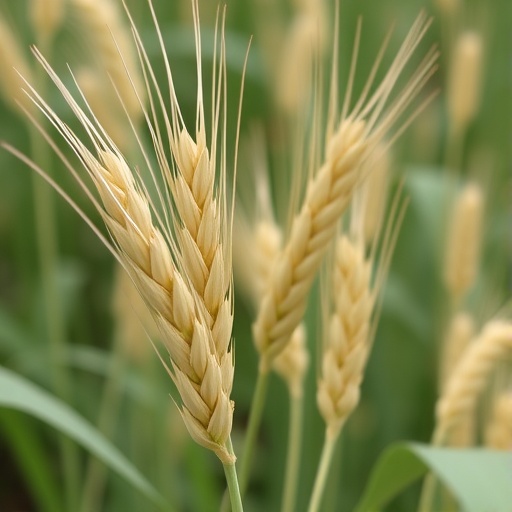
In the ever-evolving landscape of agricultural genomics, the recent research conducted by Kesawat et al. on the Small Ubiquitin-like Modifier (SUMO) gene family in wheat presents groundbreaking insights that could revolutionize our understanding of plant gene regulation and stress response mechanisms. Wheat, known scientifically as Triticum aestivum, is a staple crop that sustains millions of people globally. Enhancing its resilience and yield is paramount, especially in light of climate change and food security challenges. This study delves deep into the SUMO gene family’s role in wheat, shedding light on its potential for advancing agricultural biotechnology.
The SUMO gene family is essential in various cellular processes, including protein modification, gene expression regulation, and stress response. These small proteins play a pivotal role in post-translational modifications, altering how proteins interact with each other and function within the cell. By targeting the SUMO pathway, researchers can manipulate plant stress responses, potentially leading to enhanced drought tolerance and disease resistance—traits that are critical for sustaining crop yields under unfavorable conditions.
In this exceptional study, researchers undertook a genome-wide identification process, examining the complete genomic landscape of Triticum aestivum. The identification of SUMO genes involved intricate bioinformatics approaches, where full genome sequencing data was meticulously analyzed. This comprehensive analysis allowed the researchers to catalog not only the presence of SUMO genes but also to characterize their unique features, including gene structure, phylogenetic relationships, and chromosomal locations.
The findings revealed a diverse repertoire of SUMO genes within the wheat genome, indicating that these genes may have adapted to meet the specific environmental challenges faced by wheat plants during their life cycle. Such adaptation provides a fascinating glimpse into the evolutionary pressures that have shaped the genetic landscape of one of our most vital food sources. Furthermore, the presence of multiple SUMO genes suggests a potential for redundancy and specialization, laying the groundwork for future functional studies.
Building on this foundational work, the researchers carried out expression analysis of SUMO genes across various developmental stages and under different environmental stresses. This component of the study is particularly significant because it connects the genetic data with biological function. By examining how these genes express themselves in response to stressors like drought and salinity, the researchers could draw correlations between SUMO activity and plant resilience.
One key aspect of the expression analysis was the profiling of SUMO gene expression across diverse tissues. The data indicated that certain SUMO genes were highly expressed in roots and leaves under stress conditions. These findings suggest that SUMO proteins might be active in mitigating damage caused by environmental stress, thereby supporting the plant’s overall health and adaptability. It opens avenues for genetic engineering strategies aimed at enhancing wheat’s resilience to climate extremes.
The study also emphasizes the potential applications of these findings in breeding programs. By utilizing advanced genomic technologies, plant breeders can selectively enhance desirable traits linked to SUMO gene expression. This targeted approach could lead to the development of new wheat varieties that are better equipped to thrive in changing climates, thus ensuring food stability for future generations. This research not only highlights the immediate benefits for agriculture but also contributes to long-term sustainability efforts in food production.
Moreover, the implications of SUMO gene research extend beyond just wheat. Understanding the role of these genes in stress responses can have profound impacts on other crops as well. The insights garnered from this wheat-specific study could be applied to various other important agricultural species, promoting resilience across a broader spectrum of global food sources. Therefore, this research underlines the interconnectedness of plant biology and global food security challenges.
As the world grapples with increasing pressures from population growth and climate change, studies such as the one by Kesawat et al. are crucial. They provide scientific data imperative for decision-making in agricultural practices. This genome-wide analysis of the SUMO gene family represents a pioneering step toward harnessing the power of genetic tools for crop improvement. The findings not only showcase the potential for enhanced yield and resilience in wheat but also encourage an interdisciplinary approach that merges botanical science with practical agricultural applications.
In summary, the research conducted by Kesawat and colleagues represents a significant advancement in our understanding of the SUMO gene family’s role in wheat. By unraveling the complex interactions between these genes and the plant’s response to stress, the study sets the stage for future innovations in crop breeding and biotechnology. The exploration of SUMO genes could indeed pave the way for the development of wheat varieties that are not just more productive but also more resilient in the face of climatic adversity.
This groundbreaking work calls for collaborative efforts between geneticists, agronomists, and environmental scientists to explore the full potential of SUMO genes in agricultural contexts. Through multidisciplinary research and technological advancements, the potential for producing sustainable crop varieties becomes increasingly viable. Hence, it is crucial for the scientific community to follow up on these findings and further investigate the molecular mechanisms underpinning SUMO-mediated regulation in plants.
Ultimately, the ongoing exploration of gene families like SUMO will be vital as we confront the challenges of feeding a growing global population. The understanding derived from this research will be essential not just for enhancing wheat production but for informing strategies across a range of crops. By embracing the complexities of plant biology, agricultural practices can be transformed, ensuring that future generations have access to the nourishment they require.
Subject of Research: Small Ubiquitin-like Modifier (SUMO) gene family in wheat
Article Title: Genome-wide identification and expression analysis of the Small Ubiquitin-like Modifier (SUMO) gene family in Triticum aestivum L.
Article References:
Kesawat, M.S., Kherawat, B.S., Reager, M.L. et al. Genome-wide identification and expression analysis of the Small Ubiquitin-like Modifier (SUMO) gene family in Triticum aestivum L..
BMC Genomics 26, 1098 (2025). https://doi.org/10.1186/s12864-025-12416-w
Image Credits: AI Generated
DOI: https://doi.org/10.1186/s12864-025-12416-w
Keywords: SUMO gene family, Triticum aestivum, genetic engineering, stress response, agricultural biotechnology, genome-wide analysis, crop resilience


