

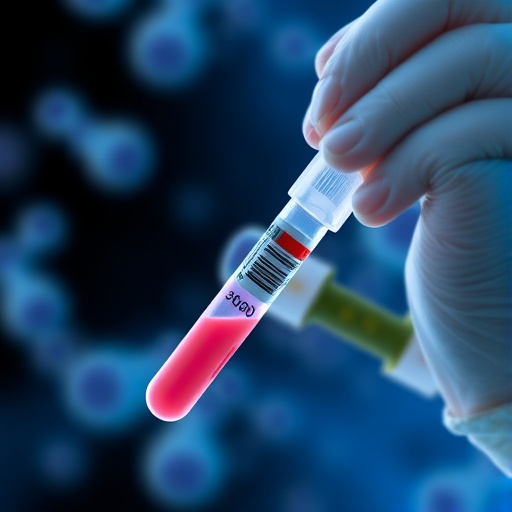
In a groundbreaking collaborative effort, researchers from the Princess Máxima Center have embarked on an innovative study to determine whether fragments of tumor DNA circulating in the bloodstream can serve as predictive biomarkers for chemotherapy effectiveness, particularly in young adults suffering from germ cell tumors resistant to standard treatments. This pioneering research, conducted in partnership with experts from Italy and Slovakia, addresses one of the most critical challenges in oncology—predicting therapeutic outcomes in patients for whom conventional chemotherapy regimens fail to achieve remission.
Germ cell tumors, originating from the precursor cells of sperm and eggs, predominantly impact boys and young men and manifest not only in the testis but also at extragonadal sites throughout the body. In the Netherlands alone, around 30 children and approximately 850 young men are diagnosed annually with these tumors, with testicular cancer representing the most common malignancy in males aged 15 to 35. Unfortunately, roughly 10% of these patients exhibit poor responsiveness to standard chemotherapy protocols. For this subset, high-dose chemotherapy is the alternative; however, the prognosis remains dismal, with mortality rates at 50% despite aggressive treatment.
The crux of this study revolved around analyzing circulating tumor DNA (ctDNA) isolated from blood samples of patients enrolled at multiple hospitals across Italy and Slovakia. Employing shallow whole genome sequencing techniques, the team quantified tumor fraction—an estimate of the proportion of ctDNA relative to total cell-free DNA—and examined copy number alterations (CNAs), genetic aberrations known to influence tumor behavior and therapy resistance. By correlating these genomic parameters with clinical outcomes like progression-free survival and overall survival, the investigators sought to unveil molecular signatures predictive of chemotherapy responsiveness.
One of the standout revelations was that tumor fraction surpassed detection thresholds in three-quarters of patients treated with salvage high-dose chemotherapy, underscoring the sensitivity of ctDNA analysis. Importantly, elevated tumor fraction correlated robustly with poorer survival outcomes across both high-dose and standard chemotherapy cohorts, highlighting its potential utility as a prognostic indicator. This insight lays a foundation for stratifying patients based on molecular tumor burden, enabling more nuanced clinical decision-making.
The study also compared the performance of tumor fraction against miR-371a-3p, an existing biomarker targeting microRNA molecules associated with germ cell tumors. While miR-371a-3p demonstrated superior sensitivity for detecting tumor presence, it fell short in prognosticating survival, a gap effectively bridged by tumor fraction metrics. This distinction emphasizes the complementary roles of these biomarkers in clinical oncology, with ctDNA tumor fraction offering vital prognostic data beyond mere disease detection.
Delving deeper into the genomic landscape, the researchers identified recurrent copy number alterations linked to adverse prognosis, notably gains in chromosomal regions 3p, 9q, and 11q, coupled with losses at 6q. These CNAs were disproportionately prevalent among patients receiving high-dose chemotherapy who eventually experienced treatment failure. Such genetic insights could elucidate mechanisms underpinning chemoresistance, offering novel therapeutic targets to counteract these molecular pathways.
Histological examination revealed that tumors exhibiting extra-embryonic features, specifically yolk sac tumor and choriocarcinoma subtypes, harbored distinct genetic alteration patterns correlating with unfavorable survival outcomes. These subtypes, characterized by unique microscopic morphology, appear to engage different oncogenic drivers reflected in their CNA profiles. Recognizing these patterns can facilitate refined histopathological risk stratification and influence therapeutic strategies tailored to tumor biology.
Fascinatingly, the data indicated a potential advantage of high-dose chemotherapy in patients harboring a high tumor fraction, suggesting that intensified treatment regimens may yield better efficacy within this molecularly defined subgroup. This observation advocates for personalized chemotherapy dosing paradigms guided by ctDNA biomarkers, moving away from one-size-fits-all approaches and toward precision oncology.
The implications of this study extend beyond prognostication. By leveraging minimally invasive blood-based biopsies, clinicians can monitor tumor dynamics in real time, adjusting treatment plans responsively while minimizing patient burden. This methodology could revolutionize the management of relapsed or refractory germ cell tumors, particularly when conventional imaging or tissue biopsies are impractical or risky.
Looking forward, the research team plans to validate their findings in a larger, international cohort encompassing adolescents and children afflicted with germ cell tumors. Such expansion is critical to confirm the robustness and generalizability of these biomarkers across diverse patient populations and tumor subtypes. Moreover, this collaborative network aims to explore novel therapeutic avenues informed by the molecular vulnerabilities unveiled through ctDNA analysis.
The promise of ctDNA and copy number alteration profiling heralds a new era in oncology, where real-time genomic surveillance informs not only prognosis but the development of targeted, less toxic therapies. By integrating these biomarkers into clinical workflows, oncologists could spare patients from futile high-dose chemotherapy when unlikely to confer benefit and prioritize alternative, more effective treatments based on individual molecular signatures.
In summary, this landmark study, published in the Journal of Clinical Oncology, illuminates the profound potential of circulating tumor DNA as a prognostic tool in young adults with relapsed or refractory germ cell tumors. Through meticulous genomic interrogation and international collaboration, the research paves the way for precision-guided interventions poised to enhance survival outcomes while mitigating treatment-related morbidity. As the oncology community awaits confirmation from forthcoming larger-scale studies, the implications for personalized cancer care are profound and transformational.
Subject of Research: Human tissue samples
Article Title: Impact of Circulating Tumor DNA and Copy Number Alterations on Clinical Outcome in Relapsed/Refractory Germ Cell Tumors Treated with Salvage High-Dose Chemotherapy
News Publication Date: 19-Feb-2026
Keywords: Oncology, Cancer research, Cancer treatments, Blood samples, Germ cells


