

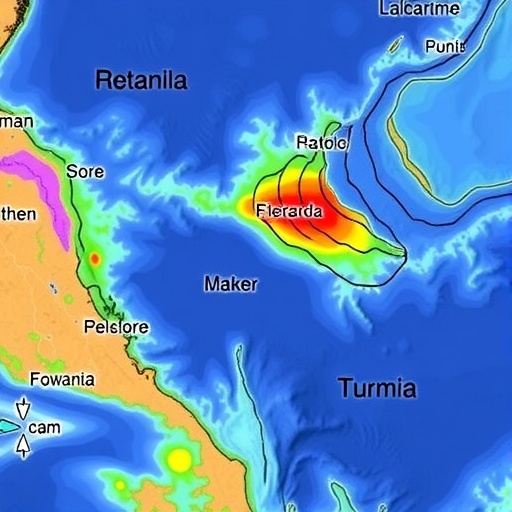
The Cascadia Subduction Zone, stretching over 600 miles from British Columbia to Northern California, represents one of the most enigmatic and potentially catastrophic tectonic boundaries on Earth. Unlike other well-studied megathrust faults worldwide, Cascadia is strikingly seismically quiet, with minimal earthquake activity detected over decades. This anomaly has led to widespread scientific consensus that the tectonic plates—the oceanic Juan de Fuca plate converging beneath the continental North American plate—are locked together through friction, accumulating stress that could one day unleash a major, possibly devastating, earthquake. However, the underwater and offshore nature of Cascadia poses significant observational challenges, limiting our understanding of its dynamic behavior.
Observing seismic behaviors in offshore subduction zones is inherently difficult due to extreme depths and the aquatic environment. Conventional seismic networks on land provide limited spatial resolution and fail to capture subtle ground deformations occurring beneath the seafloor. Compounding this, Cascadia’s infamous seismic quietude complicates data collection; fewer quakes provide fewer natural ‘probes’ to illuminate ongoing tectonic processes. Consequently, crucial details including fault locking behavior, slow slip events, and fluid movement beneath the fault remain poorly constrained, leaving many unknowns about earthquake hazard potential.
Leveraging an unprecedented dataset spanning 13 years from seafloor seismometers strategically positioned near Vancouver Island and the Oregon coast, researchers at the University of Washington have broken new ground in characterizing the fault’s underexplored zones. Through advanced seismic noise analysis—a technique sensitive to tiny variations in seismic velocity—the team tracked minute strain changes offshore over extended timescales. Their findings challenge the long-held assumption of a fully locked megathrust, revealing spatial heterogeneity in the fault’s coupling state and suggesting fluid migration through hidden subterranean channels influences fault mechanics at Cascadia’s shallow plate interface.
Intriguingly, the northern segment of the subduction zone displayed a steady increase in seismic velocity, interpreted as rock compaction consistent with locked plates accumulating strain. This region’s apparent immobility supports the traditional model wherein stress builds progressively until overcoming frictional resistance, triggering a sudden megathrust rupture. Contrastingly, the central section of Cascadia exhibited episodic decreases in seismic velocity over multiple years, notably around a two-month interval in 2016. These velocity drops correspond to slow-motion slip events and fluid pulses migrating along faults transverse to the main subduction boundary, phenomena often undetected in standard earthquake catalogues.
Fluid dynamics emerge as a crucial factor modulating seismic behaviors in Cascadia. As the oceanic plate subducts, the immense pressure squeezes water from pore spaces within sediments and rocks, driving fluids towards the seafloor through complex fault networks. The study identifies these subsidiary faults as “fluid highways,” enabling episodic fluid release at the shallow megathrust interface. Because fluid pressure can weaken fault zones, their transient increases or venting may modulate stability and potentially arrest ruptures, thereby influencing whether an earthquake propagates along the entire fault or stops at segment boundaries. Such fluid-related processes have been implicated in other subduction zones but are now clearly demonstrated at Cascadia for the first time.
The implications extend to seismic hazard assessment for the Pacific Northwest. Megathrust quakes, among the most powerful natural events, occur along subduction zones roughly every 500 years in Cascadia, with the last major rupture dated to 1700. Current probability models estimate a 10-15% chance for a full-length Cascadia rupture within the next fifty years, capable of generating magnitude 9+ shaking and tsunamis. Although this study does not alter these probabilities, the revelation of heterogenous locking and fluid pathways suggests the fault’s rupture behavior could be more complex and variable than previously believed, potentially affecting the earthquake’s rupture extent, intensity, and aftershock distribution.
Recent seafloor mapping has delineated at least four geologically distinct fault segments along Cascadia, implying that large ruptures may not propagate uninterrupted. The new seismic noise data deepens this segmentation concept by unveiling differential locking states offshore. The northern locked segment contrasts with a central region accommodating slow slip and fluid flow, suggesting a mosaic of creeping and locked patches modulated by subterranean hydrology. This heterogeneity could explain why Cascadia’s seismic signals have historically been quiet and subtle, yet harbor latent rupture potential in isolated areas.
Technically, the research employed ambient seismic noise interferometry, a cutting-edge method that uses continuous background vibrations—such as ocean waves—to measure changes in seismic wave velocity through the crust. Minute changes in velocity often correlate with physical processes like rock compaction, fracturing, or fluid saturation. By applying this method to long-term data from deep-ocean seismometers, researchers captured temporal variations in subsurface strain and fluid pressures inaccessible through traditional earthquake records. This approach exemplifies how modern geophysical techniques can illuminate complex, slow geodynamic phenomena invisible to standard seismology.
Looking forward, the study team advocates for expanded offshore instrumentation and underwater observatories to unravel the full complexity of Cascadia’s fault dynamics. With significant funding secured recently for a dedicated subduction zone observatory, enhanced monitoring infrastructure will enable real-time detection of transient fluid movements, slow slip events, and fault locking changes with unparalleled resolution. Such advances promise to revolutionize earthquake forecasting capabilities and hazard mitigation strategies for the densely populated Pacific Northwest coastline vulnerable to megathrust earthquakes and tsunamis.
The discovery that the Cascadia Subduction Zone is not uniformly locked, but rather intricately influenced by fluid pathways along smaller faults, offers a new paradigm in understanding undersea fault mechanics. It suggests a dynamic interplay between tectonic stress accumulation and fluid pressure modulation governs earthquake nucleation and propagation offshore. This nuanced insight not only improves seismic risk assessments but also contributes to broader geophysical knowledge of earthquake processes at subduction interfaces worldwide.
In summary, these cutting-edge studies reveal the Cascadia Subduction Zone as a complex system where slow slip and fluid migration interact to modulate seismic risk. The findings suggest that variations in fault locking and fluid activity could potentially stop or limit megathrust rupture propagation, challenging simplified models of uniform strain accumulation. The research underscores the urgency of enhancing offshore observational networks to better capture these subtle yet critical processes that will define the timing and impact of future Pacific Northwest megathrust earthquakes.
The ongoing work in Cascadia exemplifies the frontier of earthquake science, blending long-term data analysis with innovative seismic noise techniques to probe the hidden depths beneath the ocean floor. As new observational technologies come online, researchers anticipate a transformative era in understanding and anticipating subduction zone hazards—knowledge vital for safeguarding millions of residents living in the shadow of this quietly simmering tectonic giant.
Subject of Research: Earthquake dynamics and fault locking in the Cascadia Subduction Zone.
Article Title: Active protothrusts and fluid highways: Seismic noise reveals hidden subduction dynamics in Cascadia
News Publication Date: 27-Feb-2026
Web References: http://dx.doi.org/10.1126/sciadv.aea3684
Image Credits: Science Advances / Kidiwela et al.
Keywords: Earthquakes, Seismology, Subduction, Natural disasters, Underwater acoustics, Plate tectonics, Earthquake forecasting, Geophysics, Geomorphology


