

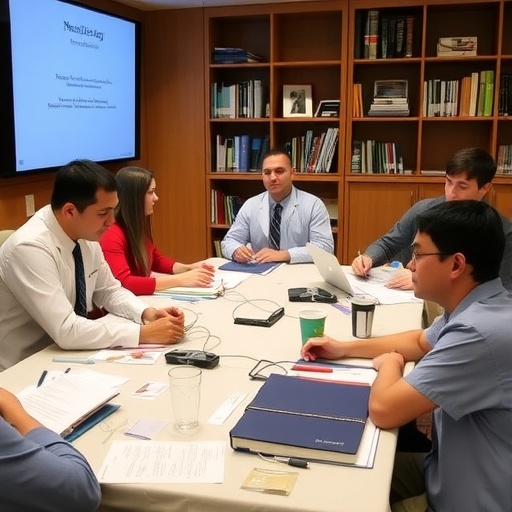
In an innovative approach to medical education, a recent study has illuminated the experiences of neurology residents participating in a no-prep journal club designed to enhance their understanding of research study design and critical appraisal. The study, spearheaded by a team led by Fu et al., provides a refreshing perspective on teaching methodologies in neurology, a field that requires rigorous critical thinking and analytical skills. Central to the research is the implementation of a no-prep format which addresses the usual barriers faced by residents when engaging with scientific literature.
Traditionally, journal clubs have been characterized by a more structured approach, often requiring participants to prepare extensive summaries of chosen articles. This can place considerable pressure on busy residents, potentially discouraging them from participating fully. The no-prep model, as explored in this study, flips this paradigm. By removing the preparatory requirement, the researchers aimed to foster a more inclusive and engaging environment, allowing residents to focus on understanding the underlying research concepts and methodologies.
The study was grounded in qualitative research methods, highlighting the subjective experiences of the participating residents. Through interviews and surveys, the researchers gathered rich data that provided insights into how the no-prep format affected residents’ confidence and competence in analyzing scientific literature. Residents expressed enthusiasm for this approach, reporting that it allowed for more spontaneous discussions and deeper engagement with the material at hand.
One of the significant findings of the study was the way in which the no-prep format contributed to a culture of collaboration among residents. Instead of viewing journal club meetings as a chore or an obligation, participants reported feeling more like equal collaborators in a learning process. This communal atmosphere seemed to empower residents to voice their opinions and challenge each other’s perspectives constructively. The invaluable opportunity to learn from one another, rather than from a single prepared presenter, was highlighted as a meaningful benefit of the no-prep approach.
Moreover, the study revealed that residents appreciated the flexibility afforded by the no-prep model. With their packed schedules, residents often struggle to find time to prepare thoroughly for journal clubs while juggling clinical responsibilities and personal commitments. By eliminating the preparation requirement, this model not only alleviated the time constraints but also emphasized the importance of real-time critical thinking during discussions. Residents reported that the lack of preparation fostered a more dynamic and responsive learning environment.
An essential aspect of the research focused on developing critical appraisal skills, which are vital for future specialists in neurology. The no-prep journal club provided a platform for discussing various study designs and their implications, which is crucial for residents who will be critically evaluating research throughout their careers. Participants noted that discussing studies in real-time allowed them to navigate through complex methodologies effectively. This engagement led to a more comprehensive understanding of the principles of research design, a skill integral to their future practice.
The study also addressed the need for educators to adapt teaching strategies to better fit the learning styles of their residents. Traditional education models can sometimes fall short of catering to diverse learner needs and preferences. The success of the no-prep journal club suggests that educators should consider more flexible, learner-centered approaches that prioritize engagement and critical thinking over rote preparation. This shift could potentially lead to enhanced educational outcomes across medical disciplines.
Furthermore, the implications of this study extend beyond the realm of neurology. The insights gained from the resident experiences challenge existing paradigms in medical education. Other specialties might benefit from similar adaptations, reevaluating the ways in which journal clubs, seminars, and group discussions are structured. By embracing flexible and inclusive approaches, medical education can potentially cultivate a new generation of physicians who are more competent in their ability to analyze and interpret scientific literature critically.
Fostering a culture of open dialogue and peer-support resonates well with the current trends in medical education, which emphasize collaborative learning and lifelong education. As residency programs seek to train well-rounded physicians, the incorporation of innovative educational strategies becomes paramount. The no-prep journal club model serves as a case study for how minor adjustments in program design can yield significant returns in resident engagement and knowledge retention.
In conclusion, the exploration of the experiences of neurology residents participating in a no-prep journal club opens up essential discussions about the future of medical education. The research led by Fu et al. not only sheds light on the benefits of such a format but also serves as a catalyst for further investigation into adaptive teaching methodologies. By prioritizing collaboration and critical thinking, educators can inspire residents to become not just consumers of knowledge, but critical appraisers and contributors to the ongoing dialogue in the medical community.
The potential for a no-prep approach to reshape the educational landscape is significant. As institutions reconsider their pedagogical strategies, the experiences shared by neurology residents in this study could pave the way for broader changes across many fields of medicine. The findings advocate for educational innovations that honor the complexities of residency training and the need for effective critical thinking in the practice of medicine, ultimately leading to the advancement of medical knowledge and improved patient care.
Adaptation to changing educational paradigms will undoubtedly remain a critical area of focus for medical institutions. Embracing a no-prep journal club model is not merely a logistical adjustment but a philosophical shift that recognizes the necessity of critical engagement with research. This study serves as a reminder that investing in resident education through thoughtful program design can have profound implications for the future of healthcare.
As the field of medical education continues to evolve, it’s imperative that we take lessons from innovative approaches such as the no-prep journal club. The findings from this research are not only relevant for current medical educators but also for future leaders in healthcare who will shape the next generation of physicians. Emphasizing the importance of flexible and engaging learning environments may lead to a more robust and critically minded workforce ready to tackle the complex challenges of modern medicine.
Subject of Research: Neurology resident experiences with a no-prep journal club
Article Title: Exploring neurology resident experiences with a no-prep journal club to learn research study design and critical appraisal
Article References: Fu, K.A., Elting, S., Chan, J.M. et al. Exploring neurology resident experiences with a no-prep journal club to learn research study design and critical appraisal. BMC Med Educ 25, 1732 (2025). https://doi.org/10.1186/s12909-025-08275-4
Image Credits: AI Generated
DOI: https://doi.org/10.1186/s12909-025-08275-4
Keywords: Neurology, medical education, journal club, critical appraisal, research design, residency training, innovative education, collaborative learning.


