

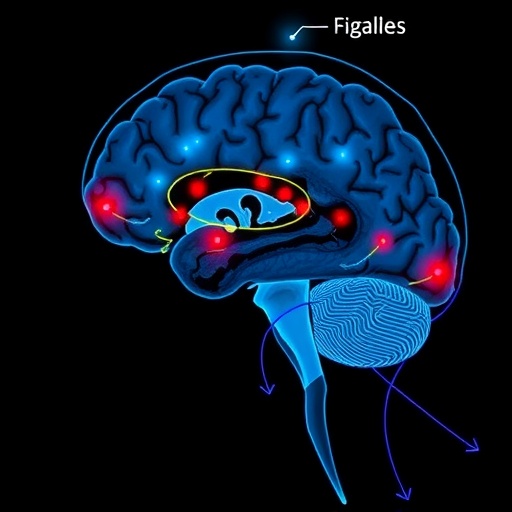
In a groundbreaking study set to reshape our understanding of Parkinson’s disease (PD), researchers have unveiled intricate neural signatures buried within the locomotor deficits characteristic of this debilitating disorder. Led by Garulli, Merk, and El Hasbani, the team employed sophisticated deep neurobehavioral phenotyping techniques, pushing the boundaries of neurological research. Their findings, published in the upcoming 2026 issue of npj Parkinson’s Disease, reveal the elusive neural fingerprints that underpin movement impairments in PD, offering new avenues for diagnosis and therapeutic intervention.
Parkinson’s disease has long been recognized as a neurodegenerative condition primarily marked by tremors, rigidity, and especially difficulties in initiating and controlling movement. However, the precise neural mechanisms driving these symptoms remain incompletely understood. Traditional assessments typically capture overt motor symptoms but often fail to discern the subtle underlying neuronal dysfunctions at play. This study pioneers the use of comprehensive behavioral and neural data integration, bringing into focus the multidimensional aspects of PD-related locomotor anomalies.
Utilizing advanced machine learning algorithms, the researchers analyzed extensive neurobehavioral datasets drawn from patients exhibiting various stages of Parkinsonian locomotor symptoms. By correlating behavioral outputs with in-depth neural recordings—spanning electrophysiology, neuroimaging, and neurochemical profiles—the team uncovered distinct neural motifs linked to specific types of motor impairment. These neural fingerprints provide a refined map of how Parkinson’s pathology disrupts motor circuits.
One of the study’s crucial revelations pertains to the heterogeneity in locomotor deficits among PD patients. Rather than a uniform neural dysfunction, the data demonstrate a spectrum of neural pattern disruptions. For example, some patients exhibited pronounced deficits in cortico-striatal communication, while others showed aberrant activity in basal ganglia-thalamic loops. Such nuanced profiles challenge one-size-fits-all treatment models and underscore the need for personalized therapeutic strategies.
Intriguingly, the research highlights the role of non-motor brain regions traditionally underappreciated in the context of Parkinson’s locomotor symptoms. Areas involved in cognitive and emotional processing, such as the prefrontal cortex and limbic structures, were found to contribute substantially to the manifestation of movement deficits. This cross-domain interference may explain the observed variability in symptom presentation and progression rates across the patient cohort.
The methodology employed by Garulli and colleagues epitomizes the future of neurodegenerative disease research. Deep phenotyping merges high-dimensional behavioral data with multimodal neurophysiological measurements, enabling an unprecedented level of granularity. This convergence not only aids in detecting subtle disease markers but also facilitates the discovery of novel biomarkers that could dramatically improve early diagnosis and monitoring of PD progression.
Beyond fundamental insight, the study’s outcomes have profound clinical implications. By delineating distinct neural fingerprints associated with locomotor disability, clinicians may soon be equipped to tailor rehabilitative approaches and pharmacotherapy according to individualized neural profiles. For instance, targeting specific neural circuit dysfunctions with neuromodulatory techniques such as deep brain stimulation or transcranial magnetic stimulation could be optimized using these detailed maps.
The research also opens new horizons in biomarker development. Current PD diagnostics rely heavily on clinical observation and symptomatic criteria, which often delay intervention until significant neural damage has occurred. The identified neural signatures offer the potential for more objective, quantifiable markers that could herald a shift toward preclinical detection and preventative therapeutics.
Critically, the findings underscore the dynamic interplay between motor and cognitive domains in Parkinson’s pathology, suggesting that locomotor deficits cannot be fully understood or treated in isolation. This integrated perspective advocates for multidisciplinary approaches encompassing neurology, psychiatry, and even computational neuroscience to holistically address the disease.
Moreover, the utilization of artificial intelligence (AI) and deep learning frameworks was pivotal in deciphering the complex datasets involved. These technologies facilitated the extraction of subtle patterns and correlations that traditional analytical methods might overlook. This advancement represents a paradigm shift in how neurological data is processed and interpreted, marrying computational power with clinical neuroscience.
Future research directions inspired by this study are manifold. Investigations could explore whether similar neural fingerprints are observable in other neurodegenerative disorders exhibiting motor dysfunction, thereby enhancing differential diagnosis. Additionally, longitudinal studies might assess how these neural signatures evolve over time and respond to various therapeutic interventions.
The study’s approach also invites a reevaluation of existing therapeutic targets. With the newfound understanding of the neural circuitry involved, drug development could pivot toward modulating circuit-specific dysfunctions rather than broadly targeting neurotransmitter depletion. This precision medicine approach promises to enhance efficacy while minimizing side effects.
Importantly, the insights gained could inform the design of assistive technologies and neuroprosthetics tailored to individual neural profiles. Such devices could dynamically adjust to the user’s unique motor control patterns, significantly improving quality of life for those afflicted by Parkinson’s disease.
Equally compelling is the study’s potential to stimulate public and scientific discourse around the complexities of Parkinson’s disease. By illuminating the depth and variety of neural disruptions, the research challenges prevailing simplistic narratives and fosters a more nuanced appreciation of the disorder’s pathophysiology.
In sum, the study by Garulli et al. represents a landmark effort in decoding the neural substrates of Parkinson’s related locomotor deficits through deep neurobehavioral phenotyping. Its rich, multidimensional insights pave the way for revolutionary advancements in diagnosis, treatment, and patient care, heralding a new era in combating the challenges posed by Parkinson’s disease.
Subject of Research: Neural fingerprints of locomotor deficits in Parkinson’s disease using deep neurobehavioral phenotyping
Article Title: Deep neurobehavioral phenotyping uncovers neural fingerprints of locomotor deficits in Parkinson’s disease
Article References:
Garulli, E.L., Merk, T., El Hasbani, G. et al. Deep neurobehavioral phenotyping uncovers neural fingerprints of locomotor deficits in Parkinson’s disease. npj Parkinsons Dis. (2026). https://doi.org/10.1038/s41531-026-01280-4
Image Credits: AI Generated


