

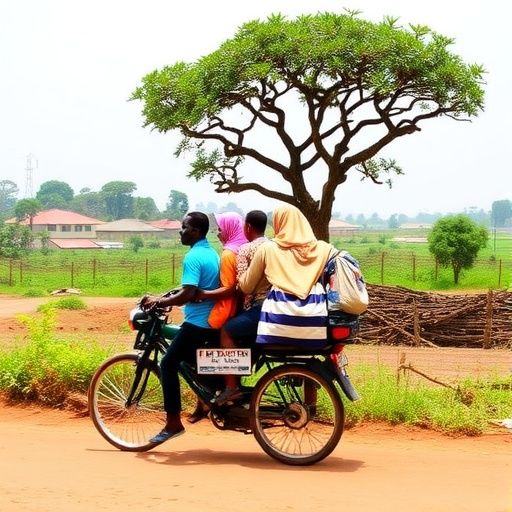
In recent years, the discourse surrounding educational access in Nigeria has intensified, particularly with regard to rural student mobility and its implications for equitable university access. In this context, a groundbreaking study by Y.D. Olaniyan has emerged, shedding light on the myriad complexities that define the spatial politics of educational opportunities in the nation. Providing a comprehensive analysis, this research illuminates the barriers, motivations, and outcomes associated with rural students’ movements toward higher education institutions.
The study highlights several defining factors that influence rural student mobility in Nigeria. At the core, economic constraints remain a formidable hurdle. Many prospective students from rural backgrounds face significant financial obstacles that deter them from pursuing higher education. The costs associated with commuting, accommodation, and tuition fees collectively pose formidable challenges, often forcing students to abandon their aspirations of attaining a degree. Thus, economic limitations can lead to a considerable disparity in university access, perpetuating cycles of poverty and educational inequity.
Furthermore, the research underscores the impact of cultural and social dynamics on educational decisions. In many rural communities, traditional beliefs and societal expectations can inhibit students from pursuing education beyond secondary school. Gender roles, in particular, can significantly shape individual aspirations, with female students often facing additional barriers. The expectation for young women to stay at home, marry early, or contribute to family income can starkly limit their educational pursuits. By addressing these cultural dimensions, the study enriches the understanding of how rural students navigate their educational trajectories.
Geographical factors also play a crucial role in shaping student mobility. The study reveals that rural students often need to relocate to urban centers to access quality higher education institutions. The distance from home can create a psychological burden, where fear of the unknown, coupled with the loss of familial support, complicates their transition to university life. The experiences of these students often oscillate between aspiration and apprehension, leading to a dual reality that encapsulates both the excitement of new opportunities and the anxiety of estrangement from their communities.
Moreover, the findings advocate for structural changes within educational policies to alleviate barriers faced by rural students. There is a pressing need for a more targeted approach in developing accessible pathways to higher education. This could involve increasing financial incentives, such as scholarships and grants specifically for rural students, and enhancing support systems that cater to the unique challenges they face. The research emphasizes that such interventions must be rooted in an understanding of the socio-economic context of rural areas to be effective.
Interestingly, the study also documents the unexpected resilience and agency displayed by rural students. Many students exhibit remarkable adaptability as they navigate their educational journeys, often forming networks that provide emotional and logistical support. These informal channels of assistance become critical lifelines that enhance their chances of success in urban educational environments. The narratives shared by these students reveal a rich tapestry of experiences that highlight their determination to overcome obstacles.
In examining the spatial politics surrounding university access, the research critiques existing educational policies that often disregard the diversity of student experiences. The formulation of blanket policies without taking into account the realities of rural students contributes to systemic inequities. This study calls for policymakers to move beyond a one-size-fits-all mentality and to embrace a multidimensional approach that acknowledges the geographic and cultural nuances that define educational access.
As cities become increasingly more connected to global educational networks, the spotlight on rural education becomes all the more critical. Understanding the motivations behind student mobility will enable stakeholders to create robust educational frameworks that cater to the needs of all students. By recognizing the diverse aspirations and challenges of rural students, educators and policymakers can work towards developing inclusive strategies that facilitate equitable access to education.
The landscape of higher education in Nigeria is evolving, yet the journey towards inclusivity is still fraught with challenges. Olaniyan’s research serves as a clarion call to rethink how educational opportunities are structured and delivered. The complexities involved in rural student mobility illuminate a pressing need for concerted efforts across various sectors, including government, educational institutions, and civil society, to forge a more equitable educational landscape.
As the academic community grapples with the findings of this study, it is evident that further research is essential to continue exploring the intricate dynamics of educational access in Nigeria. A comprehensive understanding of these issues can significantly influence future policy formulations, ensuring that no student is left behind simply due to their geographical origin. Expanding educational horizons for rural students not only benefits individuals but also fosters societal growth and development.
To summarize, Y.D. Olaniyan’s research on rural student mobility and the spatial politics of university access in Nigeria presents a thorough examination of a multifaceted issue that affects countless lives. By addressing financial, cultural, and geographic dimensions, this study underscores the need for targeted interventions that enhance educational equity. Ultimately, embracing the voices of rural students and recognizing their agency will be crucial in transforming the educational landscape for future generations.
In conclusion, the implications of Olaniyan’s findings extend far beyond academia. They challenge us to rethink our systems and ensure that educational access reflects the diverse realities of our societies. As discussions continue around rural student mobility, it is incumbent upon all stakeholders to commit to fostering environments where every student, irrespective of their background, can thrive and realize their academic potential.
Subject of Research: Rural student mobility and spatial politics of university access in Nigeria.
Article Title: Rural student mobility and the spatial politics of university access in Nigeria.
Article References: Olaniyan, Y.D. Rural student mobility and the spatial politics of university access in Nigeria. High Educ (2025). https://doi.org/10.1007/s10734-025-01592-z
Image Credits: AI Generated
DOI: https://doi.org/10.1007/s10734-025-01592-z
Keywords: Rural education, student mobility, university access, educational equity, Nigeria.


