

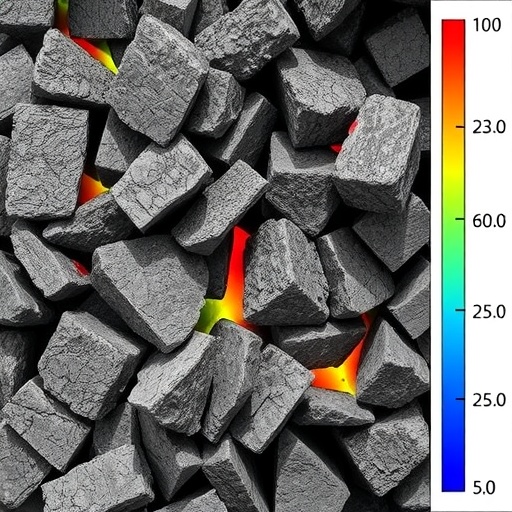
Recent research conducted by a collaborative team led by Xiong, Wang, and Zhao has shed new light on the contrasting stress sensitivity of natural versus artificially fractured deep coals. This timely investigation opens the door for more effective coalbed methane drainage pressure control, a critical aspect of energy extraction from coalbed reservoirs. For the uninitiated, coalbed methane is a form of natural gas that is found in underground coal seams, and its extraction has become critical for meeting global energy demands while minimizing the reliance on more environmentally damaging fossil fuels.
The findings of the research emphasize notable differences in the response of natural and artificially fractured coals to stress variations. This distinction is essential, as understanding the reactions of these materials to changing conditions can greatly enhance extraction methodologies in the field. By identifying how natural fractures in deep coal behave in comparison to those artificially induced, the research team is poised to inform on-site operational strategies that could improve methane recovery rates and optimize pressure management.
One of the striking revelations from the study is that artificially fractured coals exhibit a different stress sensitivity compared to their natural counterparts under equivalent conditions. While the natural fractures seem to adapt more efficiently to stress changes without significant loss in permeability, artificially created fractures could lead to unintended consequences that might hinder gas extraction efforts. This difference highlights the importance of not only knowing the geological conditions of a coalbed but also understanding the implications of the methods used for fracturing.
A critical part of methane extraction efficiency is managing groundwater, which in many cases is inextricably linked to the pressure within coal seams. The engineered nature of artificially fractured areas could result in unpredictable fluid movements that complicate hydraulic responses and put pressure control efforts in jeopardy. This is especially vital in regions where water is scarce, and managing the balance between gas extraction and groundwater retention becomes imperative. Thus, an understanding of stress sensitivity differences is crucial for the design and execution of extraction plans.
Furthermore, the implications of these findings extend beyond immediate extraction concerns. The research raises questions about the sustainability of current practices in coalbed methane extraction, as the environmental impacts of artificially fractured zones might not align with the long-term management strategies needed for energy security. Recognizing the stress sensitivity disparities may also lead to innovations in how engineers approach coalbed methane projects, potentially paving the way for more sustainable and effective energy solutions.
The study utilized a series of controlled experiments to simulate the conditions within deep coal seams, allowing researchers to observe the differences in stress reaction between natural and artificially induced fractures systematically. These experiments included varying pressure levels and monitoring changes in permeability, offering a detailed understanding of mechanical behaviors in both fracture types. This data-driven approach has fortified the research team’s conclusions and underscores the rigor behind their innovative insights.
As pressure to find cleaner energy sources mounts, this research emerges at a pivotal moment. The findings provide actionable intelligence that can help guide future legislation, industry practices, and scientific inquiries aimed at maximizing the efficacy of coalbed methane extraction. Policymakers may take these insights into account when shaping regulations that govern energy extraction practices, ensuring that both economic and environmental considerations are taken into account.
The broader implications of this research extend to climate change discussions, as methane is known to be a potent greenhouse gas. Maximizing the efficiency of methane extraction and minimizing environmental degradation must go hand-in-hand in the fight against climate change. Innovative practices that leverage the differences between natural and artificial fractures could contribute to more effective carbon reduction strategies.
The research team’s conclusions echo a growing sentiment among geoscientists and engineers regarding the necessity of adapting technologies to local geological conditions rather than relying on one-size-fits-all solutions. This adaptability could revolutionize the way coalbed methane and potentially other fossil fuels are extracted, leading to more environmentally sensitive protocols that could prolong energy extraction while preserving vital ecological systems.
Moreover, the methodologies suggested by this research could have applications beyond just coalbed methane. They might serve as guiding principles for other forms of deep resource extraction, including geothermal energy and even hydrocarbon reservoirs. Such a holistic approach that considers the heterogeneous nature of subsurface materials is increasingly important in the quest for sustainable energy development.
In conclusion, the contrasting stress sensitivity of natural and artificially fractured coals highlighted in this critical study introduces new pathways for efficiently managing coalbed methane extraction while addressing broader environmental concerns. As we forge ahead in an era of energy uncertainty, the revelations presented by Xiong, Wang, and Zhao underscore the importance of grounded scientific research in transforming industry practices. Sustainable energy solutions must be founded on a nuanced understanding of geological conditions, and this research represents a significant step in that direction.
Subject of Research: Stress sensitivity of natural versus artificially fractured deep coals in coalbed methane extraction.
Article Title: Contrasting Stress Sensitivity of Natural vs. Artificially Fractured Deep Coals: Implications for Coalbed Methane Drainage Pressure Control.
Article References:
Xiong, J., Wang, Z., Zhao, Y. et al. Contrasting Stress Sensitivity of Natural vs. Artificially Fractured Deep Coals: Implications for Coalbed Methane Drainage Pressure Control.
Nat Resour Res (2025). https://doi.org/10.1007/s11053-025-10620-9
Image Credits: AI Generated
DOI: https://doi.org/10.1007/s11053-025-10620-9
Keywords: coalbed methane, stress sensitivity, natural fractures, artificially fractured coals, energy extraction, hydraulic pressure management, environmental sustainability.


