

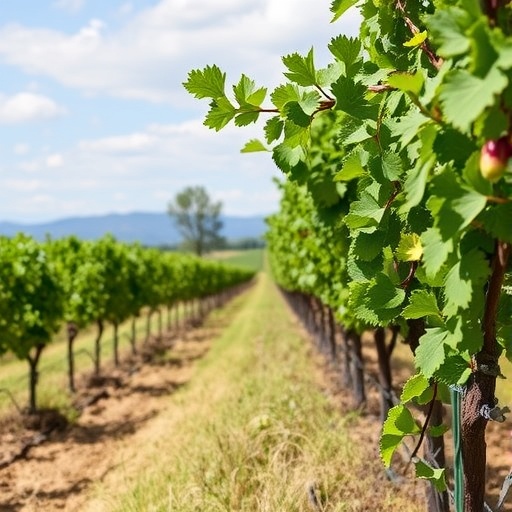
Recent research has illuminated an innovative approach to addressing soil contamination, particularly in vineyard settings characterized by high levels of metals such as copper (Cu), zinc (Zn), and manganese (Mn). The work, conducted by a dedicated team of scientists including Morsch, Marques, and Trentin, focuses on the ecological potential of native plant species from the Pampa biome. This region, rich in biodiversity, offers a unique opportunity to explore phytostabilization—a bioremediation strategy aimed at stabilizing contaminant uptake through plant systems.
In vineyards where heavy metals accumulate due to agricultural practices and environmental factors, the adverse impacts on soil health pose significant challenges. These metals can adversely affect not only plant growth but also root development and soil microbial communities. As the demand for sustainable agricultural practices intensifies, researchers are leaning towards employing native flora that have adapted to such challenging conditions. This study examines these plants’ tolerance mechanisms, providing crucial insights into improving soil health and crop yields.
The research delves into various species found in the Pampa region, each exhibiting distinct adaptations that allow them to thrive despite high metal concentrations. Notably, these species display an array of physiological responses to metal toxicity. Some plants develop enhanced root structures that prevent metal uptake, while others exhibit compartmentalization abilities, sequestering harmful metals in vacuoles or leaf tissues, thus mitigating their toxic effects.
The study employed rigorous field and laboratory analyses, testing the soil samples from several vineyard sites known for their contamination levels. By measuring the concentrations of Cu, Zn, and Mn in both soil and plant tissues, the researchers could establish correlations between metal levels and plant health. Results demonstrated that certain native species retained minimal metal concentrations, thus indicating their potential in vegetative cover to stabilize soils that would otherwise remain unfriendly to other plants.
Furthermore, the interaction between soil microorganisms and these native species plays a fundamental role in phytoremediation efforts. The presence of beneficial microbes, often found in close association with plant roots, can amplify the plants’ ability to tolerate and detoxify harmful metals. This microbial synergy, combined with the plants’ innate adaptability, suggests a holistic approach to restoring contaminated soils through a natural, eco-friendly means.
One of the central findings of the research is the identification of specific tolerance mechanisms employed by these native flora. These mechanisms include the production of chelating agents, which bind heavy metals and render them less bioavailable. Additionally, several plants exhibit antioxidant activity that mitigates oxidative stress induced by metal exposure. Understanding these adaptive strategies provides a roadmap for using these species in phytostabilization projects aimed at uncontaminated soil reclamation.
In practical terms, implementing phytostabilization in vineyard settings could result in healthier crops and less reliance on chemical remediation methods, promoting both environmental and economic sustainability. By reintroducing native species into contaminated areas, farmers can not only restore soil health but also diversify plant life, thereby fostering a resilient ecosystem that enhances biodiversity in agricultural landscapes.
The future implications of this research extend beyond the Pampa biome. With the ongoing issues of soil contamination worldwide, the findings underscore a broader applicability of using native species in various agricultural contexts. Insights gleaned from this study can guide future endeavors aimed at promoting soil health and crop production in contaminated regions globally.
As part of emphasizing sustainable agricultural practices, this research also paves the way for future interdisciplinary studies that integrate soil science, agronomy, and ecological restoration. Such collaboration is essential to evolve current agricultural models toward more sustainable paradigms that prioritize environmental health alongside food production.
In conclusion, as climate change and industrial activities continue to present challenges to soil health, the investigation by Morsch, Marques, and Trentin into the phytostabilization potential of native Pampa species opens a new chapter in remediation strategies. Their work sheds light on the natural resilience of ecosystems, re-energizing the narrative around native biodiversity. By harnessing these natural mechanisms, we could redefine the future of agriculture in vulnerable ecosystems like those found in the Pampa biome.
Through continuing research and sufficient funding, the promise of integrating natural plant-based solutions as means for soil reclamation seems not only viable but also necessary for maintaining the planet’s agrarian health.
Subject of Research: Phytostabilization of contaminated soils in vineyards using native species from the Pampa biome.
Article Title: Phytostabilization potential and tolerance mechanisms of native species from the Pampa biome in vineyard soil with high levels of Cu, Zn and Mn.
Article References: Morsch, L., Marques, A.C.R., Trentin, E. et al. Phytostabilization potential and tolerance mechanisms of native species from the Pampa biome in vineyard soil with high levels of Cu, Zn and Mn. Environ Sci Pollut Res (2026). https://doi.org/10.1007/s11356-026-37426-3
Image Credits: AI Generated
DOI: https://doi.org/10.1007/s11356-026-37426-3
Keywords: Phytostabilization, Soil contamination, Heavy metals, Native species, Sustainable agriculture, Environmental health, Biodiversity, Pampa biome, Copper, Zinc, Manganese, Ecological restoration, Soil health, Remediation strategies.


