

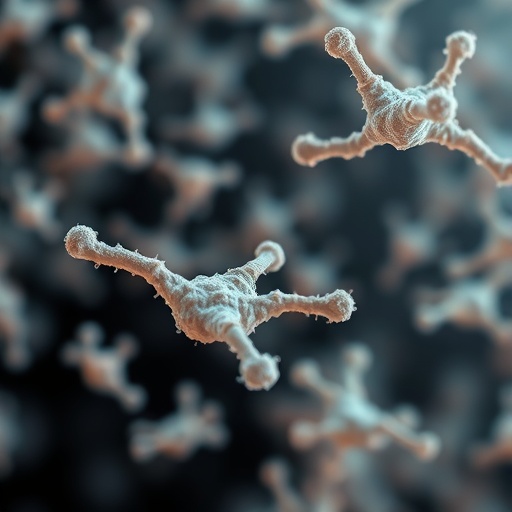
In a remarkable breakthrough that holds immense potential for environmental remediation, researchers at Nagoya University have unveiled a chemical strategy capable of activating native soil bacteria to degrade persistent and toxic aromatic pollutants like benzene and dioxins—without resorting to genetic modification. This innovative method leverages the natural enzymatic machinery of ubiquitous soil microbes, specifically cytochrome P450 enzymes, by introducing specially designed small molecules known as “decoy molecules.” This non-genetic intervention could revolutionize bioremediation, presenting an ecologically safe and regulation-compliant solution to some of the most stubborn and hazardous environmental contaminants.
Aromatic compounds, including dioxins and benzene, have long been recognized as formidable soil pollutants due to their chemical stability. Their resilience to microbial degradation results in dangerous accumulation within ecosystems, posing serious health risks to both humans and wildlife. Historically, attempts to ameliorate this problem involved genetically engineered microorganisms (GEMs) tailored for pollutant breakdown. Yet, the deployment of such organisms in natural environments has been severely limited by strict ecological regulations meant to prevent unintended consequences.
The team led by Professor Osami Shoji at Nagoya University’s Graduate School of Science has circumvented these limitations by harnessing the natural enzymatic capabilities of native soil bacteria through a purely chemical activation process. They focused on cytochrome P450BM3, an enzyme derived from the soil bacterium Priestia megaterium, known for its ability to hydroxylate fatty acids. Intriguingly, in its natural state, P450BM3 does not interact with toxic pollutants such as dioxins due to its substrate selectivity based on a lock-and-key mechanism.
Instead of genetically manipulating the enzyme’s binding site, the researchers developed decoy molecules that mimic the enzyme’s natural fatty acid substrates. These decoy molecules effectively “trick” the enzyme into opening its active site to accommodate foreign pollutants. The key attribute of these molecules is their design: they bind to the enzyme but are structurally hindered from reaching the catalytic center themselves, thus creating an isolated reaction chamber where hydroxylation of otherwise resistant compounds can occur.
This novel approach builds upon previous insights obtained by the Shoji laboratory, where enzyme activity was modulated using decoy molecules to facilitate otherwise improbable reactions. By introducing these molecules into the microenvironment of cytochrome P450 enzymes within diverse soil bacteria strains, the team unlocked latent catalytic potentials without altering the microbes’ genetic codes, maintaining their original ecological functions and safety profiles.
The researchers conducted systematic biochemical screenings involving ten bacterial strains harboring cytochrome P450BM3 or closely related cytochromes, combined with a library of 76 decoy molecules. Their findings were striking: catalytic hydroxylation of benzene occurred only when specific strain-decoy pairs were engaged, highlighting the nuanced specificity of this activation. Notably, the study included Bacillus subtilis, a common soil bacterium with a variant of cytochrome P450, which exhibited remarkable degradation capabilities when treated with appropriate decoy molecules.
Gene knockout experiments conclusively verified that the observed enzymatic activity is tied to the native cytochrome P450 enzymes in these bacteria. Beyond benzene, these enzymes, once activated, were capable of hydroxylating a range of aromatic pollutants, including toluene, xylene, and naphthalene, showcasing the versatility of this approach.
Perhaps the most impressive demonstration concerned dioxin-like pollutants. The presence of decoy molecules enabled Bacillus subtilis to completely degrade dioxin model compounds within a mere two hours at 45 degrees Celsius—a rapid catalytic turnover previously unreported for native soil bacteria under natural, non-engineered conditions. Computational modeling substantiated that the cytochrome P450 enzymes in B. subtilis can physically accommodate both the decoy molecules and the bulky dioxin substrates simultaneously, facilitating effective catalytic conversion.
This catalytic hydroxylation increases the solubility and hence bioavailability of the pollutants, a critical step that accelerates their microbial degradation and eventual removal from contaminated soils. By chemically activating these latent enzymatic pathways, this research lays a foundation for scalable bioremediation strategies that operate within regulatory frameworks prohibiting genetically modified organisms.
Importantly, the scope of this chemical activation is not limited to a single bacterial strain. The screening efforts revealed multiple bacterial species responsive to decoy molecule-induced activation, underscoring the potential for broad environmental applications. This universality could transform soil cleanup operations by tapping into the inherent metabolic versatility dispersed throughout diverse microbial communities.
Professor Shoji emphasized that this work establishes a new paradigm in bioremediation. “Our study provides a generalizable chemical strategy to unlock latent catalytic potential in ubiquitous environmental microbes,” he said, highlighting how this could drive scalable, regulation-compliant approaches to detoxifying soils worldwide. By exploiting the natural enzymatic diversity of native microbes without genetic alteration, this strategy promises a sustainable, effective, and socially acceptable technology to address persistent environmental pollutants.
Looking to the future, the team envisions expanding the repertoire of both decoy molecules and target pollutants, optimizing the approach through advanced molecular design, and exploring field-scale applications. The possibility of integrating this chemical activation method with existing soil management and monitoring technologies could catalyze a new era in environmental biotechnology, enabling rapid responses to contamination events without ecological disturbance.
This groundbreaking research, recently published in the Journal of Materials Chemistry A, demonstrates the power of combining chemical innovation with microbial ecology to tackle some of the most challenging problems in environmental science. It opens a promising pathway where environmental cleanup becomes not the domain of synthetic biology alone, but also of ingenious chemical modulation unlocking nature’s own capacities.
Subject of Research:
Chemical activation of native soil bacteria enzymes to biodegrade aromatic pollutants.
Article Title:
Chemical activation of native cytochrome P450s in soil-derived bacteria by external molecules enables biodegradation of aromatic pollutants.
News Publication Date:
9 March 2026.
Web References:
https://pubs.rsc.org/en/content/articlelanding/2026/ta/d5ta09218c
References:
Fumiya Ito, Masayuki Karasawa, and Osami Shoji (2026). Chemical activation of native cytochrome P450s in soil-derived bacteria by external molecules enables biodegradation of aromatic pollutants, Journal of Materials Chemistry A. DOI: 10.1039/d5ta09218c
Image Credits:
Osami Shoji
Keywords
Bioremediation, soil bacteria, cytochrome P450, aromatic pollutants, benzene degradation, dioxin, decoy molecules, enzyme activation, environmental pollution, microbial degradation, chemical activation, non-genetic modification


