

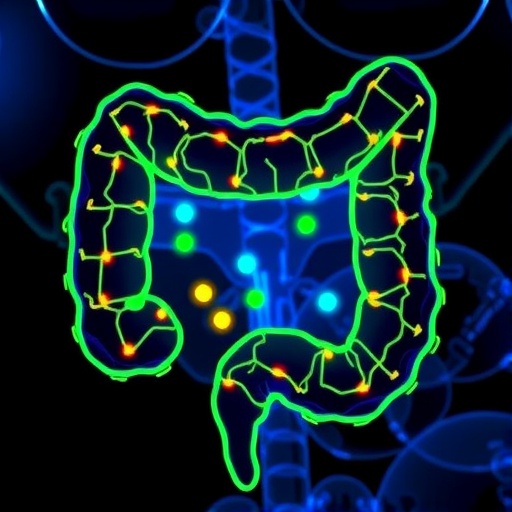
In a groundbreaking study poised to reshape our understanding of cellular metabolism and cancer prevention, researchers have unveiled critical insights into the role of NAPRT-mediated deamidated NAD biosynthesis in fortifying colon tissue resilience and curbing tumor growth. Published in Nature Communications in 2026, this landmark research sheds light on the nuanced mechanisms of nicotinamide adenine dinucleotide (NAD) metabolism, revealing its pivotal function far beyond mere energy transactions within cells. The work spearheaded by Wu, Williams, Liang, and their colleagues not only expands the frontier of metabolic biology but also opens promising avenues for therapeutic interventions targeting colorectal cancer, a leading cause of cancer mortality worldwide.
At the core of this revelation lies the enzyme nicotinic acid phosphoribosyltransferase (NAPRT), a key catalyst responsible for initiating the deamidated NAD biosynthesis pathway. Unlike the canonical amidated NAD salvage pathways, the deamidated route represents an alternative metabolic axis previously underappreciated in cellular physiology. By converting nicotinic acid (NA) into nicotinic acid mononucleotide (NAMN), NAPRT serves as a gatekeeper molecule orchestrating the availability of NAD, a coenzyme indispensable for a multitude of enzymatic reactions, including those vital for DNA repair, cellular signaling, and oxidative metabolism.
The colon, an organ incessantly exposed to microbial metabolites, dietary constituents, and environmental toxins, demands robust metabolic flexibility and repair capacity. This study highlights how upregulated NAPRT expression in colonic epithelial cells orchestrates a metabolic shift favoring deamidated NAD biosynthesis, thereby enhancing the tissue’s ability to withstand oxidative stress, inflammatory insults, and genotoxic agents. Through a series of meticulously designed in vivo and in vitro experiments, the authors demonstrated that heightened NAPRT activity was correlated with increased NAD pools, which underpin the activation of sirtuins and poly(ADP-ribose) polymerases (PARPs), integral players in chromatin remodeling and DNA damage response pathways.
Understanding this metabolic reshaping is essential, as diminished NAD levels have been linked with cellular senescence, impaired DNA repair, and chronic inflammation—hallmarks of tumorigenesis. The research team employed genetically modified mouse models deficient in NAPRT, revealing a stark increase in susceptibility to colon carcinogenesis following exposure to chemical carcinogens. Conversely, overexpression of NAPRT provided a protective effect, significantly suppressing tumor formation and progression. This correlation underscores a causal relationship between NAPRT-mediated NAD biosynthesis and colon tissue homeostasis.
Delving deeper, the study elucidated that the augmented NAD generated through the deamidated pathway enables enhanced activity of sirtuin family deacetylases, particularly SIRT1, which modulates gene expression and maintains genomic stability. Sirtuin activation through increased NAD availability promotes cellular quiescence, efficient DNA repair mechanisms, and anti-inflammatory signaling cascades. These processes collectively reduce the mutational burden and mitigate the chronic inflammatory milieu that fosters tumor initiation and expansion.
Importantly, the study also navigates the complex interplay between gut microbiota and host NAD metabolism. The metabolic byproducts of commensal microbes, including nicotinic acid derivatives, appear to influence NAPRT activity within colonic cells, suggesting an intricate host-microbiome crosstalk that contributes to maintaining epithelial integrity. This insight adds a novel dimension to our understanding of how diet, microbial composition, and host metabolic pathways coexist in a delicate balance to prevent colorectal cancer.
From a therapeutic perspective, the findings illuminate new possibilities for NAD-centric interventions. Pharmacological upregulation of NAPRT or supplementation with nicotinic acid could theoretically potentiate the deamidated NAD biosynthesis pathway, enhancing colon tissue resiliency against carcinogenic insults. Such strategies may complement existing chemopreventive measures or serve as adjuvants to improve DNA repair fidelity during cancer treatment.
Moreover, the elucidation of the deamidated NAD biosynthesis pathway’s protective role challenges prevailing assumptions that total NAD pool size is the sole determinant of metabolic health. Instead, the source and enzymatic routes of NAD production might differentially influence cellular functions and disease outcomes, highlighting the need to reconsider metabolic interventions through a more nuanced biochemical lens.
The comprehensive biochemical and molecular characterization accomplished by Wu and colleagues was enabled by advanced metabolomic profiling techniques, isotope tracing, and CRISPR-Cas9–mediated gene editing. These cutting-edge technologies allowed for precise quantification of NAD metabolites and the dissection of pathway-specific contributions to tissue physiology and pathophysiology.
In summary, this study paints a detailed mechanistic portrait of how NAPRT-mediated deamidated NAD biosynthesis undergirds colon tissue health and prevents tumorigenesis. Given the pervasiveness of colorectal cancer and the limitations of current preventive strategies, these findings herald a potentially transformative biomedical breakthrough. They not only provide a compelling rationale for exploring metabolic modulation in cancer prevention but also underscore the broader significance of NAD metabolism in human health and disease.
As the scientific community digests these revelations, further research will undoubtedly delve into the therapeutic viability of targeting NAPRT and the deamidated NAD pathway in cancer-prone populations. Clinical trials may explore the safety and efficacy of nicotinic acid supplementation or small molecules that amplify NAPRT activity. Concurrently, investigations into the microbiome’s role could yield probiotic or dietary interventions aimed at bolstering colon tissue defenses through metabolic means.
This work also invites a reevaluation of metabolic biomarkers used in oncology and precision medicine. By distinguishing between amidated and deamidated NAD biosynthetic fluxes, clinicians may better stratify patients’ risk profiles and tailor interventions accordingly. The confluence of metabolism, epigenetics, and microbiology epitomized by this study signals a burgeoning frontier in cancer biology that transcends traditional genetic paradigms.
In conclusion, the identification of NAPRT’s critical role in deamidated NAD biosynthesis as a determinant of colon tissue resiliency and tumor suppression represents a monumental advance in our understanding of cellular metabolism’s interface with cancer biology. The findings elucidate fundamental biochemical pathways and lay the groundwork for innovative strategies that may one day revolutionize colorectal cancer prevention and treatment, offering new hope to millions worldwide.
Subject of Research: The role of NAPRT-mediated deamidated NAD biosynthesis in enhancing colon tissue resilience and suppressing tumorigenesis.
Article Title: NAPRT-mediated deamidated NAD biosynthesis enhances colon tissue resiliency and suppresses tumorigenesis.
Article References:
Wu, X., Williams, J.G., Liang, H. et al. NAPRT-mediated deamidated NAD biosynthesis enhances colon tissue resiliency and suppresses tumorigenesis. Nat Commun (2026). https://doi.org/10.1038/s41467-026-68998-w
Image Credits: AI Generated


