

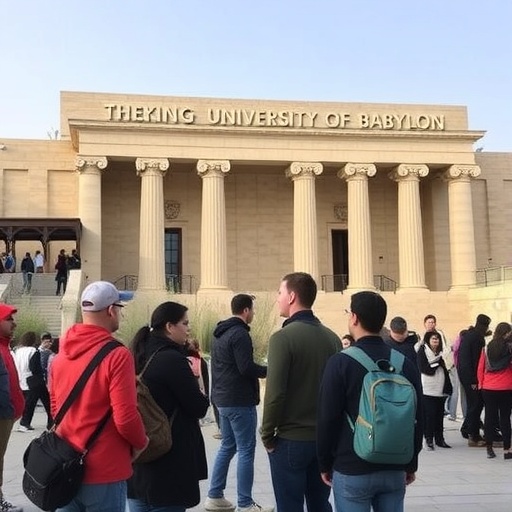
Myopia, commonly known as nearsightedness, has reached alarming proportions worldwide, and a recent study highlights its growing prevalence among Iraqi medical students at the University of Babylon. The findings, published in the journal Discover Education by Hammood and colleagues, illuminate the increasing struggle with myopia faced by this elite group of future healthcare providers, indicating a broader, concerning trend within educational systems. The research underscores a significant public health issue that could have long-lasting implications for education and healthcare outcomes in Iraq.
In recent years, myopia has transitioned from a mere visual nuisance to a global health epidemic, affecting millions and altering the landscape of how educational institutions address eye health. Recent statistics reveal that the incidence of this refractive error is not confined to specific geographical borders, as urbanization, lifestyle changes, and screen time surge. The implications of these trends are particularly concerning for students, who rely heavily on their vision during their studies.
The study conducted at the University of Babylon encompassed a diverse sample of medical students, aiming to quantify the prevalence of myopia and explore its contributing factors. Researchers employed a comprehensive cross-sectional approach, which provided pertinent insights into the correlation between academic demands and the worsening visual acuity among students. Concerns surrounding eye strain due to prolonged reading, digital screen exposure, and lack of adequate outdoor activities resonate deeply within the findings of this research.
Interestingly, the researchers noted that myopia prevalence was significantly higher among students who spent more than six hours per day engaged with digital devices, a stark reminder of the ongoing digital revolution. Students today find themselves immersed in learning environments dominated by technology, exposing them to potential visual risks that may not have been as pronounced in previous generations. The interaction between excessive screen time and the development of myopia presents a critical challenge that educators and policymakers must address.
Alongside technological interactions, researchers identified genetic predispositions as another crucial element influencing myopia development. Family history has long been recognized as a contributing factor in the progression of nearsightedness. In the case of the medical students evaluated in this study, data indicated that those with a parental history of myopia exhibited a higher likelihood of experiencing similar vision problems. This intertwining of genetics and environmental exposure sets a complex stage for understanding how myopia evolves within student populations.
With these findings in mind, Hammood and colleagues advocate for the implementation of preventive strategies targeting eye health among students. Such accommodations could encompass regular eye examinations, educational initiatives promoting vision care, and an emphasis on balanced lifestyle habits that prioritize eye protection. Incorporating outdoor activities into students’ schedules might also counteract the adverse effects of excessive screen time, fostering improved overall health and visual acuity.
Public health advocacy takes on a significant role in this conversation, as stakeholders within educational systems, healthcare sectors, and governmental organizations must collaboratively work toward implementing effective strategies. The study calls for a united front that promotes awareness of myopia as not solely an individual concern but a collective responsibility. As future healthcare providers, medical students have a unique opportunity to lead the charge in prioritizing eye health within their communities.
Among the numerous implications of this research, it is clear that addressing myopia’s escalating prevalence in educational institutions serves not only to enhance individual student outcomes but also bolsters future healthcare initiatives. Investment in initiatives that promote healthy vision habits translates into a more capable and resilient future workforce, better equipped to address the challenges posed by visual impairments on a population scale.
Furthermore, digital literacy programs could take on an essential role by educating students about the potential hazards of excessive screen exposure and the necessity of regular eye health assessments. By embedding these learning experiences into medical curricula, students can better understand the gravity of myopia as they prepare for their roles in health education, prevention, and treatment.
In conclusion, the cross-sectional study conducted by Hammood et al. emphasizes the necessity to address the increasing prevalence of myopia among Iraqi medical students at the University of Babylon. As the conversation on eye health continues to develop within educational discourse, proactive measures must take precedence. The time to act is now—our collective vision for a healthier future relies upon our capacity to address challenges like myopia before they escalate into larger public health crises.
The ramifications of the study extend beyond mere statistics; they symbolize an urgent call to action for educational institutions, medical communities, and students alike. Ensuring that future generations retain healthy vision will be essential to creating a resilient, capable workforce dedicated to improving public health outcomes.
As the world adapts to an ever-changing landscape influenced by technology, fostering a culture of awareness and proactive eye care may pave the way for a vision-healthy future. Treading down this path, we might look ahead to a time when nearsightedness is not a growing concern, but rather an adequately managed aspect of our collective health narrative.
Subject of Research: Myopia prevalence among Iraqi medical students.
Article Title: Myopia: an increasing problem for Iraqi medical students at the University of Babylon: a cross-sectional study.
Article References:
Hammood, H.L., Hadi, H.R., Al-Mosawi, R.H. et al. Myopia: an increasing problem for Iraqi medical students at the university of Babylon: a cross-sectional study. Discov Educ 4, 553 (2025). https://doi.org/10.1007/s44217-025-00974-w
Image Credits: AI Generated
DOI: https://doi.org/10.1007/s44217-025-00974-w
Keywords: Myopia, Iraqi medical students, eye health, cross-sectional study, University of Babylon


