

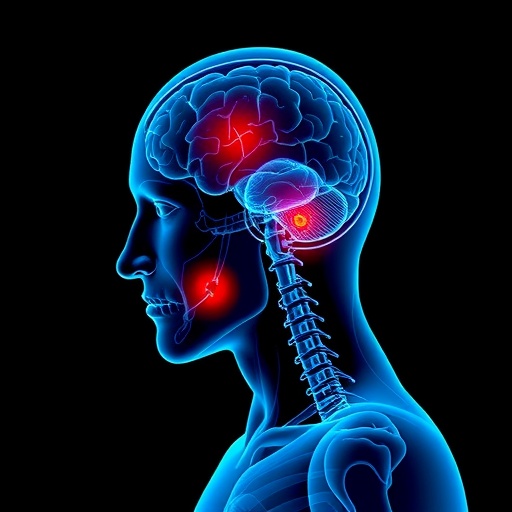
In a groundbreaking study set to redefine our understanding of Parkinson’s disease (PD), researchers have uncovered compelling evidence linking muscle bursting patterns and corticomotor excitability to impaired impulse control. Published in the prestigious npj Parkinson’s Disease journal, this research illuminates the neural disruptions underlying one of the most challenging non-motor symptoms experienced by individuals with Parkinson’s disease.
Impulse control disorders (ICDs) in Parkinson’s disease—ranging from compulsive gambling and hypersexuality to uncontrolled shopping and eating—pose significant challenges for patients and their families. Although these behaviors are recognized as critical aspects of neuropsychiatric involvement in PD, the neurophysiological mechanisms driving them remain elusive. This new study by Warden, McAllister, Cruse, and colleagues offers a meticulous examination of electrophysiological markers that may serve as objective predictors and potential therapeutic targets for ICDs.
At the heart of the research lies the phenomenon of muscle bursting, a pattern of rapid, synchronized muscle activity that has long been associated with motor control. By applying advanced surface electromyography (EMG) techniques, the researchers were able to quantify the frequency and dynamics of these bursts in the limbs of Parkinson’s patients exhibiting ICD symptoms. Remarkably, they found that abnormal bursting patterns correlated strongly with the severity of impulsive behaviors, suggesting a direct link between peripheral muscular activity and central neural control pathways.
Complementing the muscle activity measurements, the team employed transcranial magnetic stimulation (TMS) to investigate corticomotor excitability—a measure of the brain’s motor cortex responsiveness. This technique allowed for the non-invasive probing of corticospinal pathways, providing insights into how the central nervous system’s motor command is altered in PD patients with impulse control problems. The study revealed elevated corticomotor excitability in these individuals, indicating hyperactive motor cortical circuits that may underlie dysregulated impulse control.
The implications of these findings extend beyond the conventional motor symptoms typically emphasized in Parkinson’s disease research. The coupling of abnormal muscle bursts with heightened corticomotor excitability paints a complex picture of motor and non-motor integration failure. This suggests that the motor cortex and associated spinal mechanisms may contribute substantially to the manifestation of ICDs, challenging the notion that such disorders are purely dopaminergic or limbic in origin.
One of the significant novelties of this research is the potential biomarker application of muscle bursting and corticomotor excitability metrics. Clinicians currently rely heavily on subjective scales and patient self-reporting to diagnose and track ICDs in PD. Objective, quantifiable electrophysiological signatures could revolutionize this process, offering a reproducible means of identifying high-risk patients and tailoring individual therapeutic strategies more effectively.
Technically, the study harnessed a multimodal approach integrating neurophysiological recording and rigorous computational analyses. Sophisticated algorithms were used to parse EMG signals, extracting burst timing, amplitude, and coherence across muscle groups. Simultaneously, TMS protocols measured motor evoked potentials (MEPs) across various stimulus intensities, enabling the calculation of input-output curves representative of cortical excitability. This comprehensive dataset allowed the researchers to correlate peripheral muscle phenomena with central brain activity robustly.
Furthermore, the temporal dynamics of muscle bursting events revealed intriguing patterns related to voluntary and involuntary movement initiation. Patients with pronounced impulsivity displayed not only increased burst frequency but also altered burst timing relative to motor tasks. This suggests a disruption in the sensorimotor integration essential for inhibitory control, highlighting a potential mechanistic avenue for targeted neuromodulation treatments such as repetitive TMS or deep brain stimulation adaptations.
The interrelationship between dopaminergic therapy and the electrophysiological findings was also explored. Since dopamine replacement is known to exacerbate ICDs in some PD patients, the study investigated whether medication status influenced muscle bursts or corticomotor excitability. Although results are preliminary, initial data suggest that dopamine agonists may amplify the aberrant bursting activity and cortical excitability, shedding light on a physiological substrate for drug-induced impulse control problems.
This research also raises pressing questions about the broader role of motor cortex hyperexcitability in neuropsychiatric disorders overlapping with Parkinson’s disease. The involvement of corticomotor circuits in behavioral control echoes findings in disorders like Tourette syndrome and obsessive-compulsive disorder, where motor cortex abnormalities contribute to symptomatology. Understanding these parallels may open the door to cross-condition therapeutic insights or repurposing of neuromodulatory techniques.
The findings pave the way for future longitudinal studies to determine the causal directionality and temporal progression of electrophysiological changes relative to ICD development. Specifically, whether muscle bursting abnormalities precede behavioral symptoms or emerge as a consequence remains to be elucidated. Such insights are critical for designing preventive interventions or early detection frameworks for high-risk individuals.
Moreover, the integration of these electrophysiological markers with neuroimaging, particularly functional MRI and diffusion tensor imaging, could provide a multidimensional understanding of the structural and functional brain network disruptions coinciding with impaired impulse control. Multimodal biomarker panels would significantly enhance diagnostic accuracy and treatment monitoring.
In translational terms, this study holds promise for refining neuromodulation therapies targeting the motor cortex and spinal circuits. Personalizing stimulation parameters based on individual bursting profiles and cortical excitability assessments may optimize symptom relief and minimize side effects. The possibility of leveraging closed-loop stimulation systems that adapt in real time to electrophysiological feedback is a thrilling prospect on the horizon.
Ultimately, these discoveries underscore the profound complexity of Parkinson’s disease, challenging prevailing frameworks that isolate motor symptoms from the rich tapestry of neuropsychiatric manifestations. By bridging peripheral muscle physiology with cortical excitability patterns, the study invites a holistic reevaluation of motor and behavioral symptom interdependencies, highlighting innovative routes for research and clinical intervention.
As the global prevalence of Parkinson’s disease continues to rise alongside an aging population, the urgency to decode the neural underpinnings of non-motor symptoms escalates. This research marks a pivotal step towards such understanding, pointing towards refined diagnostic tools and novel treatment targets that address impulse control disorders—arguably among the most debilitating challenges faced by patients.
In conclusion, Warden and colleagues’ work provides a compelling narrative that muscle bursting and corticomotor excitability are not mere epiphenomena but central contributors to impaired impulse control in Parkinson’s disease. Their meticulous methodology, compelling results, and incisive interpretation offer hope for improved quality of life through enhanced diagnosis and tailored therapeutics, heralding a new era in Parkinson’s research.
Subject of Research: The investigation focuses on the neurophysiological mechanisms underlying impaired impulse control in Parkinson’s disease, emphasizing muscle bursting activity and corticomotor excitability.
Article Title: Muscle bursting and corticomotor excitability mark impaired impulse control in Parkinson’s disease.
Article References:
Warden, A.C.M., McAllister, C.J., Cruse, D. et al. Muscle bursting and corticomotor excitability mark impaired impulse control in Parkinson’s disease. npj Parkinsons Dis. (2025). https://doi.org/10.1038/s41531-025-01207-5
Image Credits: AI Generated


