

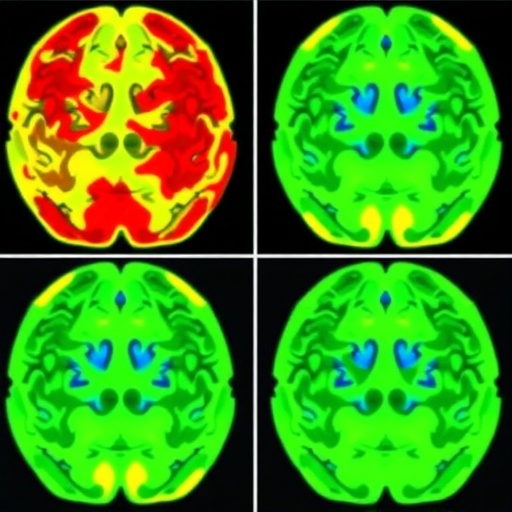
In a groundbreaking advancement poised to transform psychiatric diagnostics, researchers have unveiled a novel multimodal approach utilizing electroencephalography (EEG) combined with functional near-infrared spectroscopy (fNIRS) to enhance the accuracy and reliability of bipolar disorder diagnosis. Published in Translational Psychiatry, this innovative study by Tahir, Planat-Chrétien, Bertrand, and colleagues introduces a sophisticated classification framework that harnesses the complementary strengths of EEG and fNIRS, potentially setting a revolutionary standard for clinical neuropsychiatry.
Bipolar disorder, characterized by unpredictable mood swings ranging from manic highs to depressive lows, remains a diagnostic challenge due to overlapping symptoms with other mental health conditions and reliance on subjective clinical assessments. Traditional diagnostic protocols often fall short of providing definitive biomarkers, resulting in delays and inaccuracies in diagnosis. Addressing this critical gap, the research team proposed an integrative neuroimaging strategy that captures both electrophysiological and hemodynamic brain activities to decode the complex neural signatures underlying bipolar disorder.
EEG, a longstanding tool in neuroscience, records electrical brain activity with high temporal resolution, revealing rapid fluctuations in neuronal firing patterns. However, it lacks fine spatial resolution and specificity regarding cerebral oxygenation and metabolic changes. By contrast, fNIRS measures cerebral blood flow and oxygenation changes with a higher spatial resolution than EEG but with slower temporal dynamics. The synergy of these modalities enables the capture of a rich dataset encompassing both fast electrical signals and slower vascular responses, providing a holistic neural snapshot.
The core of the study involved integrating and classifying the multimodal data using advanced machine learning algorithms. The researchers meticulously recorded simultaneous EEG and fNIRS signals from participants diagnosed with bipolar disorder alongside healthy controls, aiming to extract discriminative features capable of facilitating accurate classification. Parameters such as spectral power distributions from EEG and hemodynamic changes in specific cortical regions detected by fNIRS were analyzed, creating a multidimensional feature space for robust pattern recognition.
Employing state-of-the-art classifiers, including support vector machines and deep neural networks, the authors optimized the system to distinguish bipolar signatures from normative brain activity. Their model demonstrated remarkable sensitivity and specificity, outperforming unimodal approaches relying solely on either EEG or fNIRS data. This multimodal fusion not only refined diagnostic precision but also illuminated distinct neurophysiological mechanisms implicated in bipolar pathology, such as altered prefrontal cortex functionality and disrupted connectivity patterns.
One of the striking outcomes of this study is its demonstration that simultaneous electrophysiological and hemodynamic monitoring can yield complementary biomarkers that single modalities miss. By effectively bridging temporal and spatial gaps, this approach captures a more comprehensive brain activity profile, offering new insights into the dynamic interplay between neuronal firing and vascular responses in psychiatric conditions. These findings challenge the traditional paradigms of mental health diagnostics rooted in symptom-based evaluations.
Beyond diagnostics, the multimodal EEG-fNIRS framework holds promise for monitoring treatment response and disease progression in bipolar disorder. Longitudinal applications could enable clinicians to tailor therapeutics based on objective biomarkers, fostering personalized medicine approaches in psychiatry. Moreover, its non-invasive and relatively portable nature makes it amenable for routine clinical use, potentially facilitating wider accessibility in diverse healthcare settings.
Technical innovations embedded in this study encompass refined sensor configurations and optimized signal processing pipelines that mitigate artifacts common in both EEG and fNIRS recordings. The research team devised novel algorithms to synchronize and co-register the data streams accurately, ensuring that the temporal alignment enhances feature extraction fidelity. Such meticulous engineering underpinned the success of the classification framework, underscoring the importance of integrative computational neuroscience methodologies.
The potential impact of this work extends to other neuropsychiatric disorders where diagnosis remains elusive, including major depression, schizophrenia, and anxiety disorders. The modular nature of the multimodal classification framework allows adaptation to different patient populations by retraining algorithms with disorder-specific datasets. This scalability makes the technology a versatile platform for advancing the broader landscape of brain disorder diagnostics and research.
Ethical considerations also play a pivotal role in deploying AI-driven diagnostic tools in psychiatry. Ensuring transparency, fairness, and patient privacy will be essential as such technologies progress toward clinical translation. The study discusses measures taken to anonymize data and validate the algorithm’s generalizability across demographic variables, emphasizing a responsible approach to integrating artificial intelligence into mental health care.
The authors highlight future directions including expanding sample sizes, incorporating longitudinal datasets, and integrating additional modalities such as functional magnetic resonance imaging (fMRI) or positron emission tomography (PET) to further enrich diagnostic accuracy. Collaborative efforts across interdisciplinary domains, bridging neuroscience, engineering, psychiatry, and data science, will catalyze the refinement and clinical adoption of multimodal neuroimaging solutions.
In conclusion, the pioneering multimodal EEG-fNIRS classification model represents a significant stride toward objective, technology-driven diagnostics for bipolar disorder. By capturing the brain’s electrical and vascular signatures simultaneously and interpreting them through powerful machine learning algorithms, this approach promises to disrupt conventional psychiatric paradigms, enabling earlier detection, nuanced understanding, and individualized management of complex mood disorders. As this innovation gains momentum, it heralds a new era in mental health diagnostics where biological markers replace subjective assessments, with profound implications for patient outcomes and healthcare systems worldwide.
Subject of Research:
Bipolar disorder diagnosis using multimodal brain imaging combining EEG and fNIRS data.
Article Title:
Multimodal EEG–fNIRS classification as a clinical tool for bipolar disorder diagnosis.
Article References:
Tahir, I., Planat-Chrétien, A., Bertrand, A. et al. Multimodal EEG–fNIRS classification as a clinical tool for bipolar disorder diagnosis. Transl Psychiatry (2026). https://doi.org/10.1038/s41398-026-03858-1
Image Credits: AI Generated
DOI: https://doi.org/10.1038/s41398-026-03858-1


