

The most climate-vulnerable countries with the highest hunger rates are significantly under-represented in agrifood research – sparking a need for urgent action and increased investments to redress this imbalance, a major new study has found.

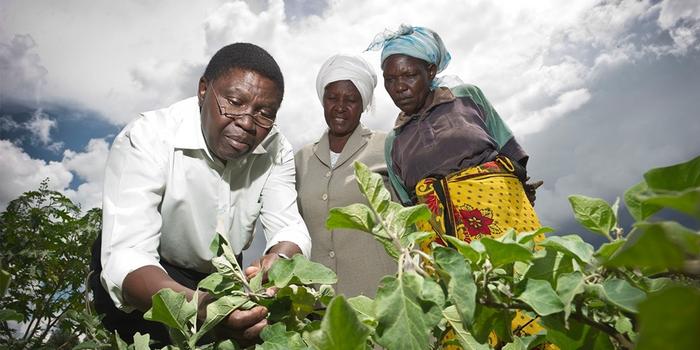
Credit: CABI
The most climate-vulnerable countries with the highest hunger rates are significantly under-represented in agrifood research – sparking a need for urgent action and increased investments to redress this imbalance, a major new study has found.
The ‘State of the Field for Research on Agrifood Systems’ report, published by The Juno Evidence Alliance – a partnership of CABI, Havos.Ai and the University of Notre Dame, USA – found that only one out of eight research papers is led by scientists from the 81 poorest countries.
The world-leading authors, which included those from the Food and Agriculture Organization of the United Nations (FAO), the International Food Policy Research Institute (IFPRI) and the Inter-American Institute for Cooperation on Agriculture (IICA), revealed that some countries have an evidence base of fewer than 1,000 articles.
Poised to shape future research agendas for greater food security
This ground-breaking report, which used artificial intelligence to assess 6.3 million scientific titles, abstracts, and metadata spanning the years 2010 to 2023, sourced from CAB Abstracts, offers an overview of current outcomes from research and is poised to shape future research agendas for greater food security with donors and governments.
It also presents a series of recommendations including calls for increased funding to support original research efforts in the world’s poorest countries – focusing on regions most vulnerable to climate change and hunger.
Furthermore, the scientists suggest greater promotion of participatory practices to incorporate women’s perspectives into agricultural research methodologies and strengthen engagement on outcome and intervention pathways to foster coherence and cooperation in addressing agricultural challenges.
Inclusive and equitable development within food systems
Professor Jaron Porciello, Director of the Juno Evidence Alliance and lead author of ‘The State of the Field for Research on Agrifood Systems,’ said, “This report aligns scientific research with policy imperatives, concentrating on outcomes and interventions proposed by scientists to guide inclusive and equitable development within food systems across low-and middle-income countries.”
The report highlights how research publication in agriculture and food systems have increased more than 60% in the past decade, with publications spanning over 35,000 journals and technical reports within agricultural domains alone.
However, dominance in agricultural research publications by countries such as China, the USA, Brazil and India, the scientists say, underscores the need for enhanced focus on regions with disproportionately lower research output.
Insights crucial for informed policymaking
They add that under-representation of scientists from the world’s poorest countries in scientific publications stifles global conversation, impeding the acquisition of contextually relevant insights crucial for informed policymaking.
Professor Porciello added, “Discrepancies in crop-related research, where cereals receive 40% more research attention than fruits and vegetables, highlights potentially missed opportunities to address critical outcomes through interventions – particularly in promoting gender equity, nutritional outcomes, and sustainable farming practices.”
“Keeping pace presents an immense challenge. Beyond the sheer volume lies the Herculean task of synthesizing scientific research into actionable evidence.”
Further recommendations from ‘The State of the Field for Research on Agrifood Systems’ report include calls for greater investment in initiatives promoting crop diversification to enhance food security and agricultural sustainability.
The report also highlights the need for high-quality research aimed at bridging the gap between farmers’ perceptions of climate change and actionable advisory services.
Other researchers who collaborated on the research included those from Cornell University and the University of Texas, USA, the University of Helsinki, Finland, and Global Affairs Canada.
Additional information
Main image: Credit: CABI.
Media enquiries
Professor Jaron Porciello, Global Director, Evidence and Policy, CABI and Chief Technology Officer of Havos.Ai, and Lead author of The State of the Field for Research on Agrifood Systems, email: j.porciello@cabi.org
Wayne Coles, Senior PR Manager, CABI, email: w.coles@cabi.org
Full report reference
Porciello, J., et al (2024). The State of the Field for Research on Agrifood Systems. Juno Reports.
The report can be read here.
Acknowledgements
The report was funded by UK International Development and the Bill & Melinda Gates Foundation.
About the Juno Evidence Alliance
The Juno Evidence Alliance is co-founded by CABI, the University of Notre Dame, and Havos.Ai, with support from the Foreign, Commonwealth & Development Office (FCDO) in the United Kingdom, the Bill & Melinda Gates Foundation, the Rockefeller Foundation, and the US Agency for International Development.
Juno is a pioneering global platform at the forefront of transforming agriculture, food systems, and climate adaptation through evidence-based policy. Our mission is to fill the critical gap in the coordination and standardization of evidence-informed decision-making processes.
By harnessing the power of artificial intelligence and established scientific research methods, we expedite the synthesis of diverse data sources, delivering scientific and technical conclusions for governments, funders, and policymakers worldwide.
Juno brings together researchers, policymakers, publishers, computer and data scientists, and evidence advocates from across fields and disciplines to break down traditional boundaries between research production and use.
For more information visit:
Method of Research
Literature review
Subject of Research
Not applicable
Article Title
The State of the Field for Research on Agrifood Systems
Article Publication Date
1-Jul-2024

