

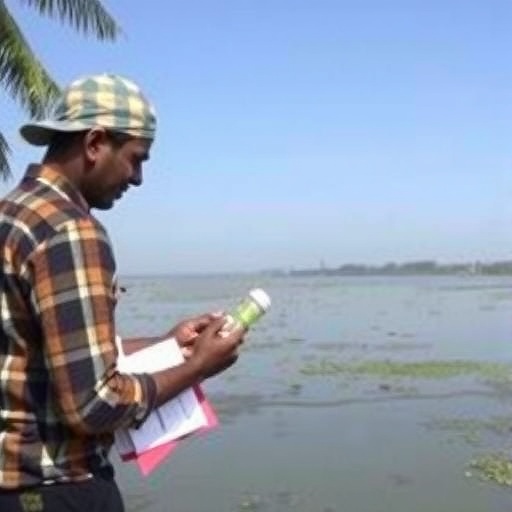
The Meghna River, one of the major rivers of Bangladesh, has long been a vital resource for the surrounding communities, sustaining agriculture, fishing, and drinking water. However, the increased industrialization and urbanization in the region have led to the alarming introduction of various pollutants, particularly organochlorine pesticides. A recent study conducted by researchers Haider, Islam, and Shoeb sheds light on the spatio-environmental surveillance of these contaminants in the Meghna River, utilizing an advanced method of liquid-liquid extraction coupled with gas chromatography-electron capture detection (GC-ECD). This innovative approach aims to not only evaluate the current state of pesticide contamination but also to enhance our understanding of its ecological impacts.
The investigation into organochlorine pesticides (OCPs) is particularly pertinent given their bioaccumulative nature and long half-lives, which pose significant threats to both environmental and human health. These compounds are remnants of agricultural practices that, despite being banned in many countries due to their toxicity, continue to linger in the ecosystem. The study highlights the importance of continuous monitoring, especially since these pollutants can migrate and accumulate in the aquatic food chains, leading to broader implications for biodiversity and safety of the water supply.
In the realm of environmental science, the methodologies employed in studies such as this one are just as critical as the outcomes. The research utilizes liquid-liquid extraction, a time-tested technique that enables the separation of organic compounds from an aqueous solution. By employing this method, the researchers can concentrate the pesticide residues, making them easier to detect and quantify through subsequent analysis using GC-ECD. This combination of techniques proves beneficial in addressing the myriad complexities associated with environmental samples, which often contain a mix of diverse contaminants.
The gas chromatography-electron capture detection (GC-ECD) method is known for its sensitivity and selectivity, making it ideal for detecting trace levels of organochlorine pesticides. ECD operates on the principle of thermal conductivity, providing a powerful means to identify even the faintest traces of these pollutants. The ability to detect OCPs with high precision is crucial, especially in regions where the concentration levels might pose risks to both aquatic life and local communities that depend on the river.
During the course of the study, samples were systematically collected from various locations along the Meghna River. Each site was chosen based on factors including proximity to agricultural runoff, industrial discharges, and urban settlements. The comprehensive nature of sampling ensures that the resulting data provides a well-rounded picture of the spatial distribution of organochlorine pesticides in the river ecosystem.
As the research team delved into the analytical phase, the importance of method validation came to the forefront. Detecting organochlorine pesticides is no straightforward task, as interferences from other organic substances can skew results significantly. Through rigorous calibration and the application of various quality control measures, the researchers ensured that their findings were reliable and indicative of true environmental conditions. This level of detail in methodology reinforces the credibility of the study’s conclusions.
One of the standout findings of the research was the high concentration of pesticides in areas near densely populated settlements and regions with intensive agricultural activities. This correlation suggests a direct link between anthropogenic activities and pesticide prevalence. It raises critical questions about the sustainability of agricultural practices in the region and calls for immediate regulatory measures to curtail the use of harmful chemicals.
The implications of these findings are not limited to environmental health; they extend to public health as well. The potential for bioaccumulation of organochlorine pesticides in fish, a staple in the local diet, signifies a direct pathway for human exposure. As the local population relies heavily on the Meghna River for their sustenance, understanding the extent of pesticide contamination becomes a pressing concern.
Additionally, the study emphasizes the necessity for ongoing environmental surveillance. Given the dynamic nature of river systems, where pollutants can fluctuate seasonally, a one-time assessment is insufficient. The researchers advocate for the establishment of a regular monitoring program that could better inform regulatory decisions, contributing to protective measures for both ecological and human health.
Moreover, as this research reveals the pressing need for action, it also highlights the larger conversation surrounding environmental justice. Communities living along the Meghna River bear the brunt of pollution yet often lack the resources or political clout to enact change. This study stands as a call to action for policymakers, scientists, and civil society to collaborate in addressing these environmental inequities, ensuring that vulnerable populations are protected from the adverse effects of pollution.
In closing, the work conducted by Haider and colleagues offers a crucial glimpse into the state of the Meghna River concerning organochlorine pesticides. Not only does it underscore the immediate need for action regarding pesticide usage and environmental policies, but it also sets a precedent for future research endeavors. As the environmental challenges evolve, so too must the methodologies employed to study and mitigate them. This study serves as a reminder of the interconnectedness of environmental health, public policy, and community engagement in building a sustainable future.
Subject of Research: Surveillance of organochlorine pesticides in the Meghna River.
Article Title: Spatio-environmental surveillance of organochlorine pesticides in the Meghna River by liquid–liquid extraction coupled with GC-ECD.
Article References:
Haider, A., Islam, M. & Shoeb, M. Spatio-environmental surveillance of organochlorine pesticides in the Meghna River by liquid–liquid extraction coupled with GC-ECD.
Environ Monit Assess 198, 21 (2026). https://doi.org/10.1007/s10661-025-14878-7.
Image Credits: AI Generated.
DOI: https://doi.org/10.1007/s10661-025-14878-7.
Keywords: organochlorine pesticides, Meghna River, liquid-liquid extraction, gas chromatography, environmental monitoring, pollution.


