
Friday, February 27, 2026
Science
No Result
View All Result
  • Login
  • HOME
  • SCIENCE NEWS
  • CONTACT US
  • HOME
  • SCIENCE NEWS
  • CONTACT US
No Result
View All Result
Scienmag
No Result
View All Result
Home Science News Earth Science

Monitoring Dive Pressure and Wildlife Interactions via Social Media

August 7, 2025
in Earth Science
Reading Time: 1 min read
0
65
SHARES
595
VIEWS
Share on FacebookShare on Twitter
ADVERTISEMENT

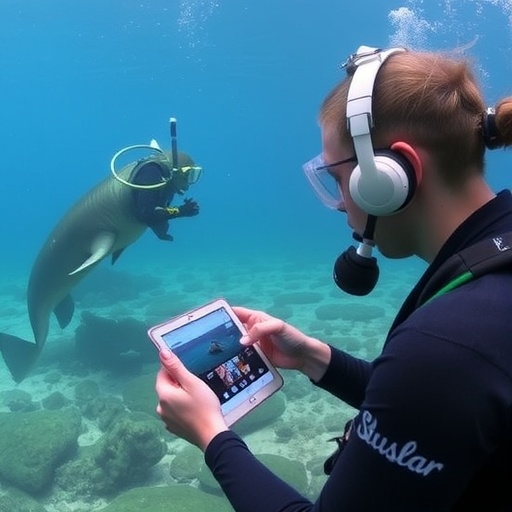
In the age of rapid technological advancements, the intersection of social media and environmental monitoring has emerged as an innovative frontier, particularly in the realm of marine conservation. A recent study published in Coral Reefs delves into how social media platforms can be harnessed to observe diving behaviors, anthropogenic pressures on marine ecosystems, and the nuanced interactions between divers and wildlife in the northern Red Sea. This encompasses a critical and evolving approach to understanding the pressures faced by fragile marine habitats.

The authors of the study, Neri, Oren, and Roll, highlight the pressing need for accurate monitoring of diving activities, especially in areas popular among diving enthusiasts. The northern Red Sea is well-known for its biodiversity and coral reef systems, making it a prime location for study. The researchers argue that as diving tourism expands, so too does the potential for human-induced disturbances to these delicate ecosystems. Therefore, monitoring human interactions with marine wildlife is not just valuable but essential to preserving the integrity of these habitats.

Through innovative use of social media analytics, the study aims to bridge a significant gap between recreational diving and conservation efforts. By examining the volume and nature of posts related to diving, the researchers hoped to identify patterns in diver behavior, frequency of visits to sensitive habitats, and any


Tags: anthropogenic pressures on marine ecosystemscoral reef conservation strategiesdata analytics for conservation effortsdivers' impact on marine habitatshuman-induced disturbances in marine environmentsinnovative environmental monitoring techniquesmonitoring diving activities through social mediapreserving fragile marine ecosystemsrecreational diving and biodiversitysocial media in marine conservationtechnology in wildlife monitoringwildlife interactions in the northern Red Sea
Share26Tweet16
Previous Post

Scientists Develop Technique to Halt Ultrafast Silicon Melting with Precision Laser Pulses

Next Post

Mapping Earth’s Giant Landslides: Insights from Topography

Related Posts

blank
Earth Science

Ancient Organic Carbon Released from Siberian Yedoma Lakes

February 27, 2026
blank
Earth Science

Abrupt Gulf Stream Shifts Signal Atlantic Circulation Collapse

February 27, 2026
blank
Earth Science

Daily Changes in Lunar Carbon, Nitrogen, Oxygen Ions

February 27, 2026
blank
Earth Science

Stratospheric Trigger Flips Winter “Warm Arctic-Cold Eurasia”

February 27, 2026
blank
Earth Science

Pathogen Spread Heightens Risks at Oyster Restoration Sites

February 27, 2026
blank
Earth Science

Deservingness Perceptions Influence Views on Environmental Migrants

February 27, 2026
Next Post
blank

Mapping Earth's Giant Landslides: Insights from Topography

  • Mothers who receive childcare support from maternal grandparents show more parental warmth, finds NTU Singapore study

    Mothers who receive childcare support from maternal grandparents show more parental warmth, finds NTU Singapore study

    27616 shares
    Share 11043 Tweet 6902
  • University of Seville Breaks 120-Year-Old Mystery, Revises a Key Einstein Concept

    1022 shares
    Share 409 Tweet 256
  • Bee body mass, pathogens and local climate influence heat tolerance

    665 shares
    Share 266 Tweet 166
  • Researchers record first-ever images and data of a shark experiencing a boat strike

    532 shares
    Share 213 Tweet 133
  • Groundbreaking Clinical Trial Reveals Lubiprostone Enhances Kidney Function

    517 shares
    Share 207 Tweet 129
Science

Embark on a thrilling journey of discovery with Scienmag.com—your ultimate source for cutting-edge breakthroughs. Immerse yourself in a world where curiosity knows no limits and tomorrow’s possibilities become today’s reality!

RECENT NEWS

  • Hidden Galaxy-Black Hole Growth in Dark Matter Halos
  • Ancient Organic Carbon Released from Siberian Yedoma Lakes
  • Prussian Blue Nanoparticles Combat Heart Injury via PANoptosis
  • Global Patterns in Urban Tree Diversity Revealed

Categories

  • Agriculture
  • Anthropology
  • Archaeology
  • Athmospheric
  • Biology
  • Biotechnology
  • Blog
  • Bussines
  • Cancer
  • Chemistry
  • Climate
  • Earth Science
  • Editorial Policy
  • Marine
  • Mathematics
  • Medicine
  • Pediatry
  • Policy
  • Psychology & Psychiatry
  • Science Education
  • Social Science
  • Space
  • Technology and Engineering

Subscribe to Blog via Email

Enter your email address to subscribe to this blog and receive notifications of new posts by email.

Join 5,190 other subscribers

© 2025 Scienmag - Science Magazine

Welcome Back!

Login to your account below

Forgotten Password?

Retrieve your password

Please enter your username or email address to reset your password.

Log In
No Result
View All Result
  • HOME
  • SCIENCE NEWS
  • CONTACT US

© 2025 Scienmag - Science Magazine

Discover more from Science

Subscribe now to keep reading and get access to the full archive.

Continue reading