

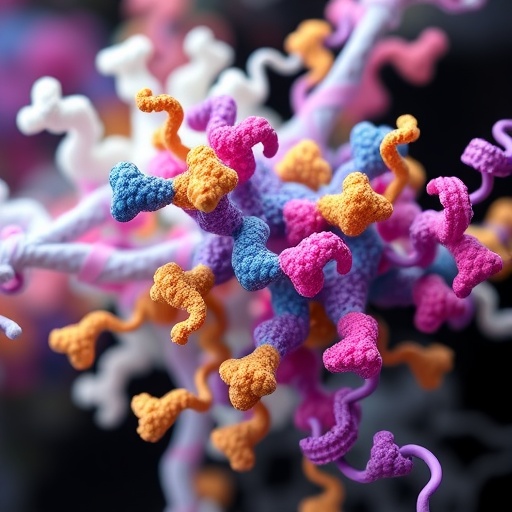
In a groundbreaking partnership that signals a new era in protein biology, EMBL’s European Bioinformatics Institute (EMBL-EBI), Google DeepMind, NVIDIA, and Seoul National University have jointly unveiled an unprecedented collection of AI-predicted protein complex structures. These predictions, now accessible through the AlphaFold Database, leverage advances in artificial intelligence to provide scientists worldwide with detailed structural insights into millions of protein complexes. This landmark development has the potential to revolutionize our understanding of cellular mechanics, disease pathways, and drug design by illuminating the intricate dance of protein interactions that govern life at the molecular level.
Proteins seldom act in isolation; instead, they assemble into complexes that execute the vast array of biological functions essential to life. Understanding the precise architecture of these complexes is vital for decoding cellular behavior and the molecular perturbations underlying disease. Yet, predicting the three-dimensional arrangements of multi-protein complexes is notoriously difficult due to their dynamic nature and the combinatorial explosion of possible interactions and conformations. The newly released dataset addresses this challenge head-on by focusing on homodimers—protein complexes formed by two identical polypeptide chains—across 20 highly relevant species. Incorporating such a breadth of data ensures wide applicability, especially in areas critical for global health.
The release, the largest dataset of protein complex structures ever made available, prioritizes biologically and medically significant proteins, including those from human cells and bacterial species designated as priority pathogens by the World Health Organization. By targeting these key proteins, the dataset facilitates immediate research applications in infectious disease studies, antimicrobial drug development, and understanding pathogen-host interactions. This global health emphasis underscores the initiative’s dual commitment to fundamental science and translational impact.
Central to this achievement is Google DeepMind’s AI system AlphaFold, renowned since 2021 for its unprecedented accuracy in predicting folded protein structures from amino acid sequences. Extending AlphaFold’s capabilities from single proteins to protein complexes required integrating domain expertise with innovative computational strategies. The collaboration between the partners harnessed government-scale bioinformatics infrastructure with cutting-edge AI algorithms. NVIDIA contributed by optimizing deep learning inference and accelerating multiple sequence alignment calculations integral to the prediction process. Simultaneously, Seoul National University’s Steinegger Lab provided pioneering methodologies to tackle the complex modeling of protein-protein interactions at scale.
EMBL-EBI’s role went beyond hosting the data; it fostered a scientific ecosystem that supports open access, data interoperability, and analytical tools for the broader research community. By embedding these complex predictions within the existing AlphaFold Database—a resource already accessed by over 3.4 million users from across 190 countries—the collaboration ensures that researchers globally, regardless of institutional resources, can engage directly with these structural insights. This democratization of data is pivotal for accelerating discoveries across disciplines ranging from structural biology to pharmacology.
The technical feat behind generating millions of protein complex predictions cannot be overstated. Historically, such computational tasks would demand an estimated 17 million GPU hours, representing an extraordinary barrier to entry for most laboratories. The team’s integrated AI/ML pipeline leverages batch processing, parallelism, and algorithmic optimizations to handle this workload efficiently. By executing these calculations once and serving the results openly, the partnership eliminates redundant efforts by individual researchers, streamlining scientific workflow worldwide.
The dataset currently encompasses 1.7 million high-confidence homodimer structures directly integrated into the AlphaFold Database, accompanied by an additional 18 million lower-confidence predictions available for bulk download. Meanwhile, exploratory work on heterodimers—complexes comprising two distinct proteins—is underway, marking the next frontier in building a comprehensive interactome atlas. The high-confidence predictions, verified through rigorous metrics and biological plausibility checks, provide a reliable scaffold for hypothesis-driven experimentation and computational modeling.
Beyond the immediate structural data, this advance opens avenues for elucidating the principles governing protein complex formation, stability, and dynamics. For example, the homodimeric protein complex Q55DI5 from the slime mold Dictyostelium discoideum exemplifies how AI models can reveal unexpected structural features—the homodimer folds by interlacing two chains that each contribute to forming a stable domain, an insight missed by single-chain modeling. Such revelations highlight how protein complex predictions expand our biological knowledge by unveiling conformations that are invisible when proteins are viewed in isolation.
Leading voices in the project emphasize the broader implications for biology and medicine. Dame Janet Thornton, Director Emeritus of EMBL-EBI, articulates how this resource heralds a foundational step toward charting the human interactome. The interactions encoded within protein complexes underpin critical regulatory pathways, signal transduction, and the molecular basis of disease. Comprehensive structural data will inform the rational design of novel therapeutics, improve our understanding of pathogen mechanisms, and ultimately bring us closer to a predictive biology where cellular behavior can be modeled and manipulated precisely.
The collaboration between these scientific powerhouses exemplifies the synergy between domain expertise and AI-driven innovation. Anthony Costa of NVIDIA highlights the transformative power of AI infrastructure to accelerate computational biology tasks by orders of magnitude—enabling analyses that were previously computationally prohibitive. Meanwhile, Martin Steinegger from Seoul National University points to the illumination of molecular interaction landscapes across diverse life forms as a significant contribution to the field—a contribution that bridges the evolutionary spectrum of proteins and their complexes.
Encapsulating the spirit of open science, this initiative signals a maturation point where data generation, prediction accuracy, and accessibility coalesce to empower the global research community. As more datasets emerge and the focus expands to heterodimers and transient complexes, a more intricate and nuanced map of the proteome’s interactive network will take shape. This progress not only enriches fundamental science but also accelerates applied efforts in drug discovery, synthetic biology, and understanding disease pathogenesis.
In conclusion, the integration of millions of predicted protein complexes into the AlphaFold Database stands as a transformative milestone. It reflects decades of scientific progress leveraged by next-generation AI technologies, creating a resource with profound implications for biological research and global health. The tremendous scale and openness of this dataset open vast exploratory possibilities that will reverberate throughout molecular biology—fueling discoveries that can reshape our understanding of life and disease for years to come.
Subject of Research: AI-predicted protein complex structures and their implications for biological function and global health.
Article Title: Unprecedented AI-Predicted Protein Complex Structures Revolutionize Biological Research and Drug Discovery
News Publication Date: Not specified in the source text.
Web References:
- AlphaFold Database: https://alphafold.ebi.ac.uk/
- WHO bacterial priority pathogens list: https://www.who.int/publications/i/item/9789240093461
Image Credits: AlphaFold Database; background by Karen Arnott/EMBL-EBI
Keywords
Artificial intelligence; Protein complexes; Protein structure; Protein folding; Computer processing; Computer science; Tropical diseases; Pathogens; Bacterial pathogens


