

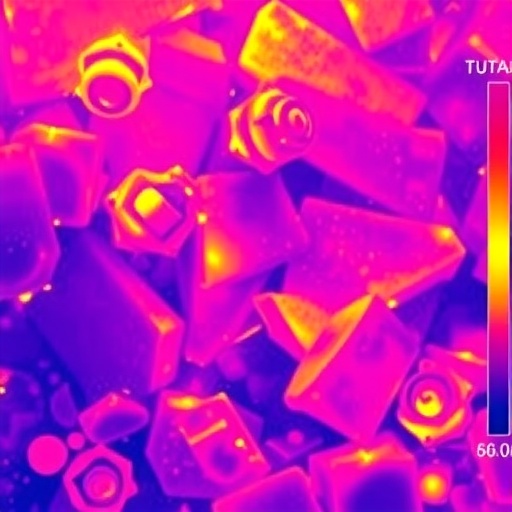
Recent advancements in mineral processing have paved the way for more effective and eco-friendly methods of ore sorting. The latest research conducted by Pan, Wang, and Pickles delves into the experimental foundations of microwave infrared sorting for Pb–Zn ores. The study not only enhances our understanding of the thermal behaviors of these ores but also demonstrates the significance of surface temperature distribution and thermal contrast in the sorting process. The implications of this research could transform the way minerals are extracted, leading to more sustainable practices within the mining industry.
As professionals in the field continue to seek innovative methods to refine ore separation, the application of microwave infrared technology emerges as a game-changer. By targeting the thermal properties of the ore, this technique promises to increase the efficiency of sorting Pb–Zn ores while potentially reducing energy consumption in the process. The innovative use of thermal contrast in the sorting process allows for a more precise identification of valuable minerals versus waste material.
One of the key findings of the study is the influence of non-uniform temperature distributions on the efficiency of the sorting process. When applying microwave infrared technology, the uneven heating within the ore samples can significantly impact the results. Understanding these thermal distributions enables researchers and industry professionals to optimize the sorting mechanisms. Moreover, the ability to measure and analyze the thermal behavior of these ores in real-time opens new avenues for the development of adaptive sorting technologies.
In conducting their experiments, the researchers characterized the physical and thermal properties of the Pb–Zn ores using advanced imaging techniques. By visualizing how different sections of an ore sample respond to microwave irradiation, the team gained valuable insights into how to effectively separate valuable minerals from less desirable ones. Their findings emphasize the need for a more detailed exploration of these properties to fully leverage the advantages offered by microwave infrared technology.
Equally important is the role of thermal contrast, which refers to the difference in temperature between the desired minerals and the surrounding material. The stronger the thermal contrast, the more efficient the separation process. The research team highlighted various factors that affect thermal contrast, including mineral composition, moisture content, and particle size. By documenting these parameters, they provided a thorough framework for optimizing microwave infrared sorting in real-world applications.
The experimental data underpins a broader trend within mineral processing where traditional methods are being re-evaluated in light of new technologies. As industries face increasing pressure to adopt sustainable practices, innovative approaches such as microwave infrared sorting are crucial. The ability to perform selective sorting at a molecular level could lead not only to enhanced recovery rates but also to a reduction in the environmental impact associated with mining operations.
Despite the promising findings, Pan and colleagues also pointed out some challenges that require further investigation. Variations in ore composition can lead to inconsistent thermal responses, underscoring the necessity for continuous research in this area. The need for standardized testing protocols and equipment is paramount to ensure replicability and reliability of results across various mining environments.
The researchers advocate for interdisciplinary collaboration to advance this field of study. Integrating insights from materials science, engineering, and environmental science may yield new solutions and innovations in ore sorting technologies. By fostering a collaborative atmosphere, the scientific community can further refine these techniques and produce robust methods that can withstand the complexities found in diverse mineral deposits.
Environmental considerations are increasingly becoming central to the methodologies employed within the mining sector. The reduction of waste and the minimization of energy usage are not just beneficial from a financial standpoint but are also critical for compliance with upcoming regulations designed to protect natural resources. The findings of this study emphasize that microwave infrared sorting aligns with such sustainability goals by enhancing efficiency and reducing the carbon footprint of ore processing.
Researchers also emphasize the applicability of this technology beyond Pb–Zn ores. The principles and methodologies developed in this research could be adapted for other types of ores, showcasing the versatility of microwave infrared technology. As the knowledge surrounding its use expands, so too does the potential for it to revolutionize mineral sorting across various commodities.
The future of mining will undoubtedly hinge on technological advancements that prioritize both efficiency and environmental stewardship. The comprehensive examination of physical and thermal properties of ores through microwave infrared technology represents a significant step forward in this endeavor. By focusing on refining sorting methodologies, the mining sector can advance toward more sustainable practices without compromising mineral recovery rates.
As industries and researchers continue to delve into the findings of Pan and colleagues, the broader implications for economic and environmental impact will unfold. Addressing the challenges and limitations surrounding this technology will remain a priority for future studies. Ultimately, the continued exploration of innovative sorting technologies holds the promise of significantly reshaping the operational landscape of the mining industry.
In conclusion, the experimental foundations laid by this research signify a meaningful contribution to the field of mineral processing. The insights gained into surface temperature distribution, non-uniformity, and thermal contrast have the potential to drive advancements in ore sorting technologies. By emphasizing sustainable practices and effective methods, industries can contribute to a greener future while maximizing recovery in mining operations.
Subject of Research: Microwave Infrared Pb–Zn Ore Sorting
Article Title: Experimental Foundations of Microwave Infrared Pb–Zn Ore Sorting: Insights into Surface Temperature Distribution, Non-Uniformity, and Thermal Contrast.
Article References: Pan, Z., Wang, Y., Pickles, C. et al. Experimental Foundations of Microwave Infrared Pb–Zn Ore Sorting: Insights into Surface Temperature Distribution, Non-Uniformity, and Thermal Contrast. Nat Resour Res (2026). https://doi.org/10.1007/s11053-025-10628-1
Image Credits: AI Generated
DOI: https://doi.org/10.1007/s11053-025-10628-1
Keywords: Microwave Infrared Sorting, Pb-Zn Ore, Mineral Processing, Surface Temperature Distribution, Thermal Contrast, Sustainable Practices, Mining Technology


