

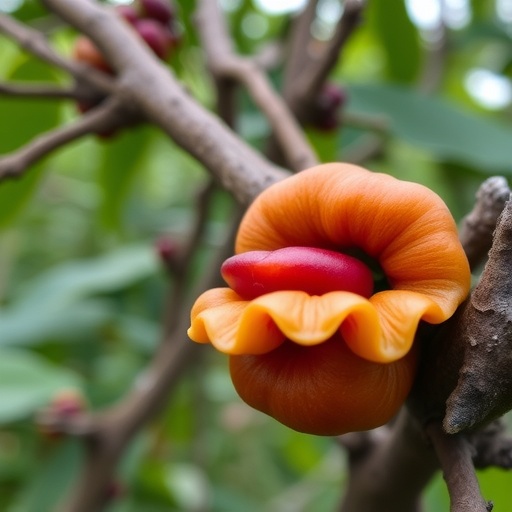
In the verdant highlands of southwestern China lies Yunnan Province, a globally recognized biodiversity hotspot boasting unparalleled variety in both flora and fauna. Among its rich agricultural output, Yunnan stands as the central hub of China’s coffee industry, responsible for virtually all the nation’s coffee production. This agricultural prominence, however, brings with it a complex ecological interplay—coffee plants serve as substrates for a diverse array of fungal species. These fungi can range from deleterious pathogens compromising plant health to benign inhabitants or even beneficial decomposers integral to nutrient cycling. Understanding the fungal communities associated with Coffea arabica is thus critical for both ecological insight and improving crop productivity.
A paradigm-shifting study, published in the prestigious open-access journal MycoKeys, has unveiled two previously unknown fungal species within the genus Neohelicomyces, isolated from coffee plant debris in Yunnan. Led by Mei-Yan Han from Chiang Mai University, this research painstakingly characterized Neohelicomyces coffeae and Neohelicomyces puerensis, expanding our knowledge of tubeufiaceous fungi interacting with agricultural systems. These findings not only highlight the fungal diversity flourishing in coffee agroecosystems but also underscore the importance of saprophytic fungi in maintaining ecosystem stability.
Neohelicomyces species are part of the Tubeufiaceae family in the order Tubeufiales, a lineage known for its intricate morphologies and ecological versatility. Both newly described species exhibit distinctive coil-shaped structures—glistening white patches visible on the necrotic branches of Coffea arabica. Neohelicomyces coffeae is characterized by relatively short conidiophore stems and multi-septate spores, features that distinguish it from its relatives. In contrast, Neohelicomyces puerensis displays tightly coiled filaments and unbranched conidiophores, morphologies that align with its eponymous city of discovery, Pu’er.
Crucially, the isolation of these fungi from dead woody tissue designates them firmly as saprophytes. Saprophytic fungi are essential decomposers in terrestrial ecosystems, capable of enzymatically degrading complex organic polymers such as lignin and cellulose. By dismantling recalcitrant plant biomass, Neohelicomyces species play a pivotal role in nutrient cycling within coffee plantations. Their metabolic activity aids in releasing bound nutrients back into the soil, fostering soil fertility and indirectly supporting the health and yield of surviving coffee plants. This natural recycling function is paramount in sustainable agriculture, especially where chemical inputs are limited.
The ecological significance of such saprophytes is complemented by their potential biotechnological applications. The Tubeufiaceae family has garnered attention for synthesizing secondary metabolites exhibiting antimicrobial, antifungal, and antitumor properties. Emerging evidence suggests that specific compounds produced by Neohelicomyces members can inhibit the proliferation of human cancer cell lines. This biochemical potential positions these fungi not only as ecological keystones but also as promising candidates in pharmaceutical discovery pipelines.
As of 2026, the genus Neohelicomyces comprises 36 known species, predominantly distributed across China’s southern provinces like Guizhou and Yunnan, alongside scattered occurrences in Europe and North America. The discovery of N. coffeae and N. puerensis within an agricultural context challenges conventional perceptions of fungal biodiversity hotspots, indicating that managed ecosystems may harbor untapped reservoirs of fungal diversity with ecological and applied significance.
Methodologically, the researchers employed a combination of classical mycological techniques and molecular phylogenetics to ascertain the taxonomic novelties represented by the two fungi. Detailed microscopic examinations revealed the minute conidiogenous structures and spore morphologies, while DNA sequencing of ribosomal and protein-coding loci facilitated robust placement within the Tubeufiaceae phylogeny. This integrative approach underscores the necessity of combining morphological and genetic data to resolve cryptic fungal diversity.
From an applied perspective, the ecological roles and biochemical repertoires of these fungi open pathways for future research into sustainable coffee cultivation. The enforcement of practices that conserve saprophytic fungal communities could enhance natural nutrient cycling, reduce dependency on synthetic fertilizers, and mitigate the impacts of fungal pathogens by maintaining microbial balance. Moreover, the prospect of harnessing novel bioactive compounds from these fungi aligns with global pursuits of new antimicrobial and anticancer agents derived from natural sources.
The emergence of N. coffeae and N. puerensis also calls attention to the unexplored microbial diversity embedded in agroecosystems. As fungal biodiversity underpins ecosystem resilience, further exploration of dead plant material, particularly in economically significant crops, promises to reveal additional taxa with vital ecological functions and biotechnological value. These discoveries reflect a broader paradigm shift towards recognizing agricultural landscapes as dynamic ecosystems rich in microbial life.
Furthermore, documenting fungal diversity in biodiversity hotspots like Yunnan not only enriches mycological taxonomy but has broader implications for global conservation efforts. The intersection of agricultural productivity and biodiversity conservation hinges on understanding these natural fungal partners, enabling informed decisions that balance economic and ecological priorities. The research team’s findings thus illuminate new frontiers in fungal ecology, conservation mycology, and applied biotechnology.
In conclusion, the identification of two novel Neohelicomyces species associated with Coffea arabica in Yunnan Province highlights the richness and relevance of fungal communities in agricultural landscapes. These saprophytic fungi contribute significantly to nutrient recycling and hold promising prospects for pharmaceutical and agricultural innovation. The study exemplifies how detailed fungal taxonomy integrated with ecological and biochemical insights can drive forward our understanding of microbial diversity and its multifaceted roles in sustaining both natural and human-managed ecosystems.
Subject of Research: Discovery and characterization of two new saprophytic fungal species, Neohelicomyces coffeae and Neohelicomyces puerensis, associated with Coffea arabica in Yunnan Province, China.
Article Title: Two new Neohelicomyces species (Tubeufiaceae, Tubeufiales) associated with Coffea arabica L. in Yunnan Province, China
News Publication Date: 29-Jan-2026
Web References:
References:
Han M-Y, Yang J-Y, Karunarathna SC, Kumla J, Lu L, Zheng D-G, Elgorban AM, Alfagham AT, Yu F-Q, Dai D-Q, Zhang L-J, Suwannarach N, Tibpromma S (2026) Two new Neohelicomyces species (Tubeufiaceae, Tubeufiales) associated with Coffea arabica L. in Yunnan Province, China. MycoKeys 127: 343-362.
Image Credits: Han M-Y, Yang J-Y, Karunarathna SC, Kumla J, Lu L, Zheng D-G, Elgorban AM, Alfagham AT, Yu F-Q, Dai D-Q, Zhang L-J, Suwannarach N, Tibpromma S (2026) MycoKeys 127: 343-362


