

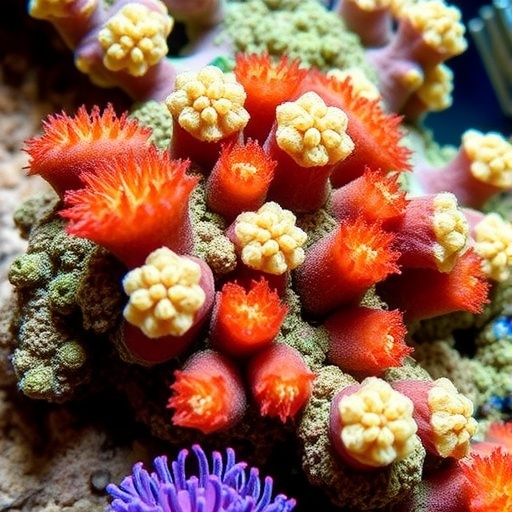
Coral reefs, often referred to as the rainforests of the sea, are renowned for their biodiversity. A recent study emphasizes the role of microhabitat heterogeneity in shaping the environments where these aquatic ecosystems flourish. Researchers Lucas, F., de Oliveira Barros, F.L., and dos Santos, P.J.P. have revealed how the complexity of coral reef habitats significantly influences the diversity and function of nematode communities. This groundbreaking work provides critical insights into how environmental factors orchestrate the intricate web of life beneath the ocean’s surface.
In shallow coral reef ecosystems, varied microhabitats create diverse niches, which nematodes exploit for survival and reproduction. The researchers meticulously documented the taxonomic and functional diversity of nematodes in different microhabitats within coral reef systems. Their findings demonstrate that reef complexity leads to lower redundancy and heightened biodiversity, suggesting these ecosystems possess unique biochemical avenues supporting various life forms. This correlation between habitat structure and biological diversity is essential in understanding ecosystem resilience against environmental changes.
Understanding the diverse assemblages of nematodes in these microhabitats can illuminate broader ecological patterns. Nematodes, often overlooked, play significant roles in nutrient cycling, decomposition, and sediment turnover. These processes are crucial in maintaining the health of coral reefs, which are under increasing threat from climate change, pollution, and habitat destruction. As such, the researchers argue for the critical need to preserve habitat complexity to sustain not only nematode diversity but also the overall integrity of reef systems.
The inherent complexity of coral reefs is multi-dimensional, hosting varied structures such as coral heads, crevices, and sand patches, each offering different resources and protection strategies for nematodes and other organisms. Lucas and his colleagues employed advanced sampling techniques across different zones within the coral ecosystem to capture comprehensive data on nematode assemblages. By doing this, they could paint a broader picture of how microhabitat variations correlate with nematode diversity patterns.
In their research, they found that areas with greater microhabitat variety exhibited significantly lower redundancy in nematode assemblages. This observation indicates that in more homogeneous environments, nematodes are more likely to share functional traits, which can lead to vulnerabilities, especially when faced with environmental stresses. In contrast, the diversity in structures and substrates provided by a heterogeneous environment enables a wider range of functional traits, thereby enhancing overall ecological resilience.
The implications of these findings reach beyond the realm of nematode ecology; they hold profound significance for the conservation of coral reefs. As human activities continue to exert pressure on these ecosystems, understanding the foundational relationships between microhabitats and organism diversity can inform conservation strategies. Ensuring a mosaic of microhabitats might be key to bolstering the resilience of coral reefs against the multifactorial threats they face today.
Furthermore, the study also highlights the intricacies of trophic interactions within these ecosystems, demonstrating how diverse nematode communities interact with other marine organisms. The functional diversity of nematodes can influence microbial dynamics and nutrient cycling, which are integral to the health of coral reef systems. These interactions suggest that a decline in nematode diversity may have cascading effects through various trophic levels, potentially disrupting the fragile balance of coral reef ecosystems.
One striking aspect of this research is its call to action for marine biologists and conservationists alike. It provides a compelling argument for prioritizing microhabitat preservation as a fundamental component in conservation efforts. The study forms a catalyst for further exploration into the dynamics between habitat structure and species diversity in marine environments, inspiring a wave of future research aimed at unraveling these complex relationships.
In conclusion, the work of Lucas and his team stands as a critical reminder of the importance of microhabitat heterogeneity in fostering biodiversity within coral reefs. Their research elucidates the intricate ties between habitat complexity and ecosystem functionality, serving as a valuable contribution to marine science. As the threats facing coral reefs continue to mount, studies such as this illuminate pathways towards sustainable management and conservation, ensuring these vibrant underwater cities endure for generations to come.
Coral reefs are not just geological formations teeming with marine life; they are dynamic ecosystems reliant on the intricate balance of their biological components. The recent findings regarding nematode diversity underscore the need for holistic approaches in reef conservation, focusing on the preservation of both macroscopic and microscopic biodiversity. Each facet of an ecosystem, no matter how small, plays an essential role in sustaining its overall health and functionality.
It becomes evident that the protection of coral reef environments cannot overlook any ecological component. The study’s revelations encourage deeper explorations into the less-studied species within these ecosystems, fostering a broader understanding of their roles and contributions. By valuing all forms of life within the marine tapestry, we can better appreciate the complexity and importance of these ecosystems and strive for their preservation amidst the challenges posed by a changing world.
In essence, this research reinforces the idea that biodiversity is not just about the number of species present but also involves the functional variety they contribute to an ecosystem. By focusing on low-redundant nematode assemblages within diverse microhabitats, this study challenges traditional views on ecosystem stability and resilience. As we grapple with the implications of environmental change, it invites scientists and policymakers alike to rethink biodiversity’s multifaceted roles in ecosystem management.
The interconnectedness of life in the coral reefs is a testament to nature’s ingenuity. As marine habitats face unprecedented challenges, research such as this offers invaluable insights into promoting biodiversity. It is a clarion call not just for scientists but for all of humanity to recognize the beauty and complexity of our oceans and take decisive steps towards their protection. Our future may well depend on the actions we take today to sustain the diversity and richness of these vital ecosystems.
As we heed the call for action, let us celebrate and commit to preserving the intricate web of life within coral reefs. The vibrant ecosystems that thrive beneath the waves are more than just a backdrop for marine exploration; they are essential to the health of our planet. By safeguarding habitat heterogeneity, we not only protect nematode diversity but ensure the future resilience of coral reefs, thus maintaining the astounding array of life they support.
Subject of Research: Microhabitat heterogeneity and its effect on nematode assemblages in shallow coral reef ecosystems.
Article Title: Microhabitat heterogeneity promotes low-redundant and highly diverse taxonomic and functional nematode assemblages in a shallow coral reef ecosystem.
Article References: Lucas, F., de Oliveira Barros, F.L., dos Santos, P.J.P. et al. Microhabitat heterogeneity promotes low-redundant and highly diverse taxonomic and functional nematode assemblages in a shallow coral reef ecosystem. Coral Reefs (2026). https://doi.org/10.1007/s00338-025-02809-4
Image Credits: AI Generated
DOI: https://doi.org/10.1007/s00338-025-02809-4
Keywords: nematode diversity, coral reefs, microhabitat heterogeneity, ecosystem resilience, biodiversity conservation.


