

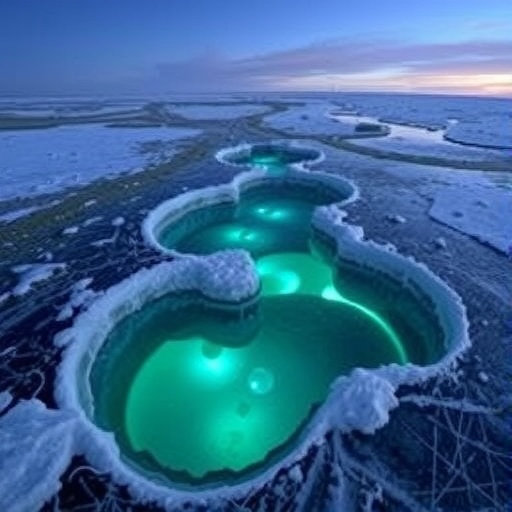
In a groundbreaking study published in Communications Earth & Environment, researchers have unveiled significant findings regarding microbial methane emissions from subsea permafrost located in the inner Laptev Sea. This area, a crucial cold ecosystem, harbors vast amounts of carbon frozen within its permafrost layer. As climate change accelerates, the potential release of methane—an incredibly potent greenhouse gas—becomes a paramount concern for scientists studying the implications of thawing permafrost. The research conducted by Brussee, Holmstrand, Wild, and their collaborators employs triple-isotopic analyses techniques to shed light on the complex interactions between microbial communities and the methane they release.
The Laptev Sea, nestled in the Arctic Ocean, is not only a vital marine ecosystem but also a barometer for the health of the Earth’s climate. Its permafrost holds an estimated 1.5 trillion tons of organic carbon, which, due to warming temperatures, is increasingly at risk of mobilization. The implications of this thaw are profound, as microbial activity in these thawing layers could exacerbate climate change by releasing methane. The study aims to pinpoint the source and dynamics of methane release, which has significant ramifications for both humanity and natural ecosystems.
To understand the scale of the problem, it is essential to grasp the nature of methane as a greenhouse gas. When released into the atmosphere, methane is roughly 25 times more effective than carbon dioxide at trapping heat over a 100-year period. This makes the microbial generation of methane during the thawing process critically significant. The research team employed a sophisticated triple-isotopic analysis technique, allowing them to dissect the source pathways of methane accurately. This methodology has become pivotal in environmental science as it provides clearer insights into microbial versus thermogenic methane origins.
As they delved into the depths of subsea permafrost, the researchers discovered that different microbial communities exhibit distinct metabolic processes leading to methane production. These processes are influenced by various geochemical gradients and physical conditions present in the subsea environment. The researchers found that the unique isotopic signatures of the methane released could be attributed to the specific types of archaea dominating in those sediments, which unveiled a previously nebulous picture surrounding methane cycling beneath the ice.
In particular, the study highlights the role of thermophilic methanogens—microorganisms that thrive in the warmer conditions resulting from permafrost thawing. As they metabolize organic matter released from the permafrost, these microorganisms produce methane as a byproduct. This finding not only clarifies the biogeochemical processes at play but emphasizes the importance of understanding microbial ecology in the context of climate change.
The researchers also postulate a feedback loop between rising ocean temperatures and permafrost thawing. Warmer sea temperatures could accelerate the rate of permafrost degradation, leading to increased methane emissions. This potential feedback mechanism underscores the urgency of monitoring microbial activity and methane output in these vulnerable ecosystems. With the consequences of climate change becoming more apparent each day, understanding and quantifying these interactions is crucial for formulating predictive climate models.
Furthermore, the implications of this study reach beyond just the Arctic regions. Methane released from subsea permafrost contributes significantly to the global methane budget, thereby affecting climate patterns worldwide. Understanding how much methane is released and the mechanisms behind this release can inform global climate policy and help mitigate some effects of climate change. The research serves as a stark reminder of the interconnectedness of Earth’s systems—ecosystems, atmospheric conditions, and human activity.
The team’s findings advocate for increased funding and resources towards Arctic research initiatives. Given the accelerating rates of permafrost thaw, investment in scientific research is critical to developing strategies that can help adapt to the changes happening within these fragile ecosystems. Preserving the Arctic environment is not just about saving unique biodiversity but is intrinsically tied to mitigating the broader impacts of climate change and protecting human welfare globally.
Collaborative efforts between scientists, policymakers, and local communities will be essential as the world grapples with the repercussions of climate change. As this research indicates, the microbial processes occurring in the inner Laptev Sea are not isolated phenomena; rather, they serve as valuable indicators of larger environmental trends that require urgent attention. This study represents not merely an academic endeavor but a crucial step in understanding the pathways of climate change.
The impact of microbial methane release on marine and atmospheric chemistry will necessitate continuous observation and research. As researchers build upon the findings presented in this paper, it opens the door for a greater understanding of how microbial dynamics can be influenced by climate shifts. Future studies could explore the genetic and metabolic adaptations of microbes and how these changes might determine the fate of the permafrost carbon pool.
In conclusion, the research carried out by Brussee, Holmstrand, Wild, and their cohorts illuminates the complex interplay between microbial life and the vast amounts of carbon stored within subsea permafrost. As we face the realities of a warming planet, this study urges the scientific community and the global populace to recognize the importance of protecting these fragile environments. The consequences of inaction could be profound, and understanding these microbial processes represents a critical tool for future climate resilience strategies.
As the discourse surrounding climate change continues, this study stands as a crucial testament to the necessity of interdisciplinary approaches that merge ecology, geochemistry, and climate science. With the ongoing uncertainties presented by climate fluctuations, researchers must remain vigilant and proactive in their studies of microbial communities and their contributions to the global carbon cycle.
In a world increasingly defined by climate uncertainty, the importance of vigilance, research, and collaboration becomes increasingly clear. The findings from this study offer a clearer picture of microbial methane production in the Arctic and its far-reaching implications. The future of the planet may very well depend on understanding and mitigating these changes in subsea permafrost.
Subject of Research: Microbial methane release from subsea permafrost in the inner Laptev Sea.
Article Title: Triple-isotopic analyses pinpoint microbial methane release from subsea permafrost in the inner Laptev Sea.
Article References:
Brussee, M., Holmstrand, H., Wild, B. et al. Triple-isotopic analyses pinpoint microbial methane release from subsea permafrost in the inner Laptev Sea. Commun Earth Environ (2026). https://doi.org/10.1038/s43247-026-03222-7
Image Credits: AI Generated
DOI: 10.1038/s43247-026-03222-7
Keywords: Methane, subsea permafrost, microbial communities, climate change, isotopic analysis, Arctic ecosystem, greenhouse gas emissions.


