

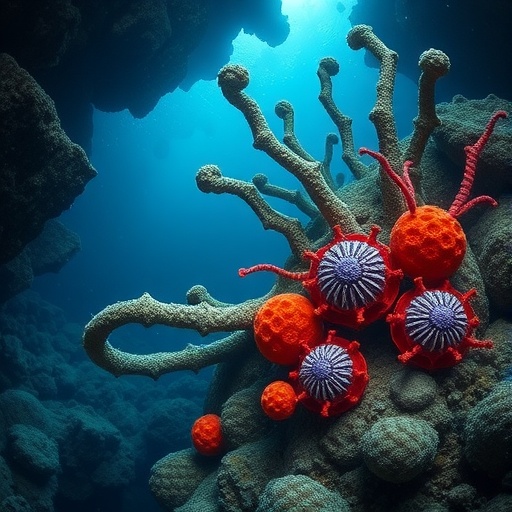
In a profound exploration into the depths of our oceans, researchers have brought to light the intricate processes that govern the cycling of iron at the microbial level. The study led by Wang et al. uncovers how these microscopic organisms play a pivotal role in the enrichment of rare earth elements in deep-sea environments, influencing both biological activity and climate change dynamics. This research not only shines a light on the formidable capabilities of marine microorganisms but also entwines them with the broader narrative of environmental changes significantly impacting our planet.
The deep sea, often perceived as a desolate expanse, teems with life that plays crucial roles in nutrient cycling and biogeochemical processes. Iron, as a trace element, holds immense importance in marine ecosystems, acting as a nutrient that fuels the growth of phytoplankton and supports the overall marine food web. However, its availability is often limited, leading to what scientists call ‘iron limitation’. The findings from this recent study thus take on heightened significance as they illustrate how microbes can manipulate iron availability and influence the ecosystems surrounding them.
Wang and his team utilized advanced methods to analyze the interactions between microbial communities and their iron-rich environments. This research encompassed various geographical locations, particularly sites distinguished by their rare earth element concentrations. Rare earth elements, despite their name, are not as rare as their title implies; rather, they are dispersed throughout the Earth’s crust but become concentrated in certain geological formations. These elements are essential for modern technology, making the understanding of their biogeochemical cycling all the more critical.
One of the compelling revelations from this study is the vital role that microbial communities, especially bacteria and archaea, play in catalyzing the transformation of iron compounds. These microorganisms are adept at converting dissolved iron into more reactive forms through processes like oxidation and reduction. This transformation is particularly important in deep-sea environments, where dark and high-pressure conditions prevail. By identifying and analyzing the specific microbial species involved in these transformations, Wang et al. have highlighted the complex web of interactions that underpin these vital geochemical cycles.
Moreover, the research indicates a direct relationship between microbial iron cycling and the enrichment of rare earth elements in the deep ocean. The study posits that as microbes alter iron compounds, they inadvertently increase the bioavailability of rare earth elements, thus enhancing their accumulation in marine sediments. This finding bridges a critical gap in our understanding of how biological processes can affect geochemical cycles, particularly in extreme environments such as the deep sea.
Equally intriguing is the potential implications this research has concerning climate change. The study suggests that fluctuations in microbial iron cycling may have wider repercussions on carbon cycling and greenhouse gas emissions. The biogeochemical pathways that govern carbon and iron are closely intertwined, and disturbances in one can lead to cascading effects in the other. For instance, if changes in the microbial population dynamics were to arise due to shifts in ocean temperature or acidity, this could alter iron availability and, in turn, impact primary production rates and carbon sequestration.
The researchers also explore the potential of these microbial processes to serve as indicators of broader environmental changes. By monitoring microbial communities and their iron cycling capabilities in the deep ocean, scientists could develop new metrics for assessing the health of marine ecosystems in a changing climate. This idea suggests a revolutionary approach to tracking the impacts of climate change, emphasizing the connection between biological activity and geochemical responses.
In the broader context, the study draws attention to the importance of deep-sea research in understanding Earth’s system science. The ocean’s depths are often overlooked in climate discussions, predominantly focusing on terrestrial ecosystems. However, the findings from Wang et al. affirm that deep-sea microbes are only beginning to reveal their potential as regulators of elemental cycling and climate interaction. Their intricate mechanisms of influence highlight an ecosystem that already faces substantial pressures from human activities, including mining, pollution, and climate change.
Significantly, this research also raises questions about the sustainability and ethics of extracting rare earth elements from marine environments. As demand grows in various sectors, the intersection of extraction, ecosystem health, and climate change becomes increasingly pertinent. Wang and the team underscore the necessity for a balanced approach to resource extraction that considers the health of marine ecosystems, suggesting that insights gleaned from microbial iron cycling could inform more sustainable practices in deep-sea mining.
As deeper explorations into oceanic systems continue, the burgeoning field of microbial ecology stands to reveal more astonishing interactions within our planet’s systems. Wang et al.’s work emphasizes that each microbe is a crucial player in the larger environmental narrative, and their contributions to iron cycling and rare earth element enrichment parallel wider global challenges linked to climate change.
The implications of this study extend beyond the realm of scientific inquiry; they beckon policy discussions regarding ocean conservation and resource management. In light of the evidence suggesting that microbial processes can significantly impact the planet’s health, decision-makers are left with the challenge of integrating scientific insights into policy frameworks that protect maritime ecosystems while addressing human resource demands.
In conclusion, the research conducted by Wang and colleagues demonstrates the intricate ties between microbial life, iron cycling, and the enrichment of rare earth elements in the deep sea. By unveiling the biological contributions of these microorganisms, the team provides invaluable insights into the past, present, and future dynamics of our planet’s climate and resources. This study not only enhances our understanding of microbial ecology but also underscores the importance of preserving the hidden wonders of our oceans, ensuring they remain a vibrant part of Earth’s diverse tapestry.
Through rigorous research, collaboration, and a dedication to sustainable practices, scientists and policymakers alike can work towards a more holistic understanding of environmental challenges in the face of ongoing climate change. As we advance our knowledge, it is imperative to remain vigilant stewards of the ocean, ensuring its complex and vital systems endure for generations to come.
Subject of Research: Microbial iron cycling and its contribution to rare earth element enrichment in deep-sea environments.
Article Title: Microbial iron cycling illuminates the biological contribution and potential climate drivers of deep-sea rare earth element enrichment.
Article References:
Wang, P., Liu, D., Babakhani, P. et al. Microbial iron cycling illuminates the biological contribution and potential climate drivers of deep-sea rare earth element enrichment.
Commun Earth Environ (2025). https://doi.org/10.1038/s43247-025-03100-8
Image Credits: AI Generated
DOI: 10.1038/s43247-025-03100-8
Keywords: Microbial ecology, Iron cycling, Rare earth elements, Deep-sea environments, Climate change, Biogeochemical processes, Ocean conservation.


