

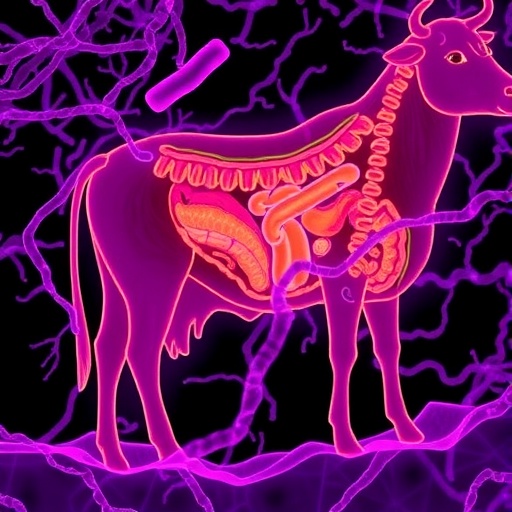
In a groundbreaking study recently published in Scientific Reports, researchers have delved into the complex interactions between microbial communities and tight junction protein expression within the gastrointestinal tracts of feedlot cattle. This research aims to shed light on the intricate relationship between gut microbiota and intestinal health, addressing a vital area of livestock management and food production. As the demand for beef continues to outpace supply, understanding these biological mechanisms becomes increasingly essential for enhancing cattle health and optimizing meat quality.
The gastrointestinal tract of cattle serves as a critical site for digestion and nutrient absorption. However, it is here that microbial communities, comprising trillions of bacteria, archaea, fungi, and viruses, play a pivotal role. These microorganisms not only aid in breaking down complex feed materials but also interact with the host’s immune system. The team’s investigation focused on the seasonal variability of these microbial communities and the expression of tight junction proteins that are crucial for maintaining intestinal barrier integrity, a key factor in overall health.
Tight junction proteins are essential components of the intestinal epithelium. They function as gatekeepers, controlling the permeability of the gut lining. When these proteins are expressed properly, they prevent harmful substances from entering the bloodstream. Conversely, dysregulation of tight junction proteins can lead to a condition known as “leaky gut,” which has been linked to various health issues, including inflammation and reduced growth performance in cattle. The researchers attempted to establish a correlation between the composition of gut microbiota and the expression of these proteins, thereby illuminating potential pathways for improving cattle welfare.
The research involved a comprehensive analysis of fecal samples collected from feedlot cattle over several months, allowing the scientists to capture seasonal shifts in microbial composition. Utilizing advanced sequencing techniques, they identified predominant bacterial species and analyzed how these communities fluctuated with changing environmental conditions. Among the findings was the observation that certain microbial groups are positively associated with higher expression levels of tight junction proteins, suggesting a symbiotic relationship that could be exploited for better cattle management practices.
Moreover, this study highlights the relevance of diet in shaping microbial communities. The feed given to cattle in feedlots is often high in starch, which can influence microbial composition. In turn, this dietary composition impacts tight junction protein expression. The researchers propose that by modifying feed formulations to include ingredients that promote beneficial microbial populations, it may be possible to enhance intestinal barrier function and overall animal health.
The implications of this research extend beyond individual animal welfare. Cattle are significant contributors to global greenhouse gas emissions, and improving intestinal health can lead to more efficient feed utilization. This efficiency means that less feed is required to achieve the same weight gain, potentially resulting in reduced environmental impact per unit of beef produced. Furthermore, healthier cattle are less likely to require antibiotics, addressing growing concerns around antibiotic resistance in agricultural settings.
This investigation also contributes valuable insights into the utter complexity of the microbiome. Each animal’s unique genetic makeup and its specific microbial community create a scenario where personalized nutrition could become a reality in livestock management. By utilizing microbial analysis to tailor dietary recommendations, farmers can potentially enhance growth performance, disease resistance, and overall profitability.
As the team reflects on their findings, they acknowledge the gaps still present in our understanding of the microbial ecosystems in livestock. Future research will undoubtedly be necessary to unravel the intricate interactions between diet, microbial communities, and host physiology. Nevertheless, the current study serves as a significant step forward in bridging the divide between microbiology and animal husbandry.
The researchers also call for collaboration across disciplines to fully understand the implications of their findings. Integrating knowledge from microbiology, veterinary medicine, and nutritional science could pave the way for innovative solutions that address the multifaceted challenges faced by the cattle industry. This approach could result in healthier animals, enhanced food security, and a more sustainable livestock sector.
As we move towards an era where sustainable agricultural practices are paramount, studies like this one underscore the significance of microbial health. This research enhances our understanding of the indispensable role that microbes play in livestock production and presents actionable insights for farmers striving to adopt more sustainable practices. The ongoing dialogue between science and agriculture will be crucial in shaping the future of beef production and ensuring that it can meet the demands of a growing global population.
Ultimately, this work serves as a reminder of the interconnectedness of life and the unseen forces that influence our food systems. As researchers continue to unlock the secrets of the microbiome, we can expect not only advancements in animal health but also broader implications for human health and environmental sustainability. This research also sets the stage for future studies that will further probe the clinical implications of microbial diversity and tight junction integrity within agricultural contexts, offering hope for a more resilient and efficient farming paradigm.
The publication of this research serves as a call to action for the agricultural industry, urging stakeholders to embrace novel scientific insights into microbiome management. Adapting agricultural practices in response to such innovations is critical if the sector is to meet the challenges posed by climate change, food security, and animal welfare. As we await further findings in this domain, it is clear that understanding the gut microbiome holds transformative potential for the future of livestock production.
In conclusion, the exploration of microbial communities and tight junction protein expression in cattle’s gastrointestinal tracts is not just an academic pursuit but a vital component of future food production strategies. As researchers continue to expand their understanding of these complex biological systems, the livestock industry stands on the brink of pioneering advances that could unlock new levels of efficiency, sustainability, and health in cattle production.
Subject of Research: Microbial communities and tight junction protein expression in the gastrointestinal tract of feedlot cattle.
Article Title: Correction: Microbial communities and tight junction protein expression in the gastrointestinal tract of feedlot cattle.
Article References:
Young, J.D., Pinnell, L.J., Wolfe, C.A. et al. Correction: Microbial communities and tight junction protein expression in the gastrointestinal tract of feedlot cattle. Sci Rep 16, 1085 (2026). https://doi.org/10.1038/s41598-025-32675-7
Image Credits: AI Generated
DOI: https://doi.org/10.1038/s41598-025-32675-7
Keywords: microbial communities, tight junction proteins, gastrointestinal tract, feedlot cattle, animal health, sustainable agriculture


