

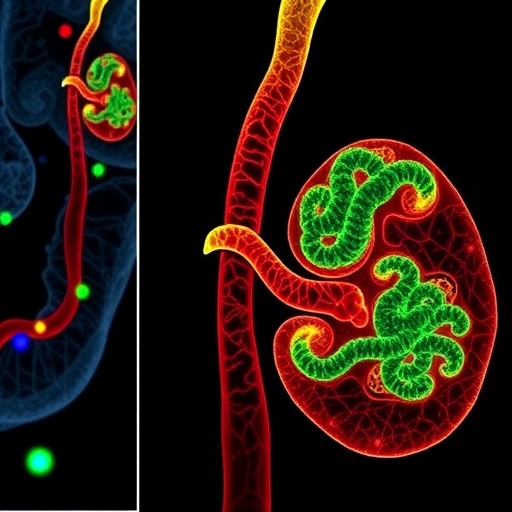
In a groundbreaking advancement poised to reshape our understanding of autoimmune kidney disease, recent research elucidates the intricate metabolic mechanisms that drive renal fibrosis in IgG4-related disease (IgG4-RD). This systemic immune-mediated disorder, characterized by chronic inflammation and tissue remodeling, has long perplexed clinicians due to its elusive etiology and complex pathology. At the heart of these new insights lies the concept of metabolic reprogramming—a dynamic shift in cellular energy pathways within immune and renal cells—that orchestrates fibrotic progression through finely tuned biochemical cascades.
Renal fibrosis, the hallmark of chronic kidney disease progression, emerges from an aberrant wound-healing response where excessive extracellular matrix accumulation compromises organ architecture and function. In the context of IgG4-RD, inflammation and immune cell infiltration into the renal interstitium provoke a metabolic imbalance that fuels this maladaptive remodeling. Researchers now reveal how alterations in mitochondrial dynamics and glycolytic flux within immune cells potentiate profibrotic signaling, effectively linking energy homeostasis disruption to immune dysregulation.
Mitochondria, the cell’s powerhouse, exhibit marked dysfunction in IgG4-RD renal tissue. Impaired oxidative phosphorylation and disturbed mitochondrial biogenesis reduce ATP production, compelling immune cells and myofibroblasts to rely heavily on anaerobic glycolysis to meet energy demands—a phenomenon akin to the Warburg effect observed in cancer metabolism. This metabolic pivot not only satisfies energetic needs but also generates biosynthetic precursors and reactive oxygen species that amplify inflammatory and fibrogenic pathways.
Central to the fibrotic cascade is the TGF-β/SMAD3 signaling axis, a canonical driver of matrix deposition and tissue scarring. Metabolic reprogramming enhances TGF-β receptor expression and downstream SMAD3 activation, promoting fibroblast differentiation into myofibroblasts. These contractile cells secrete collagen and fibronectin prolifically, escalating fibrotic burden. Concurrently, the AMP-activated protein kinase (AMPK) coupled with peroxisome proliferator-activated receptor gamma (PPARγ) pathways emerge as critical modulators of energy sensing and lipid metabolism, potentially mitigating fibrosis by restoring metabolic equilibrium.
An intriguing dimension of this research centers on ATP-binding cassette (ABC) transporters, membrane proteins implicated in the efflux of xenobiotics and endogenous metabolites. Their aberrant expression in IgG4-RD may contribute to drug resistance, complicating therapeutic interventions. By elucidating the role of ABC transporters in renal fibrosis, this study opens avenues to overcome pharmacological hurdles via targeted modulation of transporter activity.
The integration of metabolomics with high-throughput multi-omics platforms—encompassing genomics, transcriptomics, proteomics, and epigenomics—has enabled an unprecedentedly holistic perspective on IgG4-RD pathogenesis. Such comprehensive profiling facilitates the identification of metabolic biomarkers with diagnostic and prognostic potential. Early detection through metabolomic signatures could revolutionize patient stratification and enable personalized therapeutic regimens that precisely target metabolic vulnerabilities.
Emerging therapeutic strategies focus on reprogramming immune cell metabolism to halt or reverse fibrosis. Agents that enhance mitochondrial function, normalize glycolytic activity, or modulate AMPK-PPARγ signaling show promise in preclinical models. Harnessing these metabolic checkpoints could lead to the development of disease-modifying treatments that circumvent broad immunosuppression, minimizing adverse effects.
The elucidation of metabolic-immune interplay in IgG4-RD underscores the paradigm shift from viewing fibrosis solely as an endpoint of inflammation to recognizing it as a metabolically fueled, dynamic process. This holistic understanding paves the way for innovative interventions that address underlying bioenergetic disruptions rather than only mitigating inflammatory symptoms.
Further research is needed to delineate the temporal sequence of metabolic alterations and fibrotic onset, potentially via longitudinal studies and advanced imaging methodologies. Additionally, unraveling patient-specific metabolic profiles may unlock precision medicine options tailored to individual metabolic and immunological landscapes.
Importantly, this study not only advances IgG4-RD research but also resonates across broader chronic fibroinflammatory diseases, suggesting that metabolic reprogramming could be a universal mechanism in tissue fibrosis. Such cross-disease insights may accelerate drug discovery and biomarker development beyond nephrology.
In summary, the meticulous dissection of metabolic pathways in IgG4-RD renal fibrosis heralds a new era of biomedical research where immune metabolism is central to understanding and treating complex autoimmune conditions. As we decode the language of cellular energy and its influence on disease, transformative therapies aimed at restoring metabolic harmony and preserving organ function come into clearer focus.
Subject of Research: Metabolic Reprogramming in Renal Fibrosis Associated with IgG4-Related Disease
Article Title: Metabolic Reprogramming Mechanism of Renal Fibrosis in IgG4-Related Disease: From Immune Dysregulation to Imbalance of Energy Homeostasis
News Publication Date: 5-Sep-2025
Web References:
http://dx.doi.org/10.1016/j.lmd.2025.100089
Image Credits: Peng Lu, Maolin Liu, Lei Zhang, Jing-Jing Fan, Yan Sun
Keywords: Energy, Metabolic Reprogramming, Renal Fibrosis, IgG4-Related Disease, Immune Metabolism


