

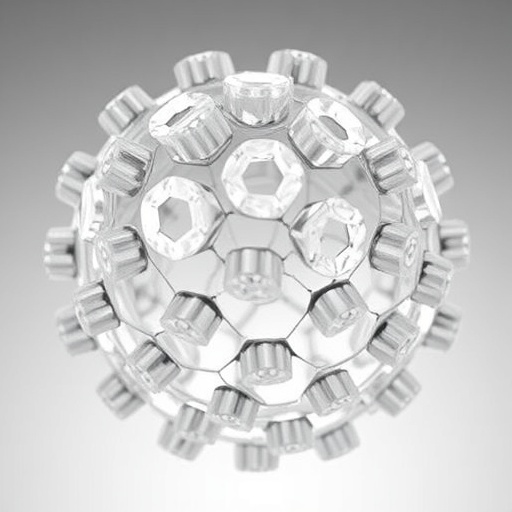
Recent advancements in pharmaceutical technology have unveiled compelling applications of mesoporous silica particles, particularly in the field of amorphous solid dispersions. The innovative research conducted by Bhatane, Chakraborty, and Bansal elucidates how these silica particles can significantly enhance drug solubility and stability—two critical parameters in drug formulation. Using mesoporous structures allows for a high degree of porosity and surface area, which are instrumental in ensuring that drugs are more readily available for absorption in the body.
Amorphous solid dispersions have emerged as a game-changing strategy in overcoming the poor solubility of many hydrophobic drugs. This issue of low solubility often leads to inadequate bioavailability, resulting in less effective treatments. The strategy primarily focuses on dispersing the active pharmaceutical ingredient (API) within a polymer matrix, thereby improving its solubility. When mesoporous silica is integrated into this mix, it serves to further enhance the dispersive characteristics, making it easier for the drug to be released and absorbed.
The unique characteristics of mesoporous silica particles stem from their nanoscale dimensions and large surface area. This helps create a highly favorable environment for drug loading. As the researchers outlined, one of the remarkable features of these particles is their tunable pore size, which can be customized to suit various drug molecules. This adaptability permits the incorporation of a wide range of active ingredients, from large complex molecules to small potent drugs, thus broadening the horizons of what can be effectively delivered through this formulation approach.
Additionally, the authors discuss how mesoporous silica particles can minimize the crystalline imperfections often found in conventional drug formulations. These imperfections can hinder the dissolution rates of drugs, leading to inconsistent bioavailability. By using mesoporous silica particles in an amorphous form, the researchers have found that the drugs can remain in a more stable, amorphous state, facilitating a more rapid dissolution and ultimately improving therapeutic efficacy.
The investigation into the specific attributes of mesoporous silica reveals insights into its potential roles beyond mere drug carriers. When subjected to various environmental stimuli, these particles can also serve as sensors or therapeutic agents themselves, opening the door for multifunctional applications. The ability to manipulate these particles on a molecular level offers significant scope for novel drug delivery systems that not only transport medications but can also interact dynamically with biological environments.
Dispersion techniques employing mesoporous silica have shown encouraging results in clinical trials, showcasing improved performance metrics such as dissolution rates and absorption profiles. The potential for dosage customization is particularly exciting, as it can allow for personalized medicine initiatives where treatment regimens can be tailored to individual patient needs based on their genetic makeup and disease state.
Scalability and cost-effectiveness are two factors that play a crucial role in the commercial viability of any pharmaceutical advancement. The research indicated that the fabrication of mesoporous silica particles can be performed collaboratively with existing technologies, thus minimizing the need for extensive overhauls in manufacturing processes. This compatibility makes it a realistic candidate for global pharmaceutical companies looking to innovate while maintaining affordability and accessibility for patients.
Another significant aspect to consider is the safety profile of mesoporous silica particles. The researchers presented evidence that, when properly formulated, these particles exhibit minimal cytotoxicity, which is paramount in drug development. Ensuring that new pharmaceuticals do not raise safety concerns is a crucial stage in drug approval, meaning that mesoporous silica represents a promising avenue for safer drug delivery methods.
Furthermore, there are ongoing explorations into the synergistic properties that could emerge when mesoporous silica particles are combined with other excipients in a formulation. The potential for enhancing the bioactivity and pharmacodynamics of drugs presents exciting opportunities in therapeutic settings. As researchers continue to delve into this area, they anticipate unveiling new combinations that could revolutionize treatment methodologies across various fields, including oncology and infectious diseases.
Global health challenges, particularly those posed by antibiotic resistance and chronic diseases, necessitate innovative solutions in drug delivery. The findings outlined by Bhatane and colleagues add a layer of hope to these pressing concerns. By using mesoporous silica to enhance drug solubility and stability, they contribute to the development of therapies that can effectively tackle resistant bacterial strains or provide sustained release of medication for chronic conditions.
Ultimately, the applications of mesoporous silica particles in amorphous solid dispersions underscore a broader trend in pharmaceutical research—an ongoing quest for enhanced drug solubility and stability. With each breakthrough, the scientific community moves closer to overcoming the barriers that have historically limited therapeutic efficacy. The collaborative nature of this research, integrating insights from various fields, emphasizes the importance of interdisciplinary approaches in addressing complex health challenges.
As Bhatane, Chakraborty, and Bansal conclude, the future looks promising for mesoporous silica particles in drug formulations. Their work not only paves the way for further research in drug delivery systems but also fosters robust discussions surrounding the harmonization of technology, efficacy, and safety in the development of new therapies. The convergence of scientific inquiry and practical application becomes exceedingly important in a world that constantly seeks innovative pathways to improved health outcomes.
In summary, mesoporous silica particles represent an exciting frontier in the pursuit of more effective drug delivery mechanisms. The ongoing research in this area promises not only to enrich our understanding of drug solubility and stability but also to propel forward the development of treatments that can effectively meet the diverse needs of patients worldwide.
Subject of Research: Mesoporous silica particles in amorphous solid dispersion
Article Title: Applications of mesoporous silica particles in amorphous solid dispersion.
Article References:
Bhatane, D., Chakraborty, S. & Bansal, A. Applications of mesoporous silica particles in amorphous solid dispersion.
J. Pharm. Investig. (2025). https://doi.org/10.1007/s40005-025-00790-2
Image Credits: AI Generated
DOI: https://doi.org/10.1007/s40005-025-00790-2
Keywords: mesoporous silica, amorphous solid dispersions, drug solubility, drug stability, pharmaceutical technology, bioavailability, drug delivery systems.


