

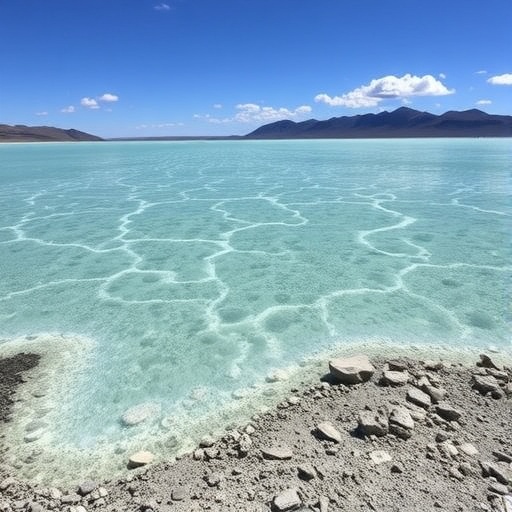
In a groundbreaking study that unravels the intricate behavior of mercury pollutants in extreme environments, researchers have unveiled compelling findings from Hyperhaline Lake Bolshoye Yarovoye, located in the south of Western Siberia. This saline lake, characterized by its unusually high salt concentrations and unique ecological niches, presents a natural laboratory for studying mercury speciation in a setting rarely explored before. Scientists Gustaytis, Maltsev, Leonova, and their team conducted a comprehensive investigation into how mercury interacts within the zooplankton, brine, and bottom sediments of this hyperhaline system, providing pivotal insights into the cycles and environmental fate of this potent neurotoxin.
Mercury contamination is a global concern, primarily due to its toxicity and bioaccumulative nature, impacting both wildlife and human health. Its chemical forms or species determine how mercury is transported, transformed, and magnified through ecological systems. Identifying these species in hypersaline conditions is critical because these environments pose unique chemical and biological challenges that influence mercury’s behavior differently compared to freshwater or marine systems. The study, published in Environmental Earth Sciences, offers a detailed analysis of mercury’s presence and speciation, unveiling complexities in its biogeochemical cycling within such extreme saline habitats.
The research team undertook meticulous sampling campaigns, targeting three critical components of the lake’s ecosystem: zooplankton, the brine water, and the bottom sediments. Zooplankton act as a gateway in aquatic food webs, mediating mercury transfer from the abiotic environment into higher trophic levels. Brine, the saturated saltwater layer, serves as the primary chemical milieu. Meanwhile, bottom sediments often act as both sinks and sources for mercury, influencing its long-term availability and transformation. By characterizing mercury species across these compartments, the study maps the intricate exchanges underpinning mercury dynamics in this distinctive ecosystem.
Analytical methods focused extensively on advanced speciation techniques capable of distinguishing various mercury forms such as elemental mercury (Hg^0), inorganic mercury (Hg^2+), and the highly toxic methylmercury (MeHg). The presence and proportion of methylmercury are especially alarming due to its ability to biomagnify through food chains, leading to significant health risks. The study’s robust chemical analysis divulges clear patterns of mercury transformation influenced by the lake’s exceptional salinity, microbial processes, and sediment interactions.
One key revelation from the study is the unexpectedly high concentration of methylmercury found within the zooplankton samples. This suggests an active and efficient microbial conversion of inorganic mercury into organic forms within the lake’s environment, despite the harsh saline conditions previously thought to limit such processes. Methylmercury accumulation in zooplankton is a clear indicator of bioavailability and potential biomagnification, signaling risks to higher-level organisms resident or migratory in this lacustrine system.
Detailed chemical profiling of the brine demonstrated distinctive mercury speciation patterns influenced by salinity gradients and geochemical parameters, including the presence of sulfur compounds and complexation with halide ions prevalent in such hyperhaline waters. These conditions alter mercury’s solubility, chemical state, and reactivity, shaping its transport pathways and interaction with living organisms. The research highlights how hyperhaline conditions create a unique chemical environment modulating mercury’s fate distinctively compared to freshwater or normal saline waters.
Sediment analyses provide critical insights into mercury’s long-term sequestration and transformation mechanisms. The study finds that bottom sediments are not merely passive mercury reservoirs but are actively involved in mercury cycling through redox reactions, microbial mediation, and complexation with organic matter and mineral components. These sedimentary processes affect the release and conversion of mercury species back into the water column, influencing exposure risk dynamics over time.
The ecological implications of these findings are profound. Given that zooplankton form an essential dietary base for fish and other aquatic organisms, the enriched methylmercury concentrations raise concerns about the contamination of entire food webs extending up to birds and human communities relying on these resources. This study underscores the potential health hazards linked to mercury pollution in unexpected and understudied environments, emphasizing the need for broader geographical and ecological assessments, especially in saline and hypersaline ecosystems.
Moreover, the research sheds light on the role of unique microbial communities inhabiting hyperhaline lakes in mercury biogeochemistry. These microorganisms drive critical methylation and demethylation reactions, modifying mercury’s toxicity and mobility. Understanding the metabolic capabilities and environmental responses of these microbial consortia offers exciting avenues for bioremediation strategies and predictive modeling of mercury contamination in extreme habitats globally.
From a broader perspective, this pioneering work calls for heightened attention to salt lakes worldwide, which often remain overlooked in pollution monitoring frameworks. As climate change influences hydrological regimes and salt concentrations in such lakes, mercury cycling dynamics could undergo significant shifts with unpredictable ecological consequences. The study advocates integrating hypersaline lake environments into global mercury monitoring and management initiatives, bridging critical knowledge gaps in mercury ecotoxicology.
Technologically, the success of this research lies in the sophisticated combination of field sampling, chemical analysis, and ecological interpretation. The ability to accurately quantify and speciate mercury forms in challenging samples such as brine and saline sediments sets a new benchmark for environmental toxicology studies. Coupling these analytical advancements with ecological insights presents a powerful approach to address complex environmental pollution issues in diverse habitats.
The findings resonate beyond the confines of this particular Siberian lake. They contribute to a richer understanding of mercury dynamics across varied ecosystems, offering comparative data crucial for global environmental modeling. Scientists and policymakers alike can leverage this knowledge to design smarter interventions, monitor emergent contamination sources, and safeguard ecosystems and public health against mercury’s insidious impacts.
In conclusion, the study by Gustaytis, Maltsev, Leonova, and colleagues represents a landmark in mercury research, opening new frontiers in understanding the environmental fate of mercury in saline and hypersaline lakes. It highlights the profound influence of unique chemical and biological factors shaping mercury speciation and transformation. Most importantly, it alerts the scientific and conservation communities about hidden toxicological threats in overlooked ecosystems, prompting urgent multidisciplinary collaboration to protect vulnerable aquatic environments in a rapidly changing world.
This research exemplifies the integration of geochemistry, microbiology, and ecology to tackle pressing environmental challenges. It beckons further exploration into mercury pollution mechanisms within extreme habitats and fuels innovation towards sustainable environmental stewardship. As such, the study stands as a testament to comprehensive, cutting-edge science illuminating the subtle yet critical underpinnings of mercury cycling on our planet.
Subject of Research: Mercury species and cycling in hyperhaline lake ecosystems
Article Title: Mercury species in zooplankton, brine, and bottom sediments of Hyperhaline Lake Bolshoye Yarovoye (South of Western Siberia)
Article References:
Gustaytis, M., Maltsev, A., Leonova, G. et al. Mercury species in zooplankton, brine, and bottom sediments of Hyperhaline Lake Bolshoye Yarovoye (South of Western Siberia). Environmental Earth Sciences, 85, 32 (2026). https://doi.org/10.1007/s12665-025-12735-x
Image Credits: AI Generated
DOI: https://doi.org/10.1007/s12665-025-12735-x


