

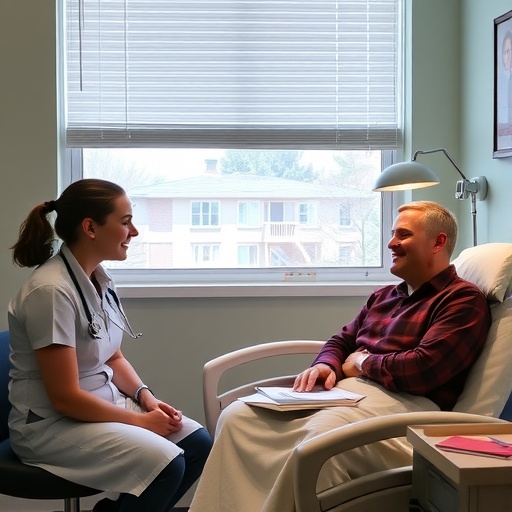
In recent years, the medical community has increasingly recognized the profound importance of communication in healthcare settings. Particularly when it comes to end-of-life care, the skills of empathic and clear communication can be the difference between a comforting experience for patients and their families or one shrouded in misunderstanding and emotional distress. A new study conducted by Frost, Alberti, and Holdsworth delves into the experiences of medical students as they engage with dying patients and their families, shedding light on an underexplored area of medical education and patient interaction.
The significance of this study cannot be overstated, as it highlights a critical gap in medical training. Traditionally, medical education has been heavily focused on clinical skills, diagnostic acumen, and treatment protocols. However, as students progress in their training, they confront the realities of human mortality, grief, and the emotional complexities that accompany end-of-life situations. The research indicates that medical students often feel ill-prepared for these intimate conversations, which can leave them and their patients feeling vulnerable and frustrated.
One of the primary findings of this study is the emotional toll experienced by medical students when communicating with patients facing terminal illnesses. Many students report feeling a sense of dread when entering these discussions. The fear of saying the wrong thing, or not knowing how to comfort a grieving family, can lead to paralysis. This underscores the necessity of integrating communication competence into the medical curriculum, offering students the tools to navigate these challenging interactions with grace and sensitivity.
Moreover, the research emphasizes the need for mentorship in fostering these skills. Medical students indicated that their most meaningful learning experiences occurred when they had the opportunity to observe seasoned professionals handle delicate conversations with dying patients. These moments provided invaluable insights into the nuances of empathetic communication, which theory alone could not impart. Such mentorship could effectively bridge the gap between academic learning and real-world application, empowering students for the future of patient care.
Another vital aspect of the findings pertains to the student’s relationship with death in a clinical setting. When faced with mortality, the students often grapple not only with the emotional responses of their patients but also with their own feelings about death. The line between professional distance and personal connection can blur easily in such poignant circumstances, leaving students unsure of where to draw boundaries. Empowering students to process their emotions effectively, while still maintaining professional decorum, is essential for their development as compassionate healthcare providers.
As highlighted by the study, establishing a rapport with dying patients and their families can enhance the quality of care provided. Patients often express gratitude for the genuine connections they are able to form with the healthcare professionals who care for them. Even in their final moments, the human touch remains pivotal. For medical students, learning this skill early in their careers can set a foundation for a lifetime of compassionate care, ensuring that patients feel valued and respected until the very end.
Furthermore, the research discusses the role of reflective practice in honing communication skills. Students who engaged in self-reflection after their interactions with dying patients reported better insights into their own emotional responses and difficulties faced during those encounters. Reflecting on these experiences can cultivate greater emotional intelligence, which is crucial for effective communication in any healthcare setting. With guided reflective practices, students can learn how to navigate their emotional landscapes while simultaneously providing support to their patients.
The importance placed on training for such conversations underscores a shift in how medical schools view the holistic development of their students. Acknowledging that healing extends beyond the physical realm is key to fostering well-rounded medical practitioners. Programs that include training on emotional intelligence, communication strategies, and even grief counseling are more likely to prepare students for the challenges they will face in real environments. This not only benefits themselves but also significantly enhances patient care quality.
Moreover, the researchers highlight the role of standardized patients in the educational process. Utilizing actors to simulate patients experiencing terminal illnesses can provide a safe and controlled environment for medical students to practice their communication skills. This realistic training method encourages students to approach difficult conversations without the pressure of actual patient interactions, enabling them to refine their approach progressively. Such innovative educational methods can empower future healthcare providers to feel more confident and capable when the time comes to engage meaningfully with patients and families facing death.
As the medical field progresses towards a more patient-centered approach, studies like this one illuminate the pathways to improved communication training within curricula. The necessity for such educational reforms cannot be overstated. Future physicians must be equipped not just with clinical knowledge but with the skills to navigate the emotional landscapes they will encounter. Addressing these unique challenges is crucial for advancing the standards of compassionate care in medicine.
Ultimately, the study conducted by Frost, Alberti, and Holdsworth serves as a call to action for medical institutions. It emphasizes the urgent need for an integrated approach to education that encompasses patient communication as pivotal to effective healthcare delivery. The experiences shared by medical students reveal a compelling narrative that traverses vulnerability, fear, and the beauty of human connection. These insights must drive the dialogue surrounding medical education, prompting a re-evaluation of how healthcare professionals are trained to engage with life’s most profound moments.
In conclusion, the intersection of communication and end-of-life care must be given profound attention within medical education. As healthcare continues to evolve, tools that facilitate better communication with dying patients and their families should become integral parts of the training process for medical students. By building a foundation of empathy, understanding, and reflective practice, we can ensure that the next generation of healthcare providers embraces the complexities of their profession, ultimately leading to improved patient experiences and outcomes in their final moments.
Subject of Research: Medical student experiences of communication with dying patients and their families.
Article Title: Medical student’s experiences of communication with dying patients and their families.
Article References:
Frost, I., Alberti, H. & Holdsworth, R. Medical student’s experiences of communication with dying patients and their families.
BMC Med Educ (2025). https://doi.org/10.1186/s12909-025-08297-y
Image Credits: AI Generated
DOI:
Keywords: Communication, Medical Education, End-of-Life Care, Medical Students, Empathy.


