

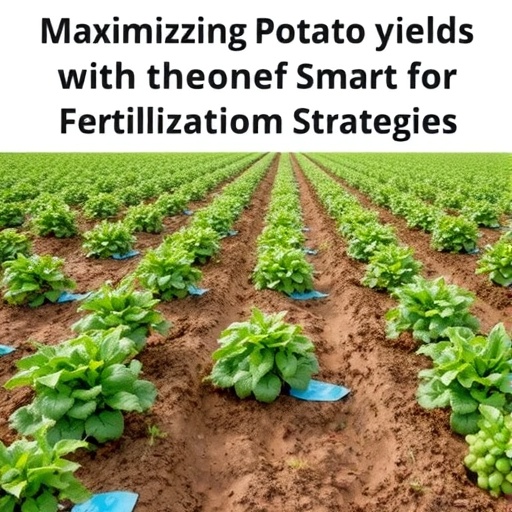
In an era where agricultural efficiency and sustainability are paramount, the quest for optimizing nutrient management in crop production is a crucial area of research. The recent study undertaken by Mihretie et al. focuses on the strategic enhancement of potato yields through the tailored application of nitrogen and phosphorus fertilizers in North Gondar, Ethiopia. This rich agricultural region, characterized by its teeming fertile lands, ironically faces the challenges of both low productivity and economic returns, necessitating innovative agricultural practices.
Potatoes, a staple crop globally, hold significant promise in Ethiopia’s agricultural landscape. With Ethiopia being one of the largest potato producers in Africa, improving its yield is not merely an agronomic concern; it also represents a pathway to enhance food security and boost the economy. The study sheds light on the various factors influencing potato production, highlighting the essential role that nitrogen and phosphorus play in promoting growth and maximizing overall yield.
Nitrogen, a key component of amino acids and proteins, is critical for plant growth. A well-planned nitrogen fertilization strategy can lead to increased plant biomass and, consequently, higher yields. However, the challenges of understanding the correct application rates remain. Over-fertilization can lead to negative environmental outcomes, such as waterway pollution and greenhouse gas emissions. The researchers delve deep into these complexities, indicating the necessity for a balanced approach in nutrient application that favors both crop yield and ecological integrity.
Phosphorus is another fundamental nutrient that encourages root development and energy transfer within plants. Its availability in the soil significantly influences the growth and productivity of potato plants. Many soils in Ethiopia are deficient in this vital nutrient, which often results in suboptimal yields. The study employs various experimental treatments, aiming to determine the precise levels of nitrogen and phosphorus that can maximize productivity while ensuring the sustainability of soil health.
The scholars employed a scientifically rigorous methodology, leveraging field trials across different locations in the North Gondar region. By closely monitoring variables such as soil nutrient content, crop vigour, and yield metrics, they aim to identify the optimum fertilization strategies tailored to local conditions. This approach is significant, as it accounts for the unique agronomic circumstances that can vary even within a small geographical area.
Reviewing the collected data reveals intricate correlations between nutrient application rates and potato yield percentages. Mihretie et al. systematically analyze these relationships, providing insights into how specific rates of nitrogen and phosphorus not only enhance production but also improve the profitability of potato farming in the region. They emphasize a results-oriented approach, which incorporates both quantitative yield figures and qualitative assessments regarding farming practices.
In their findings, the researchers articulate the pressing need for local farmers to embrace these scientifically backed fertilization techniques. Educating farmers about the importance of adhering to recommended nutrient applications can drastically alter the productivity landscape in North Gondar. By equipping farmers with knowledge and practical skills, they empower them to overcome historical barriers to productivity. Furthermore, this can bolster community economies, leading to wider socio-economic improvements in the region.
The findings also come at a time when Ethiopia is striving towards achieving comprehensive agricultural reforms. With policy initiatives geared towards modernizing agriculture and enhancing productivity levels, studies like this one can serve as vital cornerstones of that effort. By offering empirical evidence to support policy recommendations, it ensures that agricultural practices are systematically updated and reinforced with scientific knowledge.
However, the benefits extend beyond just increased yields. This research highlights the ecological implications of optimized fertilization practices. Understanding how to apply fertilizers effectively minimizes the risk of nutrient runoff and reduces the long-term detrimental effects on the environment. This denotes a significant shift towards sustainable agricultural practices which not only prioritize yield but also the broader implications for soil health and ecosystem balance.
Looking ahead, the study offers additional areas for research, emphasizing the necessity of ongoing investigations into the long-term effects of fertilization practices on soil health and potato varietals. As agricultural demands evolve, so too must our understanding of nutrient management and its consequences. With ongoing climate challenges and food security issues facing the world, the recommendations stemming from this study are timely and necessary.
In conclusion, Mihretie et al.’s research represents a significant advancement in the understanding of how optimized nutrient management can enhance agricultural productivity, particularly concerning potato farming in Ethiopian contexts. By addressing both the immediate yield outcomes and the sustainable practices that underpin them, this study acts as a clarion call for a more informed, effective approach to agriculture in developing regions.
As farmers in North Gondar respond to these findings, we may soon witness a transformation in potato production, leading to improved livelihoods, greater food security, and a robust economic future for the region. Ultimately, this research underscores the critical intersection of agricultural science and socio-economic development in driving forward sustainable practices that benefit both humanity and the environment.
Subject of Research: Optimizing nitrogen and phosphorus fertilization for potato yield enhancement
Article Title: Optimizing nitrogen and phosphorus fertilization for enhanced potato yield and profitability in North Gondar, Ethiopia
Article References:
Mihretie, A., Berihun, B., Mihretie, A. et al. Optimizing nitrogen and phosphorus fertilization for enhanced potato yield and profitability in North Gondar, Ethiopia.
Discov Agric 3, 271 (2025). https://doi.org/10.1007/s44279-025-00454-7
Image Credits: AI Generated
DOI: https://doi.org/10.1007/s44279-025-00454-7
Keywords: nitrogen, phosphorus, potato yield, sustainable agriculture, Ethiopia, North Gondar, nutrient management.


