

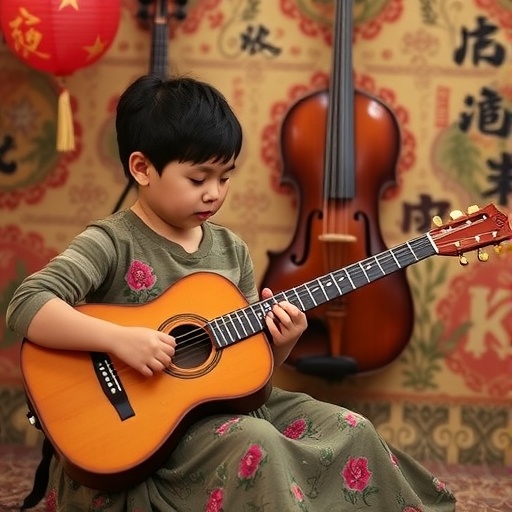
In the ever-evolving landscape of children’s education, a newly emerged study sheds light on a pivotal yet often understated aspect—the profound influence of maternal figures on children’s extra-curricular music learning in China. Conducted by esteemed researchers Xiong and Kong, this research delves into how maternal attitudes, behaviors, and engagement shape children’s musical journeys. It is no secret that music education plays a crucial role in holistic child development, fostering creativity, cognitive skills, and emotional intelligence. However, the nuances of how maternal influence specifically impacts this arena offer a refreshing lens through which to analyze the intersection of family dynamics and educational practices.
The context within which this study unfolds is particularly noteworthy. China has witnessed a cultural renaissance, wherein music education has garnered increasing attention within both societal and educational frameworks. The government has implemented policies to encourage arts education, placing music at the forefront of children’s curricular and extra-curricular activities. Nevertheless, the question remains: how do familial relationships, particularly the maternal bond, influence a child’s engagement and success in acquiring musical skills? This research aims to unpack these complexities, providing invaluable insights into the emotive ties between mothers and their children’s musical endeavors.
As the researchers embark on their investigation, they employ a mixed-method methodology, combining quantitative surveys and qualitative interviews. This dual approach allows for an enriched understanding of how mothers perceive their roles within their children’s music education. The quantitative data gathered from surveys provides a broader scope of insights, revealing trends and patterns in maternal involvement in music learning across different demographics. Meanwhile, the qualitative interviews offer depth, diving into personal narratives that illuminate the emotional and psychological dimensions of maternal influence.
The results of the research are revealing. A significant number of mothers reported feeling a deep-seated responsibility for their children’s musical education, often stemming from their own past experiences with music. Those who had pursued music in their youth exhibited a strong inclination to encourage their children’s involvement in similar endeavors. This transference of passion serves not only as a means of recreating cherished personal memories but as a bridge between generations, reinforcing familial bonds through shared musical experiences.
Mothers in the study frequently articulated the belief that music education fosters essential life skills. They noted that participation in music not only enhances cognitive functions but also promotes discipline, perseverance, and emotional expression. As such, many mothers have openly advocated for their children to engage in formal music lessons, enroll in classes, or participate in community ensembles, demonstrating proactive involvement in their children’s extra-curricular activities.
Interestingly, the research also identifies varying levels of maternal influence based on socioeconomic factors. Mothers from higher socioeconomic backgrounds were found to have more access to resources that support music education, such as private lessons and access to musical instruments. This disparity raises critical questions regarding equity in music education and highlights the need for supportive policies that bridge these gaps, ensuring that all children, regardless of background, have opportunities to engage with music learning.
Moreover, the emotional dynamics of the mother-child relationship come into play significantly in the study’s findings. The researchers discovered that a supportive maternal attitude towards music often translates into increased motivation and enjoyment among children. Children whose mothers express enthusiasm about music lessons or concerts tend to exhibit a more positive attitude toward learning music. This emotional endorsement from the mother can be a tremendous motivational asset, illustrating how intertwining emotional support with educational pursuits can enhance a child’s overall experience.
Nevertheless, the study also reveals challenges that many mothers face in promoting their children’s musical education. Time constraints, societal pressures, and balancing multiple roles as caregivers and working professionals often hinder their capacity to engage fully. Mothers expressed feelings of guilt and frustration when they were unable to dedicate time to foster their children’s music interests, calling into question the delicate balance of supporting a child’s aspirations while managing personal and professional responsibilities.
Through profound insights, Xiong and Kong highlight the critical role of community support systems. Such systems can offer a refuge for mothers seeking to promote their children’s music education amidst challenging circumstances. By fostering communal music programs and support groups, communities can create an environment where mothers collaboratively nurture their children’s talents, sharing burdens and successes alike.
Importantly, this study’s findings may resonate far beyond the borders of China. The global shift towards recognizing the significance of music education and the family’s role in fostering artistic expression calls for a reevaluation of educational strategies. As countries across various continents grapple with similar challenges and triumphs in arts education, the insights derived from this research could inform policies and practices that aim to nurture the next generation of musicians.
At a pivotal moment when educational structures worldwide are reconsidering their approaches to holistic development, the implications of maternal influence in music education emerge as critical. As families navigate music learning pathways, understanding the psychological and emotional constructs that shape their experiences can empower them to make informed decisions.
In conclusion, this study opens up a dialogue on the maternal influence in music learning, inviting educators, policymakers, and families to engage in a collective effort. As maternal figures continue to play integral roles in shaping children’s educational journeys, fostering supportive environments that recognize and uplift these influences will be paramount. Encouraging a collaborative spirit between mothers and educational institutions can yield a tapestry of flourishing musical talent across generations, ultimately enriching the fabric of society.
Subject of Research: The influence of mothers on children’s extra-curricular music learning in China.
Article Title: The Role of Maternal Influence on Children’s Extra-curricular Music Learning in China.
Article References:
Xiong, X., Kong, SH. The Role of Maternal Influence on Children’s Extra-curricular Music Learning in China. Early Childhood Educ J (2025). https://doi.org/10.1007/s10643-025-02087-3
Image Credits: AI Generated
DOI: https://doi.org/10.1007/s10643-025-02087-3
Keywords: Maternal influence, music education, child development, extracurricular activities, China.


