

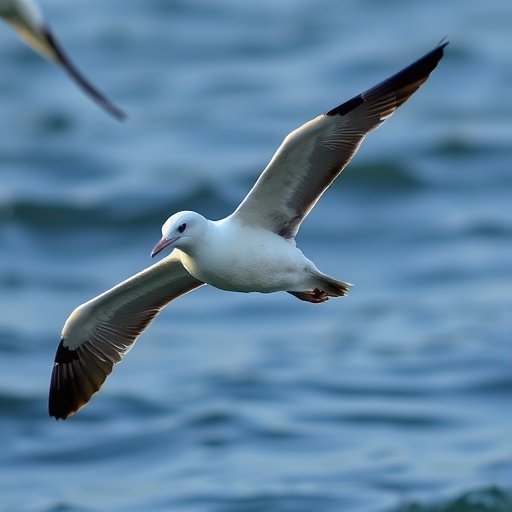
In a breakthrough study that delves into the cellular underpinnings of pollutant impact on marine life, researchers have uncovered how widespread contaminants disrupt the fundamental processes powering life in wild seabirds. The study, published in the journal Environment & Health, focuses on Scopoli’s shearwaters, seabirds breeding on the isolated volcanic island of Linosa in the Sicilian Channel. By examining the intricate bioenergetics within the mitochondria—the cellular power plants—scientists reveal how pollutants like mercury and per- and polyfluoroalkyl substances (PFAS), commonly known as “forever chemicals,” alter energy production at a microscopic scale, potentially undermining bird fitness and survival.
Mitochondria are responsible for producing adenosine triphosphate (ATP), the molecule that stores and supplies the energy cells need for all functions, from muscle contractions in flight to cellular repair and reproduction. Mercury, a heavy metal pollutant, and PFAS, a class of synthetic chemicals extensively used for decades in consumer products for their stain-resistant and non-stick properties, are both highly toxic, even at minuscule concentrations. Their pervasive presence in marine environments has raised concerns, but until now, the exact physiological repercussions in free-ranging wildlife were unclear.
Mercury, particularly its methylmercury form, poses a severe neurotoxic threat due to bacterial conversion in the ocean and subsequent bioaccumulation up the food web. Top predators like Scopoli’s shearwaters accumulate the highest concentrations over their decades-long lifespans. PFAS compounds, resistant to environmental degradation, readily bioaccumulate as well but via different exposure routes unrelated to dietary intake or trophic level, highlighting their insidious atmospheric and surface runoff sources.
The international research team led by Stefania Casagrande at the Max Planck Institute for Biological Intelligence measured pollutant burden alongside mitochondrial function in live wild seabirds with unprecedented precision. Their findings demonstrate that in individuals with elevated mercury levels, mitochondrial membranes exhibit increased “proton leak.” This phenomenon allows protons to bypass the ATP-generating machinery, dissipating energy wastefully and lowering cellular efficiency—akin to water circumventing turbines in a hydroelectric dam, reducing power output.
Conversely, certain PFAS compounds promote the opposite mitochondrial response by stiffening membranes. While this reduces the proton leak, it also impairs a crucial protective mechanism that prevents the accumulation of harmful reactive oxygen species. This blockage could facilitate oxidative damage, a cellular stress that short-circuits energy production and damages proteins, DNA, and lipids, creating a markedly different but equally damaging bioenergetic dilemma.
Such mitochondrial dysfunctions have profound implications for energy-intensive activities, especially during breeding seasons when adults engage in demanding foraging and chick provisioning routines. The cellular cost of compensating for impaired mitochondrial efficiency—through increased overall energy production—is substantial, potentially draining reserves essential for survival and reproductive success. Even marginal shifts in energy efficiency might silently erode physiological fitness over time.
Stable isotope analyses further enriched the study by linking dietary habits and foraging locations to contaminant exposure patterns and mitochondrial effects. The data revealed predictable mercury accumulation linked to age, sex, and trophic position, affirming the metal’s bioamplification through the food web. Males and older birds exhibited higher mercury levels, while females tended to shed mercury through egg-laying. PFAS levels, however, showed no relation to dietary markers or demographic variables, confirming distinct contamination pathways.
This groundbreaking research underscores the complexity and diversity of pollutant impacts on marine ecosystems, extending from molecular disruption to potential population-level consequences. It illuminates how chemical pollution, often invisible and chronic, integrates with other global threats such as overfishing, plastic pollution, and climate change to imperil wildlife. By revealing the cellular mechanisms underlying pollutant toxicity, this study lays the groundwork for more targeted conservation strategies aimed at mitigating chemical exposure risks to seabirds and other marine organisms.
Critically, because humans share many biochemical pathways with wildlife and are exposed to similar pollutants, these findings also raise concerns about broader ecological and public health implications. Understanding how sub-lethal mitochondrial effects influence fitness and survival in seabirds can inform assessments of human health risks linked to chronic low-dose pollutant exposures, emphasizing the interconnectedness of ecosystem and human wellbeing.
Researchers advocate for long-term monitoring programs integrating cutting-edge, minimally invasive techniques to follow pollutant impacts on wildlife bioenergetics. Such efforts are essential to track changing pollutant profiles as regulatory measures evolve, and to understand how compounded stressors influence reproductive output, survival, and population dynamics in natural settings.
In conclusion, this pioneering research marks a significant advance in environmental toxicology by connecting chemical exposure to mitochondrial dysfunction and potential fitness costs in a wild, free-ranging seabird species. Given the global distribution of these pollutants and their persistence in marine environments, the study highlights pressing conservation challenges and offers a powerful lens to evaluate the hidden cellular damage wrought by human activity on wildlife.
Subject of Research: Animals
Article Title: Pollutant Exposure Shapes Mitochondrial Bioenergetics in a Wild Seabird
News Publication Date: 22-Dec-2025
Web References: http://dx.doi.org/10.1021/envhealth.5c00297
Image Credits: © MPI for Biological Intelligence / Guadalupe Lopez-Nava
Keywords: Pollution, Ecology, Cell biology, Seabirds, Mitochondria


