

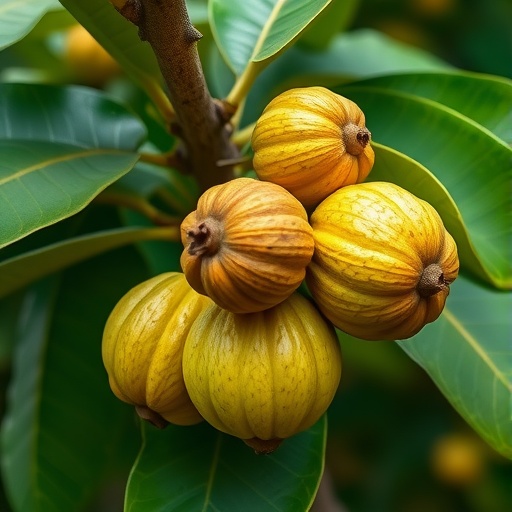
In a fascinating exploration of plant biochemistry and molecular biology, a new study probes the complex mechanisms of xanthone biosynthesis in Garcinia oblongifolia, a tropical fruit-bearing tree renowned for its various health benefits and culinary uses. Zhang et al. have leveraged cutting-edge metabolomic and transcriptomic techniques to elucidate the intricate patterns of tissue-specific biosynthesis and spatial distribution of xanthones within this species. Their findings not only illuminate the biochemical pathways that generate these bioactive compounds but also offer insights into the evolutionary adaptations that facilitate the survival of Garcinia oblongifolia in diverse environments.
Xanthones, a class of secondary metabolites primarily found in Garcinia species, possess a range of pharmacological properties, including antioxidant, anti-inflammatory, and anticancer activities. The research team employed a comprehensive approach that integrated metabolomic profiling with full-length transcriptomic analysis, allowing for a holistic understanding of the physiological roles these compounds play within various plant tissues. This integrative strategy is pivotal, as it combines the quantitative assessment of metabolites with the expression profiles of related genes, fostering a deeper comprehension of the underlying regulatory networks governing xanthone production.
Located in biodiverse tropical habitats, Garcinia oblongifolia provides not only a source of nutrition but also serves as an important cultural symbol in many regions. The intricate relationship between this unique tree and its environment underscores the significance of understanding its biochemical properties. Zhang and colleagues set out to uncover how the varying environmental conditions to which Garcinia oblongifolia is exposed influence the synthesis of xanthones, which in turn may affect its adaptability and resilience in response to ecological pressures.
One of the profound revelations of this research is the identification of distinct biosynthetic pathways linked to specific tissues within Garcinia oblongifolia. By isolating various plant tissues, such as leaves, stems, and fruits, the team mapped the metabolism of xanthones, identifying tissue-specific expression patterns that highlight the specialized roles these metabolites play. The study demonstrated that while fruits showed the highest concentrations of xanthones, leaves exhibited unique metabolic profiles suggesting potential protective roles against herbivory and environmental stressors.
Moreover, the researchers discovered that environmental factors such as light intensity, soil composition, and moisture levels could significantly impact the levels of xanthones synthesized by Garcinia oblongifolia. This aspect of their study emphasizes the biochemical plasticity of the species and the potential for optimizing conditions in agricultural practices to enhance the yield of beneficial compounds. Such findings could pave the way for developing targeted cultivation strategies that maximize xanthone production, benefiting both the ecosystem and human health.
Another key component of Zhang et al.’s work involved the application of transcriptomic analysis to elucidate the gene regulation pathways associated with xanthone biosynthesis. High-throughput sequencing technologies enabled the identification of numerous genes involved in the shikimic acid and phenylpropanoid pathways, which are crucial precursors in the synthesis of secondary metabolites including xanthones. This comprehensive genetic analysis is vital for developing biotechnological approaches aimed at enhancing the production of these compounds in both cultivated and wild varieties of Garcinia.
The implications of this research extend beyond the academic realm, holding significant potential for the pharmaceutical industry and natural product research. With the growing consumer interest in plant-based remedies and dietary supplements, the ability to produce xanthones efficiently could lead to a new wave of natural health products derived from Garcinia oblongifolia. The health benefits attributed to xanthones, especially their antioxidant properties, point toward their use in treating a variety of ailments, from chronic inflammation to cancer, creating a market opportunity for sustainable and ethically sourced plant compounds.
In terms of environmental sustainability, this study opens doors to eco-conscious agricultural practices that prioritize the conservation of biodiversity while meeting the increasing demand for health-promoting botanicals. By understanding the natural biosynthetic processes of Garcinia oblongifolia, farmers and agricultural businesses can strategize to cultivate this species in a manner that enhances not only the quantity but also the quality of xanthone production, ultimately benefiting both the producer and the consumer.
As researchers continue to decipher the complex biochemical pathways in plants, the findings of Zhang et al. contribute valuable knowledge to the field of phytochemistry. Their work emphasizes the importance of interdisciplinary approaches in unraveling the secrets of plant metabolism and highlights the potential roles of secondary metabolites in ecological interactions. With the ongoing advancements in genomics and metabolomics, the future of medicinal plant research appears promising, paving the way for innovative biotechnological solutions that harness the power of nature’s pharmacy.
In conclusion, the research conducted by Zhang and colleagues serves as a significant milestone in the study of Garcinia oblongifolia and its biosynthetic pathways. By illuminating the tissue-specific production of xanthones and their spatial distribution within the plant, this study not only enhances our understanding of plant biology but also offers practical applications for improving agricultural practices and developing natural health products. As the world continues to turn toward sustainable and health-conscious practices, the insights gained from this integrated metabolomic and transcriptomic analysis will undoubtedly play a significant role in shaping the future of plant-derived therapeutics.
This study marks a pivotal moment in the exploration of how plants synthesize beneficial compounds and how those processes can be optimized for human use. Future research will surely build upon these findings, further unraveling the complexities of plant chemistry and how we can harness these natural resources in a sustainable manner. With continued investigation, the secrets held within plants like Garcinia oblongifolia may unlock new frontiers in health and wellness, making this area of study one to watch in the coming years.
The revelations concerning the spatial organization of xanthone biosynthesis within Garcinia oblongifolia further enrich our knowledge of plant anatomy, particularly how it relates to the functional aspects of secondary metabolite production. This degree of specificity underscores the adaptability and evolutionary sophistication of plants, showcasing their ability to respond to a myriad of environmental challenges through biochemical ingenuity. As we deepen our understanding of these processes, we may be able to engineer plants for even greater efficacy in producing necessary compounds for various industries.
In summation, this remarkable study illustrates not only the intricacies of plant metabolism but also the broader implications of understanding these natural processes. By examining the biosynthesis and distribution of xanthones in Garcinia oblongifolia, Zhang and his team have opened new avenues for exploration, inviting future scholars to delve deeper into the fascinating world of plant biochemistry. As our appreciation for the benefits of phytochemicals deepens, so too does the potential for harnessing these compounds to improve human health in a safer, more sustainable manner.
Subject of Research: Xanthones biosynthesis and distribution in Garcinia oblongifolia.
Article Title: Tissue-specific biosynthesis and spatial distribution of xanthones in Garcinia oblongifolia revealed by integrated metabolomic and full-length transcriptomic analyses.
Article References: Zhang, Y., Zhang, R., Wang, B. et al. Tissue-specific biosynthesis and spatial distribution of xanthones in Garcinia oblongifolia revealed by integrated metabolomic and full-length transcriptomic analyses. BMC Genomics (2025). https://doi.org/10.1186/s12864-025-12391-2
Image Credits: AI Generated
DOI:
Keywords: Xanthones, Garcinia oblongifolia, metabolomics, transcriptomics, biosynthesis, secondary metabolites, plant biology.


