

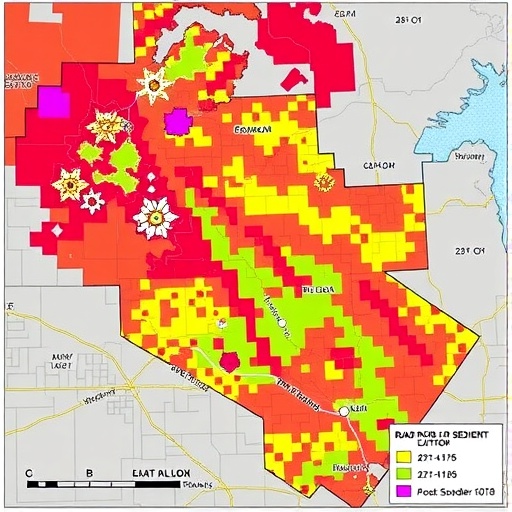
The urban ecosystem of Las Vegas, Nevada, is shaped not only by its famous entertainment venues and vibrant nightlife but also by the challenging realities of urban pollution. Recent investigations have shed light on the underlying issues concerning sedimental contaminants found on the roadways of this arid yet bustling metropolis. A comprehensive study has been undertaken to elucidate the nature and distribution of these contaminants, revealing critical insights that underscore the urgent need for environmental monitoring and remediation strategies in urban areas.
Roadways, often seen merely as conduits for transportation, can serve as significant contributors to environmental contamination, particularly in urban settings. As rainwater runs off these surfaces, it picks up various pollutants, ranging from heavy metals to hydrocarbons, which ultimately affect nearby water bodies and ecosystems. These pollutants can have severe consequences on local flora and fauna, leading to decreased biodiversity and impaired ecosystem services. This study aims to characterize the nature of these contaminants and gauge their distribution across different sites in the greater Las Vegas area, aiming to identify hotspots of contamination.
The research methodology employed by the team involved the systematic collection of road sediment samples across multiple sites within the Las Vegas metropolitan region. By deploying precise geological and chemical analysis techniques, the study aimed to quantify the concentration of diverse contaminants, drawing correlations between land use types, traffic density, and sediment contamination. Such comprehensive sampling ensures that the findings are robust and can be extrapolated to broader environmental contexts.
Notably, the study findings revealed elevated levels of heavy metals, including lead, zinc, and copper, in road sediments, often exceeding established environmental safety thresholds. These metals, primarily associated with vehicular emissions and tire wear, pose significant risks to public health and the environment. The researchers underscore the importance of monitoring these substances not just for regulatory compliance but also for safeguarding ecological integrity and human health.
Additionally, the study highlighted the impact of climatic factors on the transport and deposition of sediments and contaminants. The arid climate typical of Las Vegas, characterized by infrequent but intense rain events, can lead to rapid runoff which exacerbates the spread of these contaminants. The researchers emphasized the correlation between precipitation patterns and contaminant concentrations, suggesting that urban planning and environmental management must take such factors into account to mitigate risks.
A key aspect of this research is the formulation of strategies aimed at reducing road sediment contamination. The authors advocate for improved urban design practices, including the implementation of best management practices such as bio-retention cells and permeable pavement. These strategies not only help in capturing and treating stormwater runoff but also promote sustainable urban development by conserving water and protecting urban biodiversity.
Furthermore, the societal implications of such contamination cannot be overstated. As urban populations grow, so does the responsibility to ensure that the environments in which we live are safe and sustainable. The presence of these contaminants serves as a call to action for stakeholders, including city planners, environmental agencies, and the public, to engage in dialogue about enhancing urban resilience against pollution.
The researchers also addressed potential avenues for future work, including longitudinal studies to track changes in contaminant levels over time. Such studies would be invaluable in assessing the effectiveness of implemented mitigation strategies and adjusting them in response to observed outcomes. Continuous monitoring can provide critical data that enhance our understanding of urban pollution dynamics and inform policy decisions moving forward.
In conclusion, the findings from this pivotal study highlight the complex interplay between urban development and environmental health within the greater Las Vegas area. The presence of harmful road sediment contaminants poses a considerable challenge, necessitating a multidisciplinary approach to address the issue effectively. By fostering collaboration among scientists, policy makers, and the community, it is possible to pave the way for a cleaner, healthier urban environment.
Ultimately, the key takeaway from this research is the urgent need to recognize that roadways are not just routes for transportation; they are also crucial components of our environmental landscape that require diligent monitoring and management. The health of urban ecosystems hinges on our ability to address the pollution challenges they face, and only through concerted efforts can we secure a sustainable future for our cities.
This comprehensive analysis serves not only as a report of current conditions but also as a blueprint for future actions to mitigate pollution in urban areas. As cities continue to expand, understanding and addressing the challenges of road sediment contamination remains paramount in ensuring the health and well-being of both the environment and its inhabitants.
Subject of Research: Road sediment contaminants in urban environments
Article Title: The nature and distribution of road sediment contaminants in the greater Las Vegas, Nevada area.
Article References: K. J., G., M., G., K. L., B. et al. The nature and distribution of road sediment contaminants in the greater Las Vegas, Nevada area. Environ Monit Assess 198, 5 (2026). https://doi.org/10.1007/s10661-025-14725-9
Image Credits: AI Generated
DOI: https://doi.org/10.1007/s10661-025-14725-9
Keywords: Urban pollution, road sediment, contaminants, heavy metals, environmental monitoring, Las Vegas, sustainability, urban planning


