

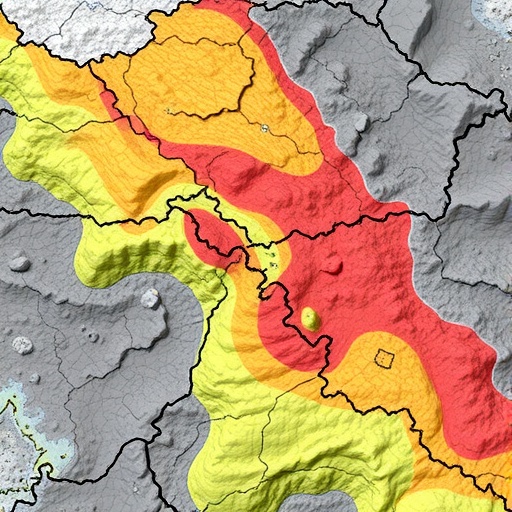
In an era where the environmental impact of industrial activities is under increasing scrutiny, the latest research by Thakur, Garg, and Jain shines a spotlight on the critical issue of ground deformation in one of India’s most significant mining regions—the Jeenagora Opencast Coal Mining region of the Jharia Coalfield. As the demand for coal continues to rise, understanding the complexities of mining-induced ground displacement has never been more vital. This comprehensive assessment utilizing Persistent Scatterer Interferometric Synthetic Aperture Radar (PS-InSAR) and advanced statistical techniques offers an invaluable perspective on the dynamics of surface deformation in this ecologically sensitive area.
The intricate process of underground coal mining not only extracts valuable resources but also affects the geology of the surrounding region. The research team employs cutting-edge PS-InSAR technology, which enables the detection of minute ground movements through radar signals. Unlike traditional methods, PS-InSAR can monitor surface changes over time with remarkable precision. This technique is particularly beneficial in densely populated and industrially active areas where conventional surveying would be logistically challenging.
By analyzing data gathered over several years, the researchers were able to derive detailed displacement patterns that highlight the extent and variability of ground deformation in the Jeenagora region. These patterns are not uniform; they vary based on numerous factors including mining operations, geological conditions, and even seasonal changes due to rainfall. Understanding these patterns is essential for predicting future deformations and mitigating their impact on nearby communities and infrastructure.
In addition to utilizing PS-InSAR, the researchers implemented advanced statistical analyses to interpret the deformation data effectively. This dual approach not only enhances the accuracy of the findings but also provides a richer context to the observed movements. By correlating deformation trends with mining activities, the study offers insights into the direct impact of human actions on the geological stability of the area.
Furthermore, the research underscores the importance of continuous monitoring in mining regions to ensure sustainable operations. Ground deformation can lead to significant hazards, including subsidence, which poses risks to both lives and property. By identifying deformation patterns early, it is possible to implement corrective measures and reduce potential risks. This proactive approach is crucial for ensuring the safety and well-being of local populations, particularly in areas prone to such geological risks.
The researchers also make a strong case for integrating these monitoring techniques into the broader regulatory framework governing coal mining operations. As regulations continue to evolve in response to environmental concerns, providing accurate data on ground deformation will be vital for decision-makers tasked with balancing resource extraction and environmental stewardship.
In addition to offering technical insights into the methodologies employed, the study highlights the social implications of ground deformation in mining areas. The local communities often bear the consequences of mining activities, facing disruptions to their living conditions and threats to their safety. Consequently, fostering transparent dialogue between mining companies, regulatory bodies, and community members is essential. This study serves as a clarion call for all stakeholders to prioritize safety and sustainability.
As the world moves towards renewable energy sources, coal will still play a significant role in energy production for the foreseeable future, particularly in developing regions. Therefore, this research not only adds to the body of knowledge regarding mining impacts but also aligns with the global imperative for safer and more responsible resource extraction methods. The findings underscore the necessity of advancing technologies like PS-InSAR to promote environmentally conscious mining practices, ensuring that future generations can benefit from mineral resources without compromising their safety or ecological integrity.
The implications of this study extend far beyond the immediate region, serving as a reference point for similar or even more complex geological environments around the globe. As mining practices evolve, the incorporation of modern monitoring techniques can facilitate more sustainable operations, not only in India but also in other mining-dependent nations. Adapting to the lessons learned from the Jeenagora region can guide global efforts towards minimizing the negative impacts of coal mining.
In conclusion, Thakur, Garg, and Jain’s research represents a significant contribution to the field of resource management and environmental science. By employing advanced technologies and statistical methods to uncover the dynamics of ground movements in the Jeenagora Opencast Coal Mining region, this comprehensive assessment provides critical insights that can influence future mining policies and practices. As the global conversation about sustainable mining intensifies, the findings of this study will undoubtedly resonate through academia, industry, and regulatory frameworks alike.
It is evident that monitoring ground deformation is an integral component of responsible mining practices. As countries grapple with the challenges of resource extraction and environmental sustainability, the need for innovative research such as this becomes increasingly important. The collaborative efforts of researchers, industry stakeholders, and policymakers can pave the way for a more sustainable future in resource extraction.
This research not only sets a new standard for how we understand the geographical impacts of mining but also reshapes the conversation around mining’s role in society. By prioritizing safety and technology-driven solutions, the mining industry can make strides towards fulfilling its economic objectives while safeguarding the environment and public welfare.
In summary, as we continue to navigate the complexities of resource management, studies like this underscore the significant role technology and collaboration can play. The future of mining might still be uncertain, but the constant evolution of research and its practical applications ensure that we are better prepared for the challenges ahead.
Subject of Research: Ground deformation dynamics and displacement patterns in the Jeenagora Opencast Coal Mining Region of Jharia Coalfield.
Article Title: Comprehensive Assessment of Ground Deformation Dynamics and Displacement Patterns in Jeenagora Opencast Coal Mining Region of Jharia Coalfield Using PS-InSAR and Advanced Statistical Analysis.
Article References:
Thakur, A.K., Garg, R.D. & Jain, K. Comprehensive Assessment of Ground Deformation Dynamics and Displacement Patterns in Jeenagora Opencast Coal Mining Region of Jharia Coalfield Using PS-InSAR and Advanced Statistical Analysis.
Nat Resour Res (2025). https://doi.org/10.1007/s11053-025-10584-w
Image Credits: AI Generated
DOI: https://doi.org/10.1007/s11053-025-10584-w
Keywords: Ground deformation, PS-InSAR, coal mining, Jharia Coalfield, surface displacement, environmental impact, mining safety, statistical analysis, sustainable mining practices, resource management.


