

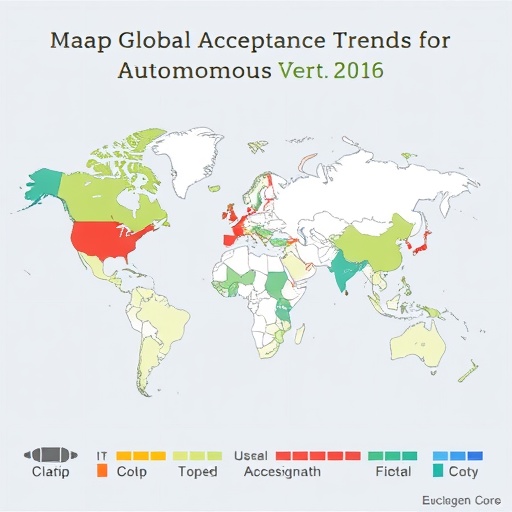
The rise of autonomous vehicles promises significant transformations across various sectors, yet it is intrinsically linked to the public’s acceptance of such technology. In the recently published study by Abdulwahab and Abdul Sukor, titled “Bibliometric Mapping of Global Public Acceptance Trends in Autonomous Vehicles,” researchers explored the mechanisms behind public perception regarding autonomous vehicles. This comprehensive bibliometric analysis underscores the multifaceted relationship between technology adoption and societal acceptance, illustrating the critical factors that facilitate or hinder progress in this area.
As autonomous vehicles become more prominent in discussions about the future of transport, understanding public acceptance trends is paramount. The study compiled an extensive range of literature from different parts of the world, revealing diverse insights into how various demographics perceive autonomous driving capabilities. The researchers utilized bibliometric mapping tools to visually represent the connections and historical evolution of research publications related to public acceptance, allowing for a more nuanced understanding of the topic.
One of the key findings of the research is that public acceptance varies dramatically based on geographical and cultural contexts. For instance, citizens in technologically advanced countries might exhibit more favorable views toward autonomous vehicles, while populations in developing nations might express skepticism. Such disparities highlight that the societal context is crucial in shaping attitudes towards technology, as it is intertwined with factors like trust in technology, safety concerns, and the individuals’ understanding of autonomous systems.
Safety consistently emerged as a prominent theme within the literature analyzed. In the minds of many potential users, the idea of relinquishing control to an autonomous system raises significant safety concerns. The transition from human-operated vehicles to self-driving cars necessitates convincing potential users that these vehicles are not only equal to but exceed conventional driving in terms of safety. This is a significant hurdle that technology developers must address through rigorous testing and transparent reporting of safety metrics.
Moreover, the findings reveal that public knowledge about autonomous vehicles dramatically influences acceptance levels. Awareness campaigns and educational efforts about how these systems operate could mitigate fears related to technology and foster a more positive outlook. The researchers suggest that as consumers become more educated about autonomous functions, capabilities, and benefits, the hesitance towards adopting these vehicles may decrease.
In examining the literature, it is evident that trust in technology plays a vital role in acceptance levels. If the public does not trust the underlying algorithms or the companies producing these vehicles, the likelihood of embracing autonomous vehicles diminishes significantly. Thus, establishing a trustworthy reputation within the industry is essential. Communities must feel confident that manufacturers prioritize safety, reliability, and ethical considerations in their developments.
Economic implications also surfaced as a relevant aspect of the public’s acceptance of autonomous vehicles. Perceptions about job losses in the transportation sector, due to increased automation, parallel concerns present in other industries facing similar technological upheavals. Addressing these economic fears through retraining programs and emphasizing new job opportunities that may arise from the autonomous driving sector could lead to greater acceptance. Teaching the public about the potential for innovation and economic growth associated with autonomous technologies may shift viewpoints positively.
Furthermore, the overall environmental impact of autonomous vehicles is an emerging discussion point. As climate change concerns intensify, many consumers view the adoption of electric autonomous vehicles as a potential solution to reduce carbon emissions. This perspective adds another layer to the acceptance narrative, where environmental benefits can encourage public endorsement. By promoting the sustainability aspects associated with autonomous vehicles, proponents can leverage this trend to foster acceptance.
The research also explores the implications of regulatory frameworks on public perception. When consumers perceive regulatory bodies as proactive and effective in overseeing the deployment of autonomous vehicles, their acceptance tends to be higher. This highlights the crucial role of policy-making in shaping social narratives surrounding autonomy in vehicles. Regulatory clarity that fosters transparency while ensuring safety is paramount in building public trust.
Cultural narratives and media portrayals of autonomous vehicles emerge as significant influencers on public perception as well. In analyzing the literature, Abdulwahab and Abdul Sukor noted that sensationalist media coverage tends to amplify fears and misconceptions, potentially hindering acceptance. Conversely, positive portrayals demonstrating the benefits of autonomous vehicles drive favorable public sentiment. Thus, stakeholders in the industry are encouraged to collaborate with media outlets to promote constructive narratives that highlight real-world applications and safety measures.
Additionally, the interplay between different stakeholders, including manufacturers, consumers, and regulators, highlights the necessity for a collaborative approach to increasing public acceptance. The researchers emphasize that ongoing dialogues are required to align perceptions and expectations while addressing any concerns. Engaging community members through public forums and discussions can facilitate better understanding and mitigate misgivings.
Looking ahead, the study by Abdulwahab and Abdul Sukor serves as a critical touchstone for future research and discussions about autonomous vehicles. The bibliometric approach allows for comprehensive insights that extend beyond mere statistics, providing a roadmap for understanding public sentiments. Continued monitoring of public acceptance trends will be essential as technology advances rapidly and becomes more integrated into everyday life.
In conclusion, the study culminates in an urgent call for manufacturers, policymakers, and researchers to work in unison to foster a conducive environment for the acceptance of autonomous vehicles. This goal can be achieved not only through technological advancements but also by addressing societal concerns and misinformation. By nurturing public trust and knowledge, the dream of a future filled with autonomous vehicles can transition from an aspiration to a reality. The road ahead is undoubtedly complex, yet the potential benefits of embracing this technology warrant the effort of reshaping public perception.
Subject of Research: Public acceptance of autonomous vehicles
Article Title: Bibliometric mapping of global public acceptance trends in autonomous vehicles
Article References:
Abdulwahab, A.M., Abdul Sukor, N.S. Bibliometric mapping of global public acceptance trends in autonomous vehicles.
Discov Sustain (2026). https://doi.org/10.1007/s43621-026-02587-1
Image Credits: AI Generated
DOI:
Keywords: Public acceptance, autonomous vehicles, safety concerns, trust in technology, cultural narratives, regulatory frameworks, environmental impact, economic implications, societal context.


