

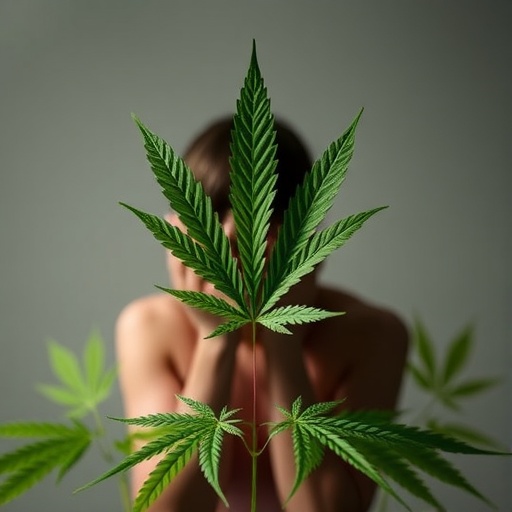
A Groundbreaking Analysis Reveals Strengthening Link Between Rising Cannabis Use and Escalating Mental Health Challenges in Canada
An extensive investigation involving 35,000 Canadians has unveiled a progressively intensifying correlation between increased cannabis consumption and worsening mental health symptoms within the population. This compelling study, spearheaded by researchers at McMaster University and published in The Canadian Journal of Psychiatry on February 25, 2026, meticulously analyzed data across a decade, from 2012 to 2022, to unravel the interplay between evolving patterns of cannabis use and mental health outcomes.
The research utilized nationally representative surveys conducted by Statistics Canada, encompassing a broad demographic of individuals aged 15 years and older residing in Canadian provinces. By examining a period that notably includes the legalization of cannabis in Canada—positioned at the midpoint of the study—the investigators identified that shifts in availability, potency, and social use context may be key factors influencing these emerging trends. Although the study does not establish direct causality, it brings to light an alarming public health concern: the synchronous rise of cannabis use and mental health disorders such as anxiety, depression, and suicidality.
A striking observation from the data revealed that the prevalence of generalized anxiety disorder (GAD) and major depressive episodes nearly doubled within the studied timeframe, escalating to 5.2% and 7.6% respectively. This substantial increase underscores a broader mental health crisis unfolding alongside changing substance use behaviors. Concurrently, suicidal ideation demonstrated a remarkable 44% increase among youth populations, underscoring the vulnerability of younger demographics to this complex interaction between cannabis use and psychological well-being.
In terms of consumption patterns, the frequency of cannabis use saw a dramatic surge. The proportion of Canadians reporting usage multiple times per week more than doubled, while those indicating any past-year use rose to 20.7%. This trend reflects not merely normalization but an intensification of engagement with cannabis, which may potentiate the risk of adverse psychological effects.
Critically, the study unearthed that cannabis consumers, at any level of use, consistently exhibited higher odds of meeting clinical criteria for disorders such as generalized anxiety and depression, along with elevated reports of suicidality, compared to non-users. More concerningly, the strength of this association intensified over time, hinting at evolving dynamics between cannabis use and mental health that warrant deeper scientific scrutiny.
By 2022, the data revealed that regular cannabis users—defined as those consuming the substance two or more times weekly—were approximately five times more likely to express symptoms of anxiety, depression, or suicidality relative to non-users. This finding signals potential dose-response effects or cumulative impacts of sustained use on mental health metrics. Although the observational nature of the research precludes definitive claims regarding causation, this robust correlation signals urgent implications for clinical practice and public health policies.
Drawing connections with preceding research, Jillian Halladay, an assistant professor at McMaster University and youth substance use research leader at the Peter Boris Centre for Addictions Research, underscored that these findings extend prior analyses spanning from 2002 to 2012. Those earlier studies similarly identified escalating co-occurrence of cannabis use and mental health issues, suggesting that the phenomenon is enduring and possibly accelerating in the context of increased cannabis normalization and accessibility.
The implications of these findings call for enhanced vigilance among healthcare providers. Halladay and colleagues emphasize the critical necessity for early identification of anxiety, depression, and suicidality within cannabis-using populations. Routine mental health screenings in contexts of substance use evaluation—and vice versa—are advocated to detect and manage these intertwined challenges more effectively. The bidirectional influences between psychological distress and cannabis consumption patterns highlight a complex feedback loop that complicates treatment and prevention efforts.
Efforts to confront this public health challenge must also prioritize integrated intervention strategies that simultaneously address substance use disorders and mental health conditions. Systemic enhancements ensuring ready access to comprehensive treatment programs can mitigate the compounded risks identified in the study. Additionally, the researchers call for updates to Canada’s Lower Risk Cannabis Use Guidelines, reflecting the increasingly apparent risks linked with frequent cannabis consumption, particularly among youth.
This research dovetails with recent findings from McMaster’s investigations into adolescent mental health, which reported nearly a threefold increase in anxiety and depression rates among teens over the past decade. Notably, heavy cannabis users within this demographic experienced even greater deteriorations in mental health, underscoring the need for targeted youth-oriented prevention and intervention initiatives.
Funded through a combination of prestigious grants—including Health Systems Impact Embedded Early Career Researcher awards, Canadian Institutes of Health Research (CIHR) fellowships, and support from the Australian National Health and Medical Research Council—the study underscores an international recognition of the critical importance of exploring how cannabis use intersects with mental health trajectories.
As cannabis consumption continues to rise in Canada amid changing legal landscapes and cultural norms, these findings serve as a clarion call for policymakers, clinicians, researchers, and the public alike. Heightening awareness about the nuanced impacts of cannabis on mental health is imperative, particularly regarding timing, frequency, and individual susceptibility. Proactive educational campaigns and evidence-based policy adjustments could be crucial in mitigating the growing mental health burden associated with cannabis use.
In conclusion, the McMaster-led study paints a sobering picture: the concurrent rise of cannabis use and mental health challenges is not only persistent but worsening, especially among younger Canadians and regular consumers. Addressing this intricate co-occurrence demands multidimensional responses that bridge prevention, clinical care, research, and public policy to safeguard mental well-being in the era of expanding cannabis accessibility.
Subject of Research: The evolving relationship between cannabis use and mental health symptoms, including anxiety, depression, and suicidality, in Canadian populations between 2012 and 2022.
Article Title: Strengthening Co-occurrence of Cannabis Use and Mental Health Disorders in Canada: A Decadal Analysis
News Publication Date: February 25, 2026
Web References:
- Study DOI: http://dx.doi.org/10.1177/07067437261420701
- Prior related study: https://pmc.ncbi.nlm.nih.gov/articles/PMC6997972/#section18-0706743719854071
- McMaster research on adolescent mental health: https://healthsci.mcmaster.ca/ontario-teens-see-sharp-rise-in-depression-and-anxiety-worst-among-frequent-cannabis-users/
References:
Published article in The Canadian Journal of Psychiatry, 2026, DOI: 10.1177/07067437261420701
Keywords: Cannabis, Mental Health, Anxiety, Depression, Suicidality, Substance Use, Public Health, Canada, Youth, Legalization, Epidemiology, Screening


