

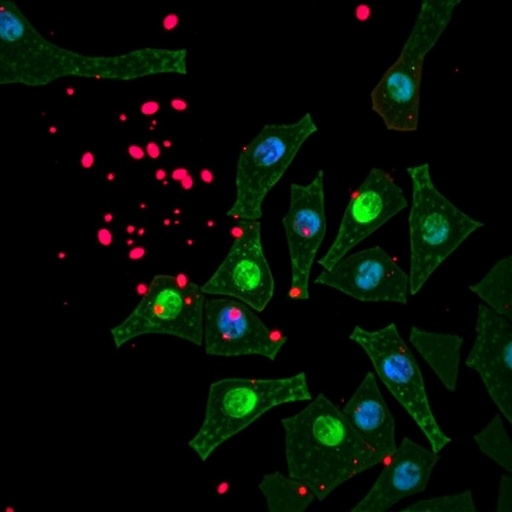
In recent years, the complexity of the tumor microenvironment has garnered significant attention in cancer research. One of the most intriguing components of this microenvironment is the tertiary lymphoid structures (TLS), which have been implicated in various types of cancers, including gastric cancer. A recent study by Zhou et al. has shed new light on the role of macrophages within these structures, specifically their impact on the apoptosis of ATF4-positive gastric cancer cells through the action of interleukin 18 (IL-18). This discovery could open new avenues for therapeutic strategies targeting these immune components to enhance cancer treatment efficacy.
The study highlights how macrophages residing in TLS are not merely bystanders within the tumor microenvironment but are crucial orchestrators of immune responses, capable of inducing apoptosis in cancer cells through specific cytokines. IL-18, a pro-inflammatory cytokine, plays a fundamental role in the activation of immune cells, particularly T-cells and natural killer cells. Understanding the mechanisms through which these macrophages can induce apoptosis in cancer cells provides critical insights into the immune system’s potential to combat tumor progression.
Macrophages are a heterogeneous population of immune cells with varying functions depending on their microenvironment and activation state. In the context of TLS, macrophages exhibit a unique phenotype that enhances their ability to interact with cancer cells. The research indicates that macrophages in these structures secrete IL-18, which triggers apoptotic pathways in ATF4-positive gastric cancer cells. This discovery not only emphasizes the importance of macrophages in immune surveillance but also points to the potential for harnessing their capabilities for cancer immunotherapy.
ATF4, a key regulator of the cellular stress response, is upregulated in many cancer types, contributing to cell survival and proliferation. However, the study demonstrates that IL-18 signaling can disrupt this survival mechanism, leading to apoptosis of ATF4-positive cells. This finding is particularly relevant for gastric cancer, which often evades immune detection and promotes tumor growth. The ability of TLS-associated macrophages to target these cancer cells represents a promising strategy for enhancing the efficacy of existing treatments.
Additionally, the interaction between macrophages and cancer cells within TLS raises questions about the broader implications of the tumor microenvironment on immune responses. The study suggests that the spatial arrangement of immune cells within TLS could influence their functional roles, potentially leading to more effective anti-tumor responses. This insight may inform the design of combination therapies that leverage the immune system’s capacity to recognize and eliminate cancer cells.
The research further underscores the need for continued exploration of the cytokine milieu present within TLS. While IL-18 is identified as a key player in this study, the roles of other cytokines in modulating macrophage function and promoting apoptosis deserve further investigation. A comprehensive understanding of these pathways could reveal novel therapeutic targets to enhance the efficacy of existing cancer treatments.
As the medical community continues to explore the intricacies of the immune response to cancer, findings such as those from Zhou et al. stress the importance of interdisciplinary approaches that combine immunology, oncology, and molecular biology. By integrating these fields, researchers can develop more nuanced strategies that not only disrupt tumor growth but also promote the immune system’s capacity to destroy cancer cells.
The potential implications of this research extend beyond gastric cancer alone. Similar mechanisms may be at play in other malignancies characterized by the presence of TLS and macrophages. Investigating these relationships could lead to the identification of common therapeutic targets across various types of cancer, potentially transforming how cancers are approached and treated.
Publications highlighting such profound findings play an essential role in disseminating knowledge across the scientific community. The study by Zhou et al. is likely to encourage further research into the roles of immune cells within the tumor microenvironment, inspiring the next generation of therapeutic strategies designed to manipulate these interactions for better outcomes in cancer patients.
Ultimately, the journey towards understanding and overcoming cancer is a collective effort, requiring collaboration and innovation across disciplines. The promising findings related to macrophages in tertiary lymphoid structures represent a step forward in deciphering the mechanisms of tumor immunology. Ongoing research in this area will not only enhance our understanding of cancer biology but also guide the development of more effective, targeted therapies for patients battling this devastating disease.
The impact of this research on future therapies is significant. It raises critical questions about the potential for clinical applications, such as incorporating IL-18-based treatments or enhancing the infiltration of macrophages into tumors. By focusing on the immune landscape of gastric cancer, researchers could significantly improve survival rates and quality of life for patients.
In conclusion, the study by Zhou et al. offers groundbreaking insights into the relationship between macrophages in tertiary lymphoid structures and gastric cancer cell apoptosis. By elucidating the mechanisms at play, this research not only advances our understanding of cancer immunology but also sets the stage for future therapeutic strategies that can harness the body’s immune response to fight cancer more effectively. As the field continues to evolve, such innovations will remain pivotal in the ongoing battle against cancer, providing hope for improved treatment outcomes in the years to come.
Subject of Research: The role of macrophages in tertiary lymphoid structures and their ability to induce apoptosis in ATF4-positive gastric cancer cells via IL-18 signaling.
Article Title: Macrophages in tertiary lymphoid structures promote apoptosis of ATF4-positive gastric cancer cells via IL-18.
Article References:
Zhou, L., Li, X., Wu, J. et al. Macrophages in tertiary lymphoid structures promote apoptosis of ATF4-positive gastric cancer cells via IL18.
J Transl Med (2025). https://doi.org/10.1186/s12967-025-07559-z
Image Credits: AI Generated
DOI: 10.1186/s12967-025-07559-z
Keywords: macrophages, tertiary lymphoid structures, gastric cancer, apoptosis, IL-18, tumor microenvironment, cytokines, immunotherapy.


