

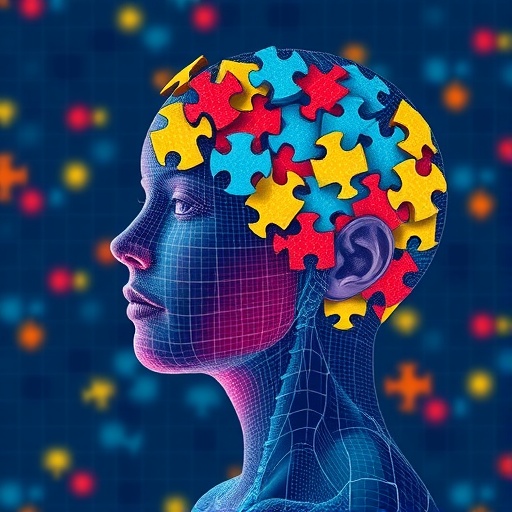
In a groundbreaking study poised to revolutionize the diagnosis of autism spectrum disorder (ASD) in adults, researchers have harnessed the power of machine learning combined with online cognitive and perceptual testing to predict autism diagnoses with unprecedented accuracy. This innovative approach, detailed in the forthcoming 2026 publication in Translational Psychiatry, represents a significant leap beyond traditional diagnostic methods, which often rely heavily on clinical observation and subjective reporting. By integrating advanced computational techniques with scalable digital assessments, the research promises to transform how clinicians identify and understand autism in adult populations.
Diagnosis of autism in adulthood has long been a complex and often delayed process, primarily because early developmental markers are frequently absent or overlooked. Adults seeking diagnosis may face lengthy waiting times and inconsistent evaluations. The current study addresses these challenges by developing an algorithmic framework that taps into subtle cognitive and perceptual profiles unique to autistic individuals. The researchers deployed a suite of online assessments capturing nuanced aspects of perception, attention, and cognitive processing, building a multidimensional dataset capable of revealing patterns inaccessible to traditional diagnostic tools.
At the core of this work is the use of sophisticated machine learning models trained on extensive datasets collected from a large cohort of adults with and without autism diagnoses. The team focused on diverse cognitive domains, including perceptual discrimination, pattern recognition, and attentional control, which prior research suggests are often atypical in autistic individuals. By applying neural networks and ensemble learning methods, the algorithm was able to identify complex, non-linear associations within the data, effectively distinguishing between autistic and neurotypical cognitive profiles.
One of the salient breakthroughs of this research is the confirmation that machine learning algorithms can parse through the ‘noise’ of individual variability to detect a consistent ‘cognitive signature’ associated with autism. This signature comprises a constellation of subtle performance differences across multiple tasks that, while individually insignificant, collectively provide a robust predictive biomarker. Unlike conventional diagnostic interviews that can be influenced by subjective interpretation, this data-driven approach offers a more objective and repeatable means of assessment.
Moreover, the online nature of the cognitive and perceptual tests delivers a scalable and accessible diagnostic option. Participants from diverse geographical regions and backgrounds completed the assessments remotely, ensuring broad representation and applicability of the findings. This digital methodology holds immense potential for reducing the barriers to autism diagnosis, especially in underserved or rural populations where specialized clinical services are scarce.
The study also highlights the nuanced relationship between perception and cognition in autism. The machine learning model’s ability to incorporate subtle perceptual variations—such as differences in sensory processing and visual discrimination—provides new insight into how these elements interplay with higher-order cognitive functions in autistic adults. This integrated understanding may eventually inform tailored interventions that address specific cognitive and perceptual profiles, enhancing therapeutic efficacy.
Importantly, the research team took rigorous steps to validate their findings, employing cross-validation techniques and independent test samples to ensure the model’s generalizability. The reported diagnostic accuracy, sensitivity, and specificity metrics underscore the robustness of the approach. Furthermore, the transparency of the machine learning pipeline and the interpretability of its features set a precedent for future studies seeking to apply artificial intelligence to neuropsychiatric diagnosis.
This advancement also raises critical considerations about ethical deployment and clinical integration. While machine learning offers powerful tools, it is not positioned as a replacement for human clinical judgment but rather as an augmentative resource. The researchers advocate for a complementary model where algorithmic insights inform and support clinicians’ decisions, enhancing diagnostic confidence and reducing oversight.
The potential for early and accurate diagnosis informed by machine learning extends beyond scientific and clinical realms—it carries social and economic implications. Early diagnosis can facilitate timely interventions, thereby improving life outcomes and reducing long-term care costs. Furthermore, by demystifying autism diagnosis through transparent and objective measures, this work can help reduce stigma and empower autistic individuals with better self-understanding.
Looking ahead, the research paves the way for deploying similar computational approaches to other neurodevelopmental and psychiatric conditions, leveraging the increasing availability of digital cognitive assessment tools and large-scale datasets. It also prompts renewed exploration into the neural underpinnings of autism, as computational models guide hypotheses about brain networks involved in altered perception and cognition.
The interdisciplinary nature of this work, melding cognitive neuroscience, clinical psychology, and data science, exemplifies the future trajectory of psychiatric research. By anchoring diagnosis in measurable cognitive phenomena and machine intelligence, the field moves closer to precision medicine paradigms that personalize care pathways based on individual neurocognitive profiles.
In conclusion, this seminal study offers a visionary blueprint for harnessing machine learning and online cognitive assessments to redefine autistic adult diagnosis. It not only illuminates the intricate cognitive architectures characteristic of autism but also establishes a scalable, accessible, and objective diagnostic framework with transformative clinical potential. As these methods continue to refine, they promise to enhance diagnostic equity and deepen scientific understanding of the autism spectrum in adulthood.
Subject of Research: Using machine learning and online cognitive and perceptual measures to predict adult autism diagnosis.
Article Title: Finding the forest in the trees: Using machine learning and online cognitive and perceptual measures to predict adult autism diagnosis.
Article References:
Van der Burg, E., Jertberg, R.M., Geurts, H.M. et al. Finding the forest in the trees: Using machine learning and online cognitive and perceptual measures to predict adult autism diagnosis. Transl Psychiatry (2026). https://doi.org/10.1038/s41398-026-03823-y
Image Credits: AI Generated


