

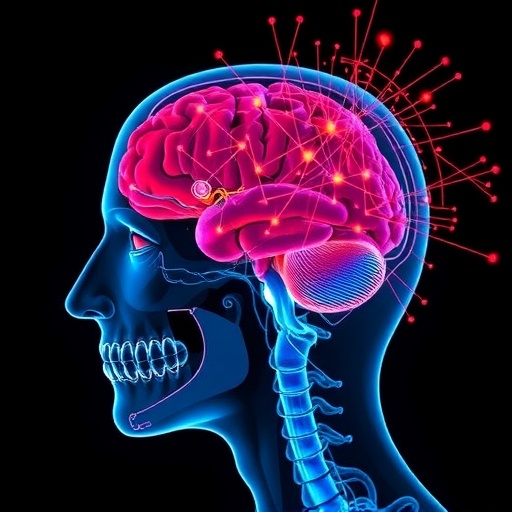
In a groundbreaking stride toward transforming the landscape of neurodegenerative disease prognosis, a team of researchers has harnessed the power of machine learning to significantly improve the prediction of cognitive decline in patients with early Parkinson’s disease. The novel study, led by Mohammadi, Ng, Tan, and colleagues and published in npj Parkinson’s Disease, illustrates how the integration of serial blood biomarkers through advanced computational algorithms can unveil patterns previously obscured by the complexity of the disease’s progression. This breakthrough holds immense promise for early intervention strategies and personalized treatment plans that could fundamentally alter patient trajectories.
Parkinson’s disease (PD), traditionally recognized for its motor symptoms such as tremors and rigidity, has increasingly been acknowledged for its profound cognitive implications. Cognitive decline, culminating in Parkinson’s disease dementia (PDD), represents a debilitating facet of the illness, severely impacting quality of life and healthcare burdens. Predicting this cognitive trajectory has remained notoriously challenging due to heterogeneous disease manifestations and the lack of reliable predictive markers. The study at hand addresses this challenge head-on by leveraging serial blood biomarker data longitudinally, analyzed through sophisticated machine learning frameworks, marking a shift from static, cross-sectional clinical assessments to dynamic, personalized prognosis.
The researchers embarked on a comprehensive longitudinal study, utilizing serial blood samples collected from early-stage Parkinson’s patients. Instead of relying solely on traditional biomarkers or single time-point data, they focused on a dynamic temporal approach. This method tracks the evolution of multiple biochemical indicators including neuroinflammatory markers, alpha-synuclein species, and metabolic signatures known to be implicated in neuronal health and degeneration. By compiling these temporal biomarker profiles, the study tapped into a rich dataset, capturing the subtle biochemical shifts correlating with cognitive trajectories.
Central to this approach was the deployment of machine learning algorithms capable of handling the complexity and volume of longitudinal data. The team employed advanced models that integrated these serial biomarker readouts, detecting intricate and non-linear patterns predictive of future cognitive decline. Unlike conventional statistical techniques that may falter with such high-dimensional data, machine learning provided a robust framework to extract meaningful predictive features while accounting for individual variability. This computational approach fundamentally enhanced sensitivity and specificity in cognitive decline prediction.
One of the most compelling aspects of this work lies in its early predictive power. The integrated machine learning model, fed by serial biomarker data, achieved unprecedented accuracy in forecasting which Parkinson’s patients would experience accelerated cognitive decline. This predictive capability emerged well before clinical symptoms of dementia became evident, providing a crucial window for clinicians to implement neuroprotective strategies. Early identification is particularly vital in Parkinson’s disease, where targeting the cognitive aspects before irreversible neuronal loss can profoundly influence disease management outcomes.
Moreover, the study sheds light on the complex pathophysiological mechanisms underpinning cognitive deterioration in Parkinson’s disease. By identifying specific biomarkers and their temporal trajectories linked to decline, the researchers illuminated biological pathways involving neuroinflammation, synaptic dysfunction, and metabolic disruption. Such insights are pivotal for the development of targeted therapeutics aimed at modulating these pathways, offering hope for disease-modifying treatments that address cognitive symptoms rather than merely alleviating motor dysfunction.
The implications of this research extend beyond Parkinson’s disease alone. The methodology—integrating serial biomarker data with machine learning analytics—establishes a versatile paradigm applicable to a broad spectrum of neurodegenerative diseases characterized by insidious and variable cognitive decline, such as Alzheimer’s disease and frontotemporal dementia. This approach promotes a shift towards precision medicine, where individualized biomarker profiles inform tailored prognoses and therapeutic decisions, potentially revolutionizing clinical trial designs and healthcare delivery.
The interdisciplinary collaboration involved in the study underscores the vital synergy between neurology, bioinformatics, molecular biology, and data science. Synthesizing expertise across these domains enabled the design of an innovative pipeline—from rigorous clinical sample collection and biomarker quantification to sophisticated algorithm development and validation. This holistic perspective is essential in tackling complex multifactorial diseases, exemplifying how cross-sector collaboration accelerates scientific discovery and clinical innovation.
From a technical perspective, the researchers adopted ensemble machine learning methods integrating decision trees, gradient boosting, and neural networks to optimize model performance. Careful handling of missing data, feature selection, and model interpretability ensured the results were not only accurate but also clinically actionable. Importantly, validation was conducted on independent cohorts, confirming the robustness and generalizability of the model to diverse patient populations, a critical step for real-world application.
This study also hints at the future of biomarker-based monitoring, envisioning a healthcare ecosystem where patients undergo routine minimally invasive blood tests coupled with real-time AI-driven analytics. Such a system would enable continuous risk assessment and dynamic adjustment of therapeutic regimens, embodying the principles of adaptive medicine. The integration of wearable sensors and digital phenotyping alongside blood biomarkers could further enhance predictive fidelity and patient-centric care.
Looking ahead, several challenges remain on the path to clinical translation. Standardization of biomarker assays, regulatory approval of AI-based tools, and integration into existing healthcare workflows require coordinated efforts and rigorous evaluation. Additionally, ethical considerations surrounding data privacy, algorithmic bias, and patient communication must be addressed to ensure responsible implementation. However, the promise demonstrated by this research sets a compelling agenda for future investment and development.
The excitement generated by this study among clinicians and researchers alike stems from its potential to redefine Parkinson’s disease management. Moving beyond symptomatic treatment, the possibility of preemptively identifying cognitive decline offers a lifeline to patients and caregivers grappling with uncertainty. Early, precise prognosis supported by objective biomarker data could transform clinical trials, enabling stratification of participants and measurement of therapeutic efficacy with unprecedented clarity.
Furthermore, this work emphasizes the value of longitudinal monitoring over one-time snapshot assessments. Neurodegenerative diseases are dynamic entities, and capturing their progression requires equally dynamic tools. Serial biomarker integration combined with machine learning exemplifies how modern technology can meet this demand, providing a continuous stream of actionable insights that track disease evolution and patient response.
In the broader context of neurodegeneration research, this advancement contributes to a growing trend of leveraging artificial intelligence to extract maximal information from complex biological data. The fusion of omics technologies, digital health, and machine learning heralds a new era in neurological disease understanding and management. Studies like this one bring us closer to unraveling the mysteries of brain aging and degeneration, offering hope for millions affected worldwide.
Ultimately, this work by Mohammadi, Ng, Tan, and colleagues represents a paradigm shift, merging cutting-edge computational methods with molecular neuroscience to tackle one of the most pressing challenges in Parkinson’s disease. As research continues to build on these findings, the prospect of personalized, predictive, and preemptive neurology moves from aspiration to tangible reality, promising to reshape healthcare and improve lives.
Subject of Research: Cognitive decline prediction in early Parkinson’s disease using integrated machine learning and serial blood biomarkers
Article Title: Machine learning integration of serial blood biomarkers enhances cognitive decline prediction in early Parkinson’s disease
Article References:
Mohammadi, R., Ng, S.Y.E., Tan, J.Y. et al. Machine learning integration of serial blood biomarkers enhances cognitive decline prediction in early Parkinson’s disease. npj Parkinsons Dis. (2026). https://doi.org/10.1038/s41531-026-01298-8
Image Credits: AI Generated


