

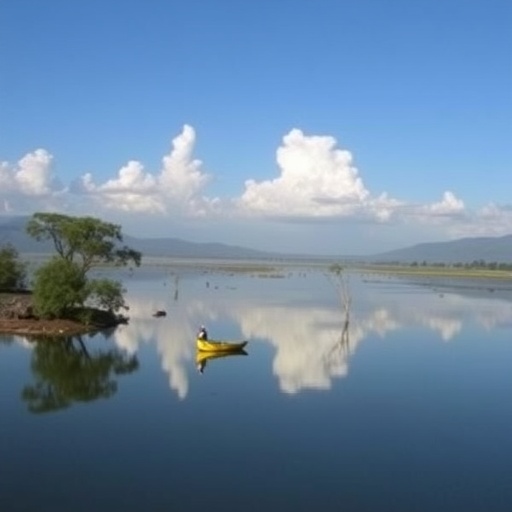
In recent years, the importance of understanding land use and land cover changes has gained prominence in the scientific community. These changes can significantly influence the suitability of land for various purposes, including agriculture, conservation, and urban development. A groundbreaking study by Seifu, Wagner, Tilahun, and their colleagues dives deep into this essential topic. The research is particularly focused on long-term effects within sub-catchments of the Lake Tana Basin in Ethiopia, a region characterized by its rich biodiversity and vital water resources.
The study meticulously assesses the myriad factors affecting land suitability potential over an extended period. Through advanced methodologies and sophisticated analytical techniques, the researchers have been able to discern patterns that would otherwise remain obscured in transient analyses. This depth of investigation is crucial as it provides a nuanced understanding of how shifting land use practices can reshape landscapes and ecosystems.
One of the striking revelations from the research is how historical land management strategies have inadvertently altered the geographic and ecological fabric of the Lake Tana Basin. For instance, the researchers observed that agricultural expansion has led to a significant decline in natural vegetation cover. This shift not only impacts soil health but also disrupts local wildlife habitats, triggering a cascading effect on the basin’s overall biodiversity.
Another critical aspect examined in this work is the socio-economic implications of land use changes. As communities adapt to new agricultural practices or urban developments, they often face a trade-off between short-term gains and long-term sustainability. Whether it’s the allure of immediate productivity from monoculture practices or the necessity of maintaining diverse ecosystems, the decisions made by local populations can have far-reaching consequences.
The researchers employed a robust framework to analyze the changes in land suitability potential, considering variables such as soil fertility, climate conditions, and existing land cover types. Utilizing remote sensing tools and Geographic Information Systems (GIS), they were able to interpret vast datasets that illustrate not only current land use but also changes over time. These methodologies provided critical insights, enabling the researchers to map out areas at risk of becoming unsuitable for traditional agricultural practices.
Moreover, the study highlights the urgency of implementing sustainable land management practices tailored to the unique circumstances of the Lake Tana region. While there are definitive strategies that can mitigate the effects of degradation, such as agroforestry and crop rotation, the team emphasizes that community involvement and local knowledge are paramount in effecting meaningful change.
One of the innovative approaches presented in the study is the promotion of land use planning informed by ecological assessments. The researchers advocate for a collaborative framework that bridges science and community engagement, ensuring that land use decisions are not only data-driven but also reflective of cultural values and local needs. This adaptive management stance is essential as it fosters resilience among communities that rely on natural resources for their livelihood.
Interestingly, the implications of this research extend beyond the immediate geography of the Lake Tana Basin. The findings provide a model that can inform land use strategies in similar ecological zones experiencing comparable transformations. By drawing parallels with other regions, stakeholders can glean valuable insights into best practices and potential pitfalls that may arise during implementation.
As the challenges of climate change continue to mount, the significance of studies like this cannot be understated. They not only enhance our understanding of environmental shifts but also lay the groundwork for policies aimed at mitigating negative outcomes. The reflective examination offered by the authors serves as a clarion call for integrated approaches to land use that prioritize sustainability and resilience.
In conclusion, the research conducted by Seifu, Wagner, Tilahun, and their colleagues illuminates critical aspects of land use and land cover changes in Ethiopia’s Lake Tana Basin. By systematically unraveling the layers of complexity surrounding land suitability potential, the team has generated knowledge that transcends the local context, offering insights pertinent to global discussions on land management and sustainability. The need for collaborative efforts in addressing these emerging challenges is more evident than ever, urging stakeholders at all levels to act decisively and responsibly.
The implications of this research extend to policymakers, environmentalists, and local communities who must navigate the intricate balance between development and conservation. As they contemplate future land use strategies, the insights gleaned from this study will prove invaluable to ensure that decisions made today do not compromise the ecological health of tomorrow.
In the ever-evolving field of environmental science, such research serves as a beacon of knowledge that can guide the future of land management practices. The balance between human activity and natural ecosystems remains a delicate dance, one that will require constant vigilance, adaptation, and innovative thinking to navigate the challenges that lie ahead.
Through collaborations and continued research, unintended consequences of land use changes can be mitigated, ensuring that both human and ecological communities thrive in the long term. Hence, embracing this scientific endeavor is not just about understanding the past; it is about constructing a sustainable future for generations to come.
Subject of Research: Long-term land use and land cover change impacts on land suitability potential in Ethiopia.
Article Title: Impacts of long-term land use and land cover change on land suitability potential in three sub-catchments of the Lake Tana Basin, Ethiopia.
Article References: Seifu, R., Wagner, P.D., Tilahun, S.A. et al. Impacts of long-term land use and land cover change on land suitability potential in three sub-catchments of the Lake Tana Basin, Ethiopia. Environ Monit Assess 198, 50 (2026). https://doi.org/10.1007/s10661-025-14806-9
Image Credits: AI Generated
DOI: https://doi.org/10.1007/s10661-025-14806-9
Keywords: Land use change, land cover change, land suitability, Lake Tana, Ethiopia, ecological impacts, sustainable management.


