

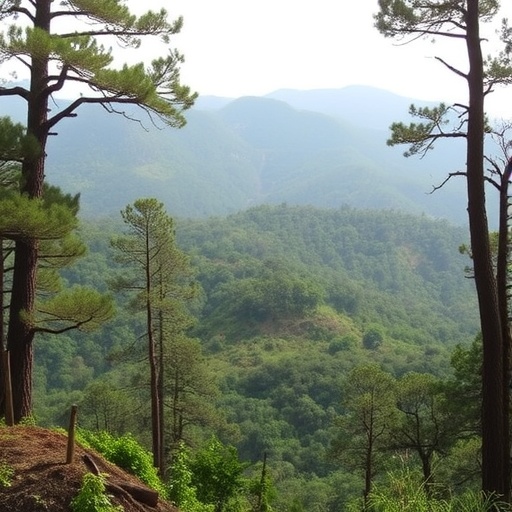
The Brutu Forest Reserve, located in the Nandom Municipality of Ghana, represents a unique ecosystem characterized by a rich biodiversity and a complex interplay between local communities and conservation efforts. Recent research conducted by Yahaya, Aazane, and Aduko has shed light on the impacts of local conservation strategies employed in this region. Their study emphasizes the necessity for collaborative management approaches that engage local stakeholders in the stewardship of this vital natural resource.
The research posits that the success of conservation initiatives is intrinsically linked to the active participation of the local population. When communities are empowered to play a central role in the management of the Brutu Forest Reserve, various positive outcomes emerge. This involvement not only ensures the preservation of biodiversity but also enhances the livelihoods of people who rely on forest resources for their daily sustenance. The intricate web of human-nature interaction becomes a focal point in understanding the viability of conservation strategies in the region.
One notable finding of the study is the significant increase in local awareness regarding the importance of conservation practices. Through participatory workshops and community meetings, residents have become more engaged in discussions about sustainable harvesting and the long-term benefits of forest conservation. The researchers noted that educational initiatives have fostered a sense of ownership among community members, leading to a collective commitment to protect their natural environment. This newfound awareness has translated into tangible action, with local groups organizing clean-up campaigns and wildlife monitoring efforts.
The role of traditional knowledge in conservation cannot be overstated. The Brutu Forest Reserve has been home to various indigenous practices, historically tied to local livelihoods. Yahaya and colleagues found that integrating traditional ecological knowledge with modern conservation techniques created a dual approach that respects cultural heritage while promoting sustainability. This fusion of knowledge systems underscores the importance of recognizing the value of indigenous perspectives in conservation discourse, which is often overlooked in mainstream discussions.
Furthermore, the research highlights the socio-economic benefits that arise from successful conservation strategies. By co-managing the Brutu Forest Reserve, local communities have begun to explore alternative income-generating activities such as eco-tourism and sustainable harvesting of non-timber forest products. This diversification not only alleviates pressure on the forest but also provides tangible economic incentives for conservation. The case of Brutu serves as an exemplar for other regions grappling with similar challenges, proving that conservation can go hand-in-hand with economic development.
Despite the positive trends observed, the study also identifies challenges that still hinder progress in conservation efforts. Issues such as land tenure disputes, illegal logging, and inadequate funding for conservation initiatives remain significant hurdles. The researchers call for stronger institutional support and policies that prioritize the needs and rights of local communities in the management of natural resources. Moreover, addressing these challenges requires a multi-faceted approach that involves collaboration between government agencies, NGOs, and local stakeholders.
The findings from this research resonate globally, as many ecosystems face mounting pressures from human activities. The Brutu Forest Reserve serves as a microcosm of the broader issues in conservation, where local involvement can lead to more effective and sustainable outcomes. The concept of co-management emerges as a powerful tool aimed at balancing ecological integrity with human welfare, paving the way for innovative strategies in biodiversity conservation.
Yahaya, Aazane, and Aduko’s work also contributes to the broader discourse on climate change and its implications for biodiversity. Forest ecosystems play a critical role in carbon sequestration, and healthier forests can significantly mitigate the impacts of climate change. By implementing local conservation strategies, the Brutu Forest Reserve not only safeguards species and habitats but also contributes to global climate goals.
In an era where biodiversity loss is reaching alarming levels, the lessons learned from the Brutu Forest Reserve are more pertinent than ever. The commitment shown by local communities, driven by education and a sense of responsibility, can serve as a blueprint for other regions seeking to harmonize human activity with environmental stewardship. The collaborative effort to protect such critical habitats stands as a testament to the power of collective action in achieving sustainability.
The implications of this research extend beyond geographical boundaries, prompting discussions on best practices and ethical considerations in conservation efforts worldwide. It encourages a reevaluation of traditional conservation paradigms, advocating for an inclusive approach that honors local voices while pursuing ecological objectives. The ongoing journey of the Brutu Forest Reserve continues to inspire others, demonstrating that sustainable development is not only possible but essential.
As the study prompts further inquiry into the effectiveness of co-management practices, it opens the door to future collaborations aimed at advancing conservation science. Researchers are encouraged to continue exploring the intersection of local and scientific knowledge, maximizing the potential for innovative solutions that respect local cultures and ecological realities. Ultimately, the Brutu Forest Reserve represents a beacon of hope in the intricate relationship between humanity and nature, showcasing a path toward a more sustainable future.
In conclusion, the pivotal research conducted by Yahaya, Aazane, and Aduko highlights the transformative power of community engagement in conservation practices. The Brutu Forest Reserve stands as a model for integrating local knowledge with formal conservation initiatives, illustrating that diverse strategies are essential in addressing the multifaceted challenges facing our planet’s ecosystems today. The proactive approach demonstrated by local communities reinforces the notion that when people are invested in their environment, both nature and society thrive.
Subject of Research:
Article Title:
Article References:
Yahaya, AK., Aazane, B. & Aduko, J. Impacts of local conservation strategies in the co-management of Brutu forest reserve in the Nandom Municipality, Ghana.
Discov Sustain (2025). https://doi.org/10.1007/s43621-025-02394-0
Image Credits: AI Generated
DOI:
Keywords:


