

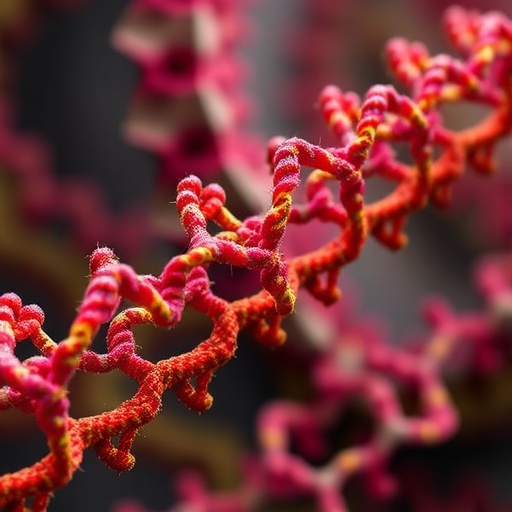
In a groundbreaking study poised to reshape our understanding of malaria pathogenesis, Guillén-Samander and colleagues have unveiled a pivotal molecular mechanism critical for the generation of invasive stages in malaria parasites. Published in Nature Communications in 2026, this research identifies a specialized bridge-like lipid transfer protein that orchestrates lipid trafficking essential for the parasite’s development and infectivity. The discovery not only deepens our grasp of the intricate lipid metabolism within Plasmodium species but also opens novel avenues for therapeutic intervention against one of the most devastating infectious diseases globally.
Malaria parasites, primarily Plasmodium falciparum, rely on a complex life cycle involving multiple developmental stages both within the human host and mosquito vector. Crucial among these stages is the formation of invasive forms capable of penetrating host cells and perpetuating infection. Until now, the molecular components that govern lipid transport and membrane remodeling during this transformation remained largely elusive. Lipids, as fundamental cellular building blocks, influence membrane integrity, signaling, and organelle biogenesis; thus, understanding their trafficking is indispensable for elucidating parasite biology.
The team’s work pivots on the identification of a distinct lipid transfer protein exhibiting a bridge-like conformation, an architectural feature reminiscent of proteins facilitating lipid shuttling between membrane compartments in other eukaryotes. This protein was found to localize to specialized parasite organelles integral to membrane dynamics during the developmental switch to invasive stages. Advanced structural biology techniques, including cryo-electron microscopy, revealed the extended tubular domain of the protein, which creates a hydrophobic tunnel enabling selective lipid passage—a critical factor in membrane expansion and remodeling within the parasite.
Detailed biochemical assays corroborated the protein’s specificity for particular phospholipid species, underscoring its role in maintaining membrane composition tailored for invasion competence. Functional genetic experiments deploying targeted knockdown approaches demonstrated a profound disruption in invasive stage formation upon depletion of this lipid transfer protein. These perturbations translated into impaired parasite infectivity, attesting to the protein’s indispensable role and positioning it as a prime target for antimalarial drug development.
Notably, the study expands the paradigm of lipid transfer in apicomplexan parasites, a group including Plasmodium that has historically been challenging to dissect due to their complex intracellular niche and unique organellar architecture. The discovery of this bridge-like lipid transfer protein refines our molecular map of parasite development, highlighting how precise lipid trafficking underpins the morphological and functional transitions necessary for survival within the human host.
The implications of this research are multifaceted. From a therapeutic standpoint, targeting lipid transfer mechanisms offers a fresh strategy distinct from classical approaches that mainly focus on parasite metabolism or protein synthesis. Since lipid homeostasis is fundamental to parasite viability, pharmacological disruption of this process could yield potent inhibitors with potentially reduced resistance profiles. Furthermore, the specificity of this protein to parasite organelles suggests that selective targeting may minimize collateral damage to host cells, a critical consideration in drug design.
Moreover, this study carries profound relevance for understanding how malaria parasites evade host defenses and establish successful infections. Lipid remodeling is intricately tied to membrane fluidity and receptor presentation, factors influencing parasite recognition and invasion efficiency. By delineating how the bridge-like lipid transfer protein modulates these parameters, the authors provide novel insights into the complex interplay between parasite physiology and host-pathogen interactions.
The interdisciplinary methodology employed by Guillén-Samander et al. exemplifies cutting-edge parasite biology research. Integrating structural biology with cell biology and genetic manipulation, the team forged a comprehensive narrative around this lipid transfer protein’s function. Their work also underscores the utility of advanced imaging modalities and lipidomics in deciphering the subtle yet crucial molecular transactions within the parasite.
Environmental adaptability is a hallmark of Plasmodium parasites, enabling them to transition seamlessly between the mosquito vector and human host. This adaptability necessitates dynamic membrane remodeling, which appears heavily reliant on efficient lipid transport pathways. The newly characterized protein acts as a biochemical bridge facilitating this adaptability, making it essential not just for invasion but also for broader parasite survival and homeostasis.
A particularly compelling aspect of the research is how it situates apicomplexan lipid transfer proteins within the broader evolutionary context of eukaryotic lipid transport. The bridge-like structure shares mechanistic parallels with lipid transfer proteins found in other organisms but has evolved specialized features tailored to the parasite’s unique lifecycle. This evolutionary specialization suggests potential vulnerabilities that could be exploited by future therapeutics designed to interfere precisely with parasite-specific lipid pathways.
As resistance to current antimalarial drugs escalates, identifying noncanonical drug targets becomes urgent. Here, the bridge-like lipid transfer protein emerges as a promising candidate, opening prospects for next-generation antimalarials with novel modes of action. The study calls for expanded screening of chemical libraries against this protein’s lipid binding and transfer activity, setting a roadmap for translational research and drug discovery efforts.
In summary, Guillén-Samander and colleagues have illuminated a critical aspect of parasite biology that underpins malaria pathogenesis. The discovery of a bridge-like lipid transfer protein essential for invasive stage generation marks a significant leap in malaria research, with far-reaching implications from fundamental biology to drug development. This protein’s characterization enriches the intricate landscape of parasite lipid metabolism and unearths untapped therapeutic targets that could transform malaria control strategies worldwide.
Given the global burden of malaria, innovations that disrupt parasite lifecycle transitions hold tremendous promise for reducing morbidity and mortality. The study’s insights advance our molecular understanding and fuel optimism that integrated multidisciplinary approaches can unmask novel vulnerabilities in one of humanity’s oldest scourges. As research builds on these findings, the intersection of lipid biology and parasite development could herald a new era in antimalarial strategy development.
Looking forward, future work might explore the dynamic interactions between this lipid transfer protein and other components of the parasite trafficking machinery. Revealing how this protein cooperates with membrane fusion machinery, cytoskeletal elements, and signaling molecules could provide a holistic view of biologically orchestrated invasion. Harnessing such knowledge will be critical in designing multifaceted intervention strategies to outpace parasite adaptation and resistance evolution.
The elucidation of this bridge-like lipid transfer protein thus stands as a landmark contribution, embodying the synergy between advanced science and urgent public health challenges. The potential to translate molecular discoveries into clinical tools reflects the power of collaborative, innovative research to address devastating infectious diseases that affect millions globally.
Subject of Research:
Article Title:
Article References:
Guillén-Samander, A., Perepelkina, N., Horáčková, V. et al. A bridge-like lipid transfer protein is critical for generation of invasive stages in malaria parasites.
Nat Commun (2026). https://doi.org/10.1038/s41467-026-70887-1
Image Credits: AI Generated
DOI:
Keywords:


